Trail & Tarp earns a commission from qualifying purchases made through links on this page, at no extra cost to you. Full disclosure.
The honest answer
The short answer
Buy a liner to keep your sleeping bag clean, to sleep in on hot nights when the bag is too much, and to add a few degrees at the margin. Do not buy one expecting it to turn a summer bag into a winter bag — and treat any specific “+25 F” claim with suspicion, because no standard governs it. Sea to Summit itself is careful about this, saying only that you should see a boost of several degrees depending on the bag and pad.
That caution is worth noticing, because plenty of liner marketing is not so careful. Sleeping bags are rated under ISO 23537 with a heated manikin in a controlled chamber; liners have no equivalent test. A figure that comes from no standard, measured against no baseline, in no stated conditions, is a claim rather than a specification.
Reason one: keeping the bag clean
This is the reason that actually justifies the purchase. Body oils, sweat and sunscreen are what degrade a sleeping bag's fill over time, and washing a bag is a slow, careful job you want to do as rarely as possible — especially a down bag, which needs specialist detergent and a long tumble dry.
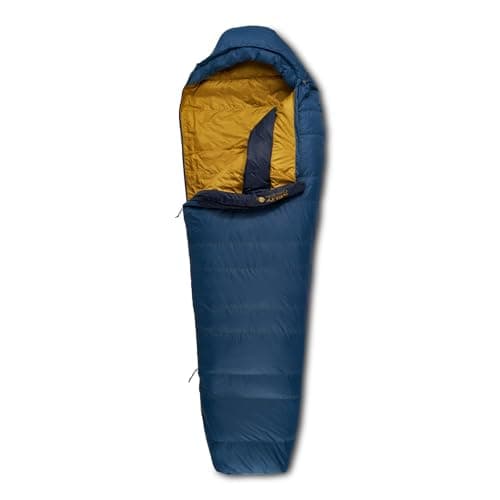
A liner takes all of that instead and goes in a normal wash. Over a few seasons that is the difference between washing a bag once and washing it five times, and each wash costs a bag a little loft. If you own a down bag like a Kelty Cosmic Down 20, a liner is cheap insurance on it; the washing routine you are avoiding is in how to wash a sleeping bag.
Reason two: the bag on its own is too warm
Most campers own one bag and camp across a season, which means several nights a year when the bag is simply too hot. Sleeping on top of it is uncomfortable and sleeping in it is worse. A liner used alone is a light, breathable sleep sack that solves both.
It also travels well beyond camping. Hostels, sleeper trains and questionable rental bedding are all liner territory, which is why a liner tends to get more nights of use than most of the gear it sits next to.
Reason three: a few degrees at the margin
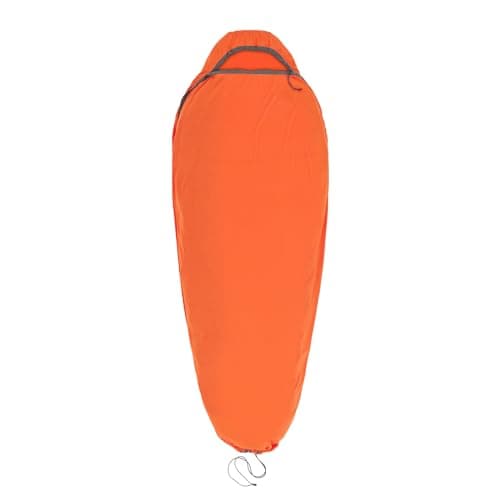
Liners do add warmth, and the mechanism is the same as any other layer: a thin insulating fabric trapping a little more still air. Sea to Summit publishes 284 g for the standard Reactor and 364 g for the Reactor Extreme, both in Thermolite Pro, a hollow-core polyester with infrared-absorbing ceramic pigments.
The right way to think about the gain is proportional rather than absolute. A liner adds meaningfully to a marginal night — a bag rated close to the temperature you are actually facing — and adds almost nothing to a night you are already far too cold for. If you are ten degrees short, the answer is a warmer bag or a warmer pad, not a liner.
Fabric
Weight class
Adds warmth
Best for
The catch
Thermolite / insulated synthetic
10-13 oz
The most of any liner
Extending a three-season bag
Bulkier; slightly clammy in heat
Silk
3-6 oz
A little
Packing small, hot climates, travel
Delicate; snags
Cotton / poly-cotton
10-16 oz
A little
Car camping hygiene, hostels
Heavy and bulky for a pack
Merino
8-12 oz
Some
Odor resistance over long trips
The most expensive option
Fleece
12-20 oz
Some
Cold car camping, kids
Very bulky
Our summary of the categories. Weights are typical ranges; the two Sea to Summit figures above are published.
What actually adds ten degrees
If you are genuinely cold, the pad under you is almost always the cause. Body weight crushes the insulation beneath you flat, so the bag is doing far less work on that side than you think. A Klymit Static V Base publishes R 1.3; a MegaMat 10 publishes R 8.1. Changing that one number does more than any liner ever will, and the mechanism is in why you get cold in a sleeping bag.
Shape and fit
A liner has to match the bag, or it bunches. Mummy liners fit mummy bags; rectangular liners fit rectangular bags; a rectangular liner inside a mummy bag ends up as a wad of fabric around your knees at 3am.
Two features worth having. A drawcord footbox, so you can open the bottom on a warm night rather than climbing out entirely. And enough length: Sea to Summit publishes 216 by 80 cm for the Reactor and recommends the Extreme for users up to 198 cm. A liner that is too short pulls the bag's footbox in and compresses the insulation exactly where feet get cold.
Using one without making things worse
Get in the liner, then get both into the bag — do not put a twisted liner in first and wriggle. Keep the liner loose rather than stretched; a taut liner compresses the bag's fill and can leave you colder, which is the same reason a blanket goes over a bag rather than inside it, per the camping blanket roundup.
And wash it often, which is the entire point. Most liners take a normal warm machine wash with ordinary detergent. If you want the hostel-and-travel version too, a silk travel liner packs to the size of a fist and weighs a few ounces.
When to skip it
If you car camp two or three weekends a year, wash your bag once a season, and are warm in it, a liner is a solution to a problem you do not have. Put the money into the pad instead, or into the pillow, which changes more nights. The full argument about where camping money earns its keep is in is expensive camping gear worth it.
The gear this page points to
Sea to Summit Reactor Sleeping Bag Liner
Sea to Summit
284 g of Thermolite Pro, 216 x 80 cm, packing to 6 x 3 x 4 in. The standard version, and the one most people should look at.
A few degrees, and no standard governs the claim. Sleeping bags are rated under ISO 23537 with a heated manikin; liners have no equivalent test, so a specific figure like +25 F comes from no baseline. Sea to Summit itself says only that you should see a boost of several degrees.
QWhat is the main reason to use a sleeping bag liner?
Keeping the bag clean. Body oils and sweat degrade fill over time, and washing a bag - especially a down bag - costs it loft each time. A liner absorbs all of that and goes in a normal wash, which is what makes it pay for itself.
QWhich sleeping bag liner fabric is best?
Insulated synthetic such as Thermolite for extending a three-season bag, silk for packing small and hot climates, cotton for car camping hygiene, merino for odor resistance on long trips, and fleece for cold car camping and children.
QShould a sleeping bag liner be loose or tight?
Loose. A liner stretched tight inside a bag compresses the bag's own insulation and can make you colder, which is the same reason a camping blanket belongs over a bag rather than inside it.
Sources
Every figure on this page comes from a published source. We have not tested this gear, so the numbers are the manufacturer's or the standard body's, not ours. How we research.