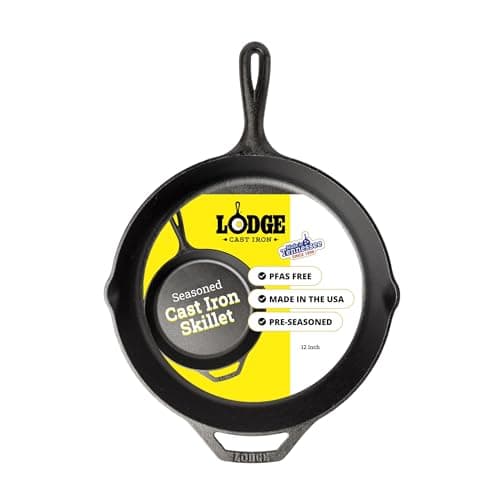
Lodge 12 in. Cast Iron Skillet (L10SK3)
Lodge
About 7.7 to 8 lb, foundry seasoned, and it works on every heat source including a campfire and induction.
$29.90 · Check price on Amazon
#ad how this is funded · price as of October 27, 2026
A 12-inch cast iron skillet weighs about eight pounds. A four-person stainless cookset weighs 5.7. That single fact decides most of this argument.
Trail & Tarp earns a commission from qualifying purchases made through links on this page, at no extra cost to you. Full disclosure.
The short answer
Cast iron holds heat, sears well, works directly in a fire, and weighs several times what anything else does. Stainless is light, needs no seasoning, handles acidic food, and heats unevenly with hot spots over a camp stove burner. Car camping favors cast iron; anything you carry favors stainless or aluminum.
Almost every other difference follows from thermal mass. Cast iron is thick and dense, so it takes a long time to heat and then holds that heat through a pan full of cold food. Thin stainless heats in seconds and loses it just as fast.
| Item | Material | Published weight | Serves | Notes |
|---|---|---|---|---|
| Lodge 12 in. Skillet L10SK3 | cast iron | about 7.7 to 8 lb | 2 to 4 | foundry seasoned; gas, induction, grill, campfire, oven |
| Lodge 6 qt Camp Dutch Oven L12CO3 | cast iron | not published | 4 to 6 | flanged lid, three legs, bail handle |
| Stanley Wildfare Core Full Serve | 18/8 stainless | 4 lb 11 oz | 4 | 4 qt pot, 8 in tri-ply pan, board, spatula, spoon, trivet |
| GSI Pinnacle Ceramic Camper | aluminum with tableware | 3 lb 10.1 oz | 4 | 3 L and 2 L pots, 9 in fry pan, 4 mugs, bowls, plates |
| MSR Trail Lite Duo | hard-anodized aluminum | 1 lb 5.8 oz | 2 | 2.0 L pot, ceramic non-stick, PTFE and PFOA free |
A single 12-inch skillet weighs more than an entire four-person stainless cookset, and five times what a two-person aluminum set weighs. That is the whole comparison in one row, and it is why this is a car camping question rather than a backpacking one.
The soap rule is mostly a myth, and the water rule is not
Modern dish soap will not strip a well-established cast iron seasoning; that belief dates from when soaps were lye-based. What genuinely destroys cast iron is water left on it. Wash it, dry it immediately over heat until no moisture remains, then wipe on the thinnest possible film of oil. A pan put away even slightly damp will have rust spots by the next trip. The full routine is in how to clean and season cast iron at camp.
Hard-anodized aluminum sits between the two and is what most backpacking cookware actually is. MSR publishes 1 lb 5.8 oz for a 2.0 L two-person set with a ceramic non-stick coating that is PTFE and PFOA free; GSI publishes 3 lb 10.1 oz for a four-person set including tableware.
Aluminum conducts heat far better than stainless, so it has fewer hot spots, and it is lighter than both alternatives. The trade is durability: the non-stick coating is the wear item, and metal utensils will end it. The sets are compared in best camping cookware sets.
For car camping, the answer most people land on is both, in different roles. A 12-inch cast iron skillet for anything seared, fried or baked, and a nesting stainless or aluminum set for boiling, pasta, soup and anything with tomatoes in it.
That is two purchases and about 14 lb, which is nothing in a car and unthinkable in a pack. For backpacking there is no argument: a 1 lb 5.8 oz aluminum pot is the whole kitchen, and a pot shape with a wide base transfers heat better than a tall narrow one — see best backpacking stoves.
Cast iron is magnetic and works on every heat source there is, including induction. Lodge publishes compatibility with gas, electric, induction, grill, campfire and oven for the L10SK3. Aluminum is not magnetic and will not work on an induction hob at all unless it has a bonded steel base.
That is worth a thought if the pan will also be used at home, because it decides whether the camping purchase earns its storage space for the other fifty weekends of the year.
Buy cast iron if you car camp, cook over fire, sear meat, or want one pan that lasts forever. Buy stainless or aluminum if you carry it, cook acidic food, boil more than you fry, or want something you can hand to someone else without a briefing.
And whichever you buy, add a chainmail scrubber and a pan scraper or a scrub pad. Cleaning is what determines whether either material survives a season of camping, and the campsite version of that is in how to wash dishes at a campsite.
Lodge
About 7.7 to 8 lb, foundry seasoned, and it works on every heat source including a campfire and induction.
#ad how this is funded · price as of October 27, 2026
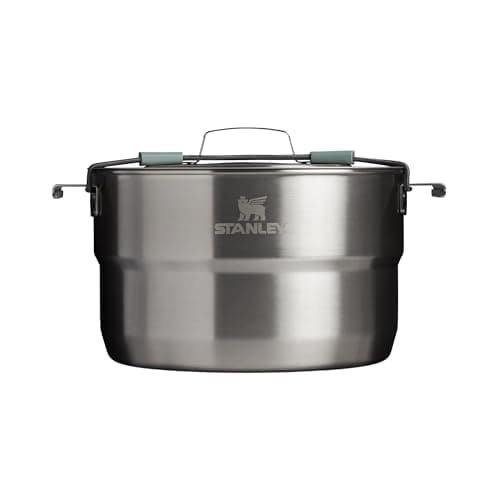
Stanley
4 lb 11 oz of 18/8 stainless for four, including a board, spatula, spoon and trivet. Less than one skillet.
#ad how this is funded · price as of October 27, 2026
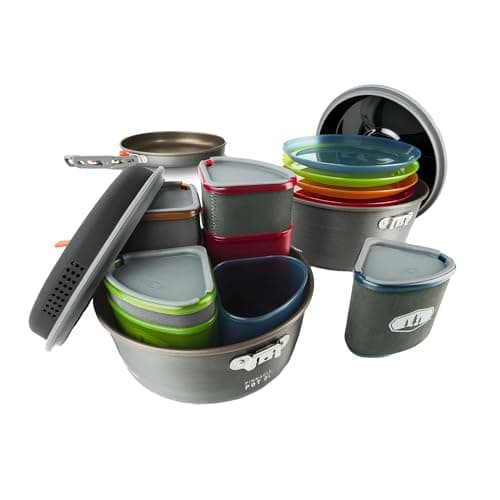
GSI Outdoors
3 lb 10.1 oz of aluminum for four, with mugs, bowls and plates. The middle path on weight and hot spots.
#ad how this is funded · price as of October 27, 2026
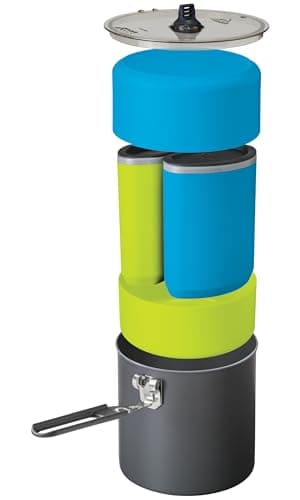
MSR
1 lb 5.8 oz for two, in hard-anodized aluminum. For anything you carry, this is the whole argument.
#ad how this is funded · price as of October 27, 2026
For car camping, yes. It sears, bakes over coals and evens out a cheap burner's hot spots, and it lasts forever. A 12 in skillet weighs about 8 lb, which is more than an entire four-person stainless cookset, so it is not a backpacking material.
Yes. Modern dish soap will not strip an established seasoning; that belief dates from lye-based soaps. What destroys cast iron is water left on it. Wash it, dry it immediately over heat, then wipe on the thinnest possible film of oil.
Aluminum conducts heat far better, so it has fewer hot spots and is lighter, and its non-stick coating is the wear item. Stainless is more durable and takes metal utensils, at more weight and worse heat distribution. For carrying, aluminum wins.
For car camping, a 12 in cast iron skillet for frying, searing and baking, plus a nesting stainless or aluminum set for boiling and anything acidic. For backpacking, one hard-anodized aluminum pot with a wide base and nothing else.
Every figure on this page comes from a published source. We have not tested this gear, so the numbers are the manufacturer's or the standard body's, not ours. How we research.