Four kinds of stove, and how to choose between them
The short answer
Upright canister stoves are the default: light, simple and good enough for three-season trips. Integrated systems boil faster and cook worse. Ultralight burners save grams and give up stability and wind performance. Liquid fuel stoves handle real cold and remote travel at a large weight penalty. Choose the category from your trips, then choose the model.
Almost everyone shopping for a first backpacking stove should buy an upright canister stove and stop thinking about it. The other three categories exist for specific problems: speed and fuel economy on rehydrated food, absolute minimum weight, and cold or remote conditions. If none of those describes your trips, the specialization costs more than it returns.
Compared on published numbers
Stove
Type
Weight
Output or boil time
Igniter
Fuel
MSR PocketRocket 2
upright canister
73 g
1 L in 3.5 min
no
threaded canister
SOTO WindMaster
upright canister
87 g with 4Flex
11,000 BTU / 3,260 W
yes
threaded canister
Jetboil Flash
integrated
13.1 oz
2 cups in about 100 sec
yes
isobutane-propane
BRS-3000T
ultralight canister
25 g
2,700 W
no
EN417 canister
MSR WhisperLite International
liquid fuel
11.2 oz
1 L in 3.5 min on white gas
no, priming required
white gas, kerosene, unleaded
Figures as published by each manufacturer, except the BRS-3000T, taken from a published retailer listing.
Boil times are published in still air at sea level with water at a stated starting temperature. Every one of them gets worse in wind, at altitude and with cold water. Treat them as a way to rank stoves against each other, not as a promise about your morning.
Fuel is the specification people forget
Canister stoves run on a sealed isobutane-propane mix that self-pressurizes. That pressure falls as the canister empties and as temperature drops, which is why a stove that boiled in three minutes on Friday takes five on Sunday morning at 30 F. A regulated stove like the WindMaster fights this; an unregulated one does not.
You also cannot fly with canisters, and you cannot always buy them. Liquid fuel solves both problems and introduces priming, maintenance and noise. The difference between the fuel types is worked through in propane vs butane camp stoves, and the safety side of running any of these near a tent is in carbon monoxide and stove safety when camping.
Work out your fuel before you leave, not at the trailhead
MSR publishes roughly 16 liters of water boiled per 227 g canister on the PocketRocket 2, or about 2 liters per ounce of fuel. Two people eating one hot dinner and one hot breakfast per day use about 1 liter of boiled water each per day. That is a 227 g canister covering roughly four days for two people, with the usual caveats: cold water, wind and altitude all push consumption up. Carry the arithmetic, not a guess.
What to buy alongside it
A windscreen matters more than the stove for every model here except the WindMaster and the Jetboil. Do not wrap a canister stove fully in foil, because trapping heat around the canister is genuinely dangerous; a partial screen on the windward side, or a rock, or your pack, does the job safely.
A pot with a wide, shallow base transfers heat better than a tall narrow one, and a lid cuts boil time by a meaningful margin at no weight cost. The sets worth looking at are in best camping cookware sets, and a foldable windscreen is a few dollars and a few grams.
Which to buy
Buy the PocketRocket 2 unless you have a specific reason not to. Buy the WindMaster if your camps are exposed or cold. Buy the Jetboil Flash if you never cook anything that is not a rehydrated bag. Buy the BRS-3000T only if you have already weighed everything else and understand what you are giving up. Buy the WhisperLite International for winter, altitude or international travel.
For a two-burner stove that cooks for a family at a campground — a completely different problem — see best camp stoves. The first-trip context for all of this is first backpacking trip.
The picks in full
1. Best overall
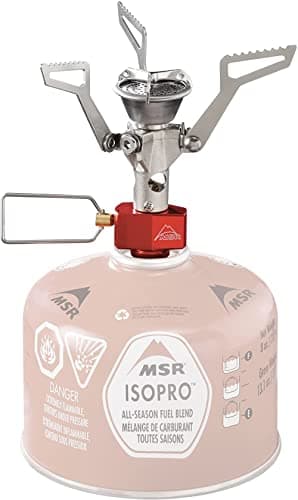
MSR PocketRocket 2
MSR
73 g, boils a liter in 3.5 minutes, and folds to 1.3 by 1.6 by 3.1 in with pot supports wide enough for a real pan.
MSR publishes a 2.6 oz / 73 g minimum weight, a 3.5 minute boil for 1 L on IsoPro, about 60 minutes of burn per 227 g canister, roughly 16 L of water boiled per canister, and a packed size of 1.3 by 1.6 by 3.1 in.
It is the default answer because nothing about it is compromised for a headline number. The pot supports hold a pan rather than only a mug, the simmer control is genuine, and 73 grams is close enough to the ultralight options that the difference disappears in a loaded pack.
The drawback
No igniter, so you carry matches or a striker and you will eventually need them in wind. The exposed burner also loses a lot of output without a windscreen.
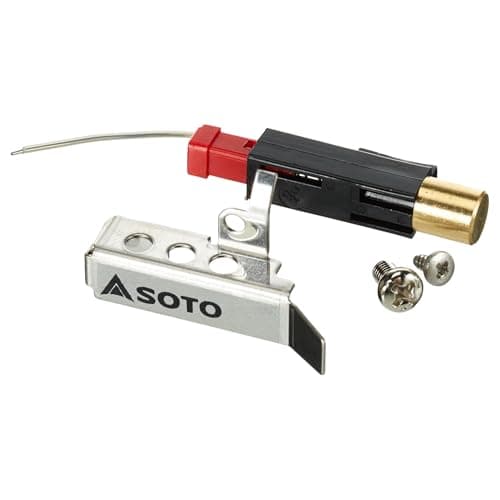
11,000 BTU from a recessed burner head with a micro regulator, at 87 g with the 4Flex supports.
SOTO publishes 2,800 kcal/h, 3,260 W and 11,000 BTU of output, 3.0 oz / 87 g with the 4Flex support and 2.12 oz / 60 g for the burner alone, a claim of boiling two cups in under two and a half minutes in strong gusty wind, about 1.5 hours of burn on a 250 g canister, and a stealth igniter on the burner post.
Two design decisions do the work. The burner head sits recessed inside the pot supports so wind cannot strip the flame sideways, and the micro regulator holds output steady as canister pressure falls with cold and use. That second one is why it keeps performing when a plain valve stove is fading.
The drawback
The pot supports detach. That is what makes it pack small, and it is also the part people lose. The stove is unusable without them.
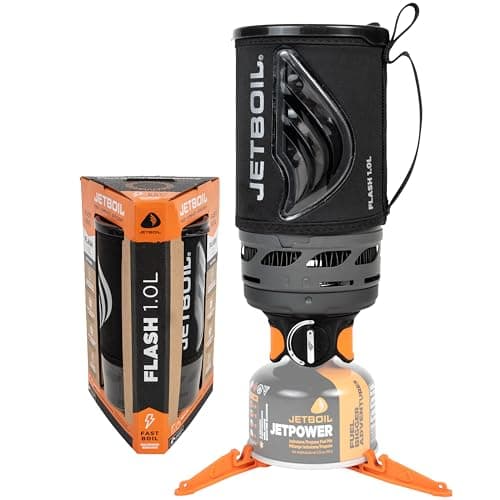
Two cups in about 100 seconds in a 13.1 oz integrated system that packs inside its own 1.0 L pot.
Jetboil publishes a boil of two cups in about 100 seconds, a 1.0 L capacity, a 13.1 oz system weight and a push-button igniter, running on isobutane-propane canisters.
The heat exchanger welded to the base of the pot is the entire reason for both the speed and the fuel economy. If dinner is a bag you pour water into, an integrated system is the right tool, and the weight penalty buys back fuel over a long trip.
The drawback
It boils; it does not cook. Simmering in an integrated system is awkward, it is a one-pot device, and 13.1 oz is heavy against a bare burner plus a titanium pot.
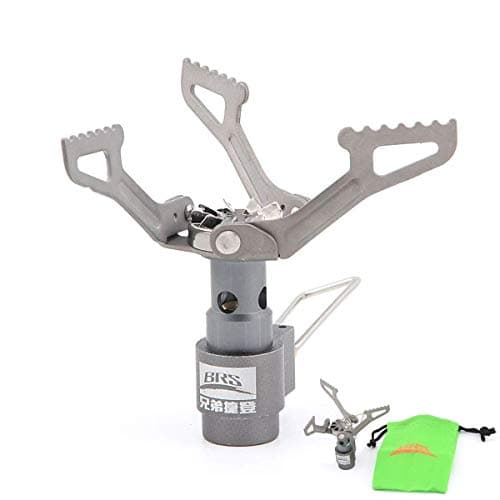
25 g of titanium producing 2,700 W, folding to 1.45 by 1.45 by 2.04 in.
Published specifications list 25 g of weight, 2,700 W of output, titanium alloy with copper and stainless components, a 3.34 by 3.34 by 2.69 in unfolded size, a 1.45 by 1.45 by 2.04 in folded size, and compatibility with any EN417 threaded canister.
Twenty-five grams is genuinely remarkable and it costs you everything else. Use it with a 0.75 L pot, in a sheltered spot, in summer, and it is excellent. Use it with a 2 L pot in wind and it is a bad decision made in a shop.
The drawback
Tiny pot supports, no wind protection at all and no igniter. It is a burner for a small pot in still air, and the thin supports have a reputation for softening under a heavy pot at full output.
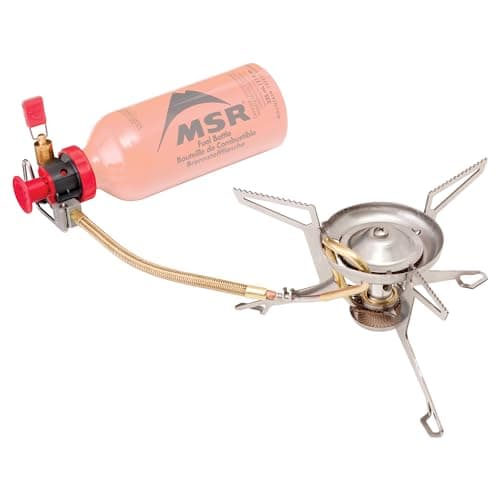
Burns white gas, kerosene or unleaded auto fuel, boils a liter in 3.5 minutes, and is field-maintainable with a shaker jet.
MSR publishes an 11.2 oz / 318 g minimum weight, 14.9 oz packaged, compatibility with white gas, kerosene and unleaded auto fuel, a 3.5 minute boil per liter on white gas and 4.4 minutes on kerosene, roughly 110 minutes of burn per 600 ml of white gas and 155 on kerosene, and a self-cleaning shaker jet. The pump, windscreen, heat reflector, parts kit and stuff sack are included; the fuel bottle is not.
Liquid fuel exists for two situations: real cold, where canister pressure collapses, and travel, where you cannot fly with canisters or buy them locally. Kerosene is available almost everywhere in the world, which is the reason this stove has the word International in its name.
The drawback
11.2 oz before the fuel bottle, which is not included. It needs priming, it is noisy, and it is far more stove than a summer weekend requires.
Published specs
Minimum weight
11.2 oz / 318 g
Packaged weight
14.9 oz / 423 g
Fuels
white gas, kerosene, unleaded auto fuel
Boil time, 1 L
3.5 min white gas; 4.4 min kerosene
Burn time per 600 ml
110 min white gas; 155 min kerosene
Included
pump, windscreen, heat reflector, parts kit, stuff sack
QWhat is the best backpacking stove for a beginner?
An upright canister stove. The MSR PocketRocket 2 publishes 73 g and a 3.5 minute boil per liter, with pot supports wide enough for a real pan. It is simple, light, and does not specialize in a way that costs you elsewhere.
QHow much fuel does a backpacking stove use?
MSR publishes about 16 liters boiled per 227 g canister for the PocketRocket 2, or roughly 2 liters per ounce of fuel. Two people using about a liter of boiled water each per day get roughly four days from one canister, less in wind, cold or at altitude.
QDo I need a wind-resistant backpacking stove?
If you camp above the treeline or on exposed ground, yes. Published boil times are measured in still air, and an exposed burner loses a lot of output in wind. Recessed burner designs like the SOTO WindMaster address it directly; everything else needs a windscreen or shelter.
QIs a Jetboil better than a regular canister stove?
For boiling water, yes: it is faster and more fuel efficient because of the heat exchanger on the pot. For actual cooking, no. Integrated systems simmer poorly and only work with their own pot, so they suit rehydrated meals rather than real food.
How we picked
Everyone else in this category will tell you they tested twenty of these. We have not tested any of them, and we would rather say so than pretend. There is no gear closet here and no test lab.
What we did instead: pulled the published specifications from each manufacturer's own spec sheet or manual, named the standard behind every rating so you can check what it actually promises, did the arithmetic that turns a spec into a decision, and pulled today's real retail price rather than quoting one from memory. Every pick states a drawback, because a list where nothing is wrong with anything is an advert.
The limits of that method, stated plainly: published specs do not capture zipper quality, seam durability, or how a tent behaves at 2am in a storm. Where that matters, we say so on the pick. The full method is here.