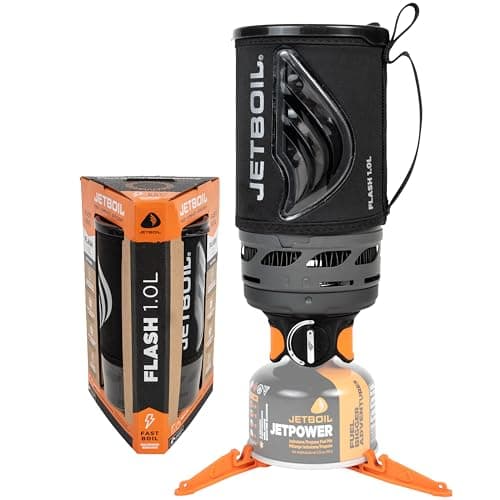
Jetboil Flash 1.0 L
Jetboil
Boils about 1 L in 100 seconds. Most backpacking food needs hot water rather than cooking, which is exactly what this does.
$144.99 · Check price on Amazon
#ad how this is funded · price as of October 23, 2026
Food is the heaviest thing in a backpack after water, and it is the only heavy thing that gets lighter every day. Planning it by weight rather than by meal changes the whole pack.
Trail & Tarp earns a commission from qualifying purchases made through links on this page, at no extra cost to you. Full disclosure.
The short answer
The working figure for backpacking food is 1.5 to 2 lb per person per day, and the metric that gets you there is calories per ounce. Aim for 100 to 125 calories per ounce across the food bag; anything much below that is carrying water and packaging. A day of food that hits 125 cal/oz weighs about 1.4 lb for 2,800 calories.
That single ratio is what separates a heavy food bag from a light one. A tin of beans is roughly 25 cal/oz because most of it is water; olive oil is about 250. Most of the work in backpacking food planning is moving the average upward without ending up with a bag of nuts and oil.
| Food | Rough calories per ounce | Role |
|---|---|---|
| Olive oil, butter | About 250 | Added to meals to raise the whole bag's average |
| Nuts, nut butter | 160-180 | Snacks and calorie density |
| Cheese, hard salami | 110-140 | Real food that survives a few days unrefrigerated |
| Dehydrated meals | 110-130 | Convenience; check the figure, they vary widely |
| Instant noodles, couscous, instant rice | 100-110 | Cheap base carbohydrate |
| Bars | 100-130 | Convenient, and easy to over-rely on |
| Fresh fruit, tinned food | Under 40 | Day one only, if at all |
Repack everything out of its box into zip bags at home, with the cooking instructions cut out and put in the bag. Boxes and outer packaging are pure weight and pure rubbish that you then have to carry out.
For one or two people, this is a short list and it should stay short.
| Item | Why | Published spec |
|---|---|---|
| An integrated canister stove | Boils fast, uses little fuel, minimal fuss | Jetboil Flash: 1 L in about 100 seconds |
| A two-person cookset, if sharing | One pot, one pan, mugs and bowls | MSR Trail Lite Duo: 1 lb 5.8 oz, 2.0 L pot |
| One long spoon each | Reaches the bottom of a freeze-dried bag | Titanium or polycarbonate, both fine |
| A mug each | Doubles as a bowl and a measure | Insulated is worth the weight in cold weather |
| A lighter, plus a backup | Piezo igniters fail | Keep the backup in a different bag |
| A small scrubber and a dry cloth | Cleaning with almost no water | Wipe first, wash second |
A Jetboil Flash is the standard first choice because it does one thing extremely well: boiling water, which is what most backpacking food needs. A MSR Trail Lite Duo publishes 1 lb 5.8 oz for a complete two-person set with a 2.0 L pot, strainer lid, two mugs and two bowls, which is the right kit if you want to actually cook rather than rehydrate. The stove comparison is in best camp stoves.
Fuel: count boils, not days
Plan fuel in liters of water boiled rather than in nights. A rough working figure is 2 to 3 liters of boiled water per person per day for coffee, dinner and a hot drink, and a small canister covers somewhere around 10 to 12 liters in mild conditions. Cold weather, wind and starting with very cold water all increase consumption significantly. Take one more small canister than the arithmetic says, because running out is a cold dinner and there is no resupply. The fuel type argument is in propane vs butane camp stoves.
Food planning and water planning are the same problem, because most backpacking food is rehydrated. Two liters a day for drinking plus another one to two for cooking and a hot drink is the working figure, and it is all coming from the source rather than from a tap.
A Sawyer Squeeze publishes 0.1 micron absolute at 3 oz, and a Katadyn BeFree publishes 0.1 micron at 63 g with up to 2 L per minute. Carry chemical tablets as the backup that weighs nothing, and know what each method does and does not remove — see water filter vs purifier vs tablets.
Everything scented goes into the storage system every night: food, rubbish, cookware, the scrubber, toothpaste and sunscreen. In areas requiring bear-resistant storage that means an IGBC-certified container — a BearVault BV475 publishes 9.3 L for about 5 to 6 days of food for one, and an Ursack Major publishes about 10.65 L at 7.6 oz.
Size the container for the whole scented list rather than the food alone, which is the mistake that leaves people with a full canister on day two. The requirement varies by district and it is worth checking before you pack — best bear canisters and food storage.
Weigh the whole food bag at home before you go, and compare it to the 1.5 to 2 lb per person per day figure. If it is well over, the problem is almost always packaging, tinned food, or three days of contingency. The rest of the pack list is in the beginner backpacking gear list.
Jetboil
Boils about 1 L in 100 seconds. Most backpacking food needs hot water rather than cooking, which is exactly what this does.
#ad how this is funded · price as of October 23, 2026
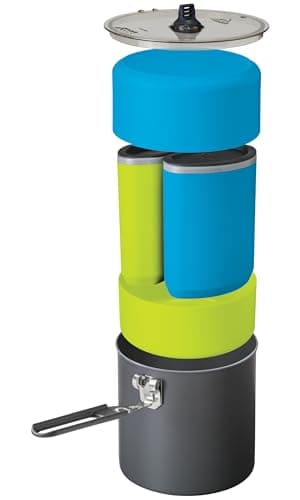
MSR
1 lb 5.8 oz for two: a 2.0 L hard-anodized pot with strainer lid, two mugs and two bowls. The kit for actually cooking.
#ad how this is funded · price as of October 23, 2026
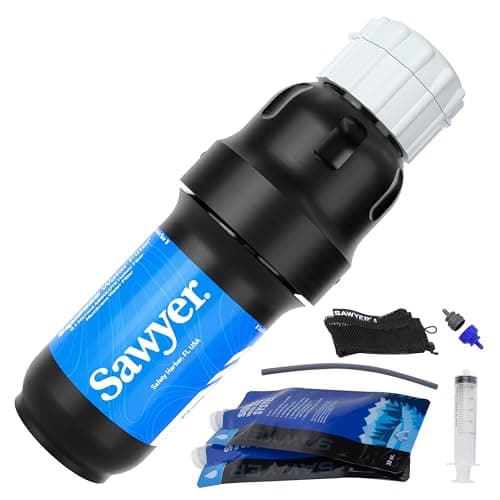
Sawyer
0.1 micron absolute at 3 oz. Food planning and water planning are the same problem when the food is rehydrated.
#ad how this is funded · price as of October 23, 2026
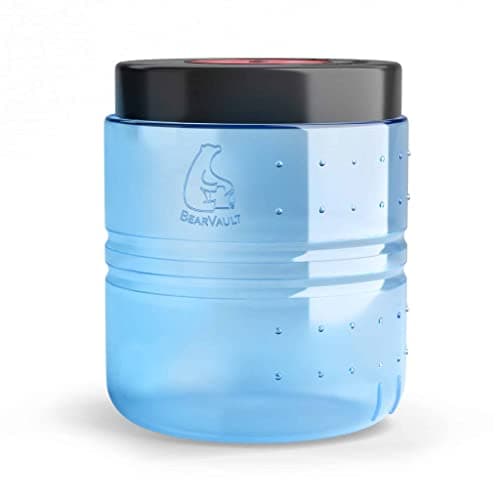
BearVault
9.3 L, IGBC certified, about 5-6 days for one person. Size it for the whole scented list, not just the food.
#ad how this is funded · price as of October 23, 2026
1.5 to 2 lb per person per day, and the metric that gets you there is calories per ounce. Aim for 100 to 125 cal/oz across the food bag; a day hitting 125 cal/oz weighs about 1.4 lb for 2,800 calories.
Count boils rather than nights. Plan 2 to 3 liters of boiled water per person per day for coffee, dinner and a hot drink; a small canister covers roughly 10 to 12 liters in mild conditions. Cold, wind and very cold source water all increase it significantly.
An integrated canister stove, a pot or a two-person cookset if sharing, a long spoon and a mug each, a lighter with a backup, and a small scrubber and cloth. Anything beyond that is being carried rather than used.
Yes. Move everything out of boxes and outer packaging into zip bags, with the cooking instructions cut out and included. Packaging is pure weight, and it becomes rubbish you have to carry out again.
Every figure on this page comes from a published source. We have not tested this gear, so the numbers are the manufacturer's or the standard body's, not ours. How we research.