Three bins, grouped by system and left packed between trips: kitchen, sleep, and camp. Everything that is used for cooking lives in the kitchen bin permanently. Everything for sleeping lives in the sleep bin. Lights, pegs, mallet, tarp, chairs and repair kit live in the camp bin. The trip becomes a fifteen-minute load rather than a two-hour hunt, and the checklist only has to cover food, clothes and water.
This is the single change that turns a household that camps twice a year into one that camps six times, and it has nothing to do with which box you buy. The barrier to a spontaneous weekend is not money and it is not time away, it is the packing. If the kit is already packed, a Friday evening departure is possible. If it is spread over a loft, a garage and three cupboards, it is not.
Bin
Capacity
Dimensions
Sealed?
Best used as
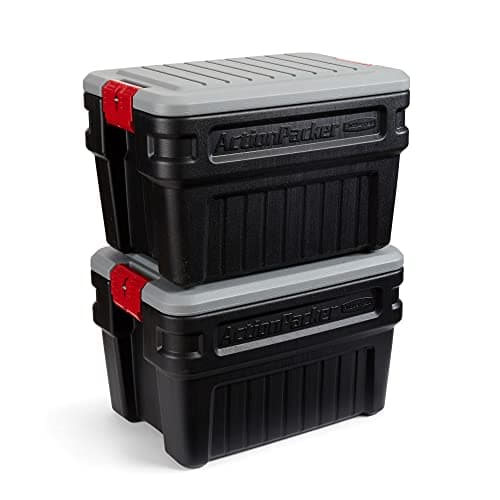
Rubbermaid ActionPacker 24 Gal
24 gal
26 x 18.5 x 17 in
No, but sheds water
Kitchen bin
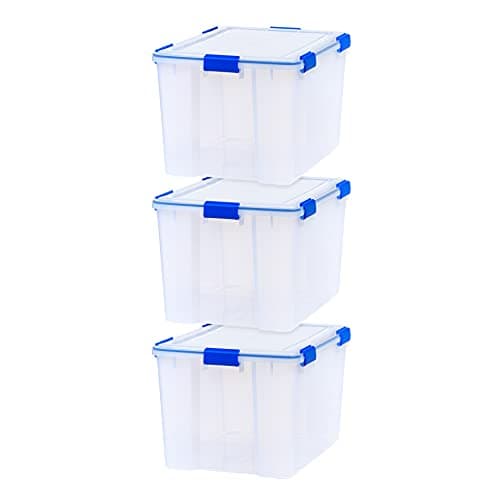
IRIS WeatherPro 74 Qt
74 qt
23.6 x 17.8 x 14.5 in
Foam gasket
Sleep bin
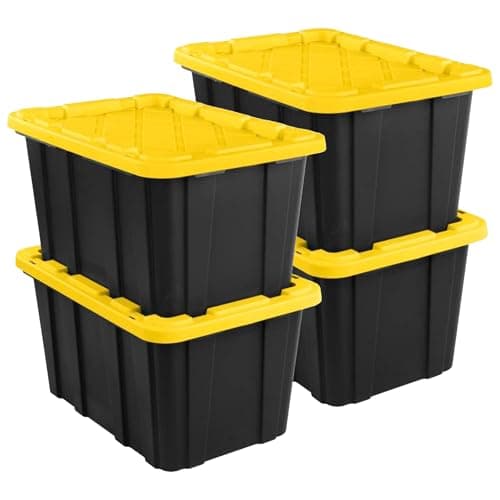
Sterilite 27 Gal Industrial
27 gal
30.5 x 20.6 x 15.25 in
No
Camp and bulk bin
All figures as published by the manufacturers. Every bin here publishes a 50 lb class load limit or lower.
What goes in each bin
Kitchen bin. Stove, fuel (see the caveat below), pots, plates, mugs, cutlery, chopping board, knife, washing-up bowl and cloth, biodegradable soap, bin bags, matches or a lighter, foil, tea towel, and a small bottle of oil. Everything except perishable food, which goes in the cooler on the day.
Sleep bin. Sleeping bags, pillows, spare blanket, and the pump if you use an airbed. Store bags uncompressed — a bag left stuffed in its sack for a year loses loft permanently, which is one of the main reasons people conclude their bag “stopped working.” See how to wash and store a sleeping bag.
Camp bin. Lantern and headlamps with spare batteries, mallet, spare pegs and guy line, tarp, repair tape, first aid kit, hand sanitizer, a length of cord, and the boring things everybody forgets: a bucket, a dustpan, and a roll of bin bags.
Two things that must not live in a bin
Gas canisters and liquid fuel. Fuel should be stored where it is ventilated and away from heat, not sealed in a plastic box in a hot garage or a car in summer. Keep fuel separate and load it last. Anything damp. A tent, tarp or towel packed away wet will mildew inside a sealed bin within days, and the smell does not come out. Dry everything fully before it goes back in, which is the whole argument of how to clean and store a tent.
Load limits are real
Both the Rubbermaid and the IRIS publish a 50 lb capacity, and a kitchen bin gets there surprisingly fast once cast iron and full water containers are involved. Exceeding it does not usually cause a dramatic failure; it causes the handles to tear out on the third trip, which is worse because it happens in a car park in the dark. If a bin is heavy enough that you brace before lifting it, split the contents across two.
Labels, and one that lists what is missing
Write the contents on the lid, not the side — the side faces a wall in storage and the lid faces you. Then keep one index card in each bin listing what is meant to be in it, so an end-of-trip check takes thirty seconds and you discover the missing tent peg at home rather than at dusk on a hillside. The car camping checklist is grouped the same way for exactly this reason, and it prints cleanly.
The picks in full
1. Best all-round camping bin
Rubbermaid ActionPacker 24 Gal
Rubbermaid
24 gal with a double-walled lid that sheds water, lockable latches, and a published temperature range of 0 to 100 F.
Rubbermaid publishes 24 gal (90.8 L), outside dimensions of 26 x 18.5 x 17 in, inside dimensions of 20 x 14.5 x 15 in, a 50 lb load limit, a 24.2 lb empty weight, a double-walled lid designed to stop water pooling and accept a padlock, and impact resistance rated across 0 to 100 F.
The double-walled lid is the feature that matters at a campsite. A bin lives outdoors for the whole trip, usually on grass, usually with something stacked on it, usually in at least one rain shower. A flat lid holds a puddle that pours into the box the moment you open it. A domed, ribbed lid sheds it.
Note the gap between the outside and inside dimensions: six inches of length and four of width disappear into the wall thickness that makes it tough. That is the trade this box makes, and it is the right one for a bin that gets dragged across gravel rather than lifted politely.
The drawback
24.2 lb empty, and a 50 lb load limit that a full kitchen bin will reach faster than you expect. It is also the bulkiest here in a car.
2. Best sealed bin, for anything that must stay dry
IRIS USA WeatherPro 74 Qt
IRIS USA
74 qt with a foam gasket in the lid and six buckle latches, in a footprint that fits a car boot better than a 24 gal box.
IRIS publishes 74 qt, dimensions of 23.6 x 17.8 x 14.5 in, a 50 lb weight capacity, a foam gasket in the lid, six buckle latches, and a reinforced lid rated for stacking.
The gasket is the reason to buy this one, and it is worth being precise about what it buys you. It keeps out driving rain, dust, and the damp that gets into a garage over a winter. It is not a dry box, it is not submersible, and if you leave it open in a downpour the gasket is irrelevant. What it does mean is that the bin holding your sleeping bags can sit outside the tent in the rain and the bags will be dry in the morning.
The lower profile is a real advantage in a car. At 14.5 in tall it stacks two-high under a hatchback parcel shelf where a 17 in bin does not, which is exactly the kind of detail that decides whether the system survives contact with your actual vehicle.
The drawback
A gasket is not a submersion rating, and buckle latches are the part that breaks first on a plastic box. 50 lb limit, same as the Rubbermaid.
27 gal in a long, low 30.5 x 20.6 in footprint, with a drip-resistant recessed lid and keyholes for tie-downs.
Sterilite publishes 27 gal (102 L), assembled dimensions of 30.5 x 20.6 x 15.25 in, a drip-resistant lid, recessed lids for stacking stability, channeled walls for crush resistance, and a grooved lid with keyholes intended as tie-down points.
This is the largest capacity here and the shape is the point: long and low rather than deep. Bulky, awkward items — folding chairs, a tarp, the fire kit, a windbreak — do not stack tidily in a deep box, and a deep box means the thing you want is always at the bottom.
The tie-down keyholes are the feature nobody notices until they need it. A loaded bin sliding around a boot on a mountain road is genuinely dangerous, and a bin you can strap down is a bin you can put on a roof rack or in an open truck bed.
The drawback
No gasket and no lock point, so it is a bulk box rather than a secure or sealed one. The long footprint does not suit a small hatchback.
In labeled bins grouped by system rather than by size: kitchen, sleep and camp. Leave them packed between trips so a departure is a fifteen-minute load. Store sleeping bags uncompressed, keep fuel out of sealed boxes, and never pack anything away damp.
QAre plastic bins waterproof for camping?
Most are not. A gasketed bin such as the IRIS WeatherPro keeps out rain and dust but is not submersible. A double-walled or domed lid, like the Rubbermaid ActionPacker's, sheds standing water, which is the failure that actually soaks gear at a campsite.
QHow much weight can a storage bin hold?
Both the Rubbermaid ActionPacker 24 Gal and the IRIS WeatherPro 74 Qt publish a 50 lb load limit. Handles and latches, not the box walls, are what fail when that is exceeded.
QShould I keep camping gear packed all year?
Yes for hardware, no for anything damp or compressible. Stoves, cookware, lights and pegs are better left packed. Sleeping bags should be stored loose in a large cotton sack, and tents must be bone dry before they go into a sealed box.
How we picked
Everyone else in this category will tell you they tested twenty of these. We have not tested any of them, and we would rather say so than pretend. There is no gear closet here and no test lab.
What we did instead: pulled the published specifications from each manufacturer's own spec sheet or manual, named the standard behind every rating so you can check what it actually promises, did the arithmetic that turns a spec into a decision, and pulled today's real retail price rather than quoting one from memory. Every pick states a drawback, because a list where nothing is wrong with anything is an advert.
The limits of that method, stated plainly: published specs do not capture zipper quality, seam durability, or how a tent behaves at 2am in a storm. Where that matters, we say so on the pick. The full method is here.