How to Keep Kids Warm Camping, and Why Their Bags Do Not Work
A child is a small body with a large surface area and a bag sized for someone twice their volume. Both of those facts work against them, and both have cheap fixes.
Trail & Tarp earns a commission from qualifying purchases made through links on this page, at no extra cost to you. Full disclosure.
Why children get colder than adults in the same tent
The short answer
Three things stack against a child: a higher surface-area-to-volume ratio, so they lose heat faster; less muscle mass, so they generate less; and an adult-length bag with a large empty volume their body has to heat. Sleeping bag temperature ratings under ISO 23537 are measured with a standardized adult manikin. No part of that test describes a seven-year-old.
The empty-volume problem is the one most parents miss. A sleeping bag works by trapping a layer of air that your body warms. Put a small child in a bag sized for an adult and they are heating a volume two or three times bigger than the one around them, with a body that produces less heat to start with. The bag is not defective. It is the wrong size, in the same way a coat four sizes too big is not warm.
The fixes, ranked by how much they help
Fix
Why it works
Effect
Put a real insulating pad under them
Ground conduction is the biggest heat loss, and body weight crushes bag insulation flat
Large
Shorten the bag's empty volume
Less air for a small body to heat
Large
Dry base layer and a hat, changed at bedtime
Damp day clothes wick heat all night
Large
Add a blanket over the bag, not inside it
Adds loft without compressing what is there
Moderate
Warm drink and a snack before bed
Digestion and hydration both raise heat output
Moderate
Get them off the tent floor onto a cot
Air gap plus distance from cold ground
Moderate, if a pad goes on top
Pee before bed, and make it easy at 2am
The body spends energy keeping a full bladder warm
Small but reliable
In practice the first three account for most of the difference.
Fix one: the pad, not the bag
This site's central argument applies with more force to children than to adults. Body weight crushes the insulation underneath you flat, so whatever the bag is rated to, the ground gets at you through the compressed side. R-value measured under ASTM F3340 is the number to read, and it is additive — stack two pads and the values sum.
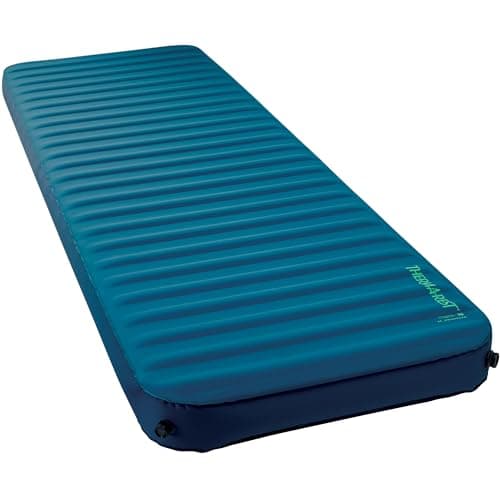
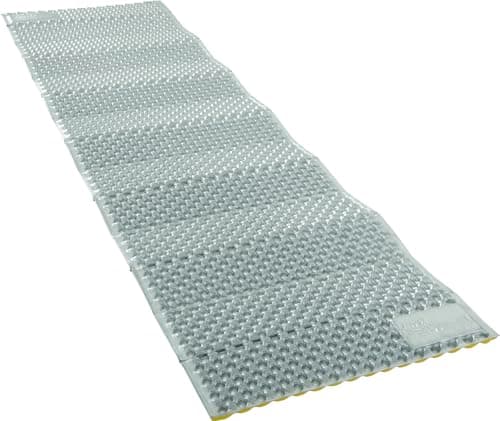
For a child on a summer night, R 2 is enough: a Therm-a-Rest Z Lite Sol publishes R 2.0 at 14 oz and is indestructible, which matters when the user is nine. For shoulder-season or cold ground, a self-inflating pad like the MondoKing 3D at R 7.0 and 4.25 in thick is a different night entirely. If your child is currently sleeping on an uninsulated air bed, that single change will do more than every other item on this page combined — the reason is in why you get cold in a sleeping bag.
Fix two: make the bag the right size
You do not need to buy a child-specific bag, though they exist and they work. You need to remove the empty volume from the bag you already have. Three ways, cheapest first:
Stuff the foot end. Put a dry fleece, spare clothes or a small dry bag into the bottom of the bag. It fills the space and doubles as tomorrow's clothes, pre-warmed.
Fold and clip the bottom. A couple of clothes pegs or a strap around the bag a foot below their feet shortens it without damaging anything.
Use a bag liner. A fleece or thermal liner both adds warmth and takes up slack, and it is far easier to wash than the bag.
What not to do: put two children in one adult bag to share heat. It sounds sensible and it produces two cold children, because neither can close the bag around themselves and the combined empty volume is enormous.
The bedtime clothing change is not optional
Children sweat through the day and then get into a sleeping bag in damp clothes, and damp fabric moves heat away from skin roughly twenty times faster than dry fabric. Carry a dedicated set of sleep clothes — base layer top and bottoms, dry socks, a hat — that never leave the tent and are never worn during the day. Changing into them is the single cheapest warmth intervention available, and it costs nothing but the discipline of doing it. The layering logic is in how to layer for camping.
Fix three: add loft on top, not underneath
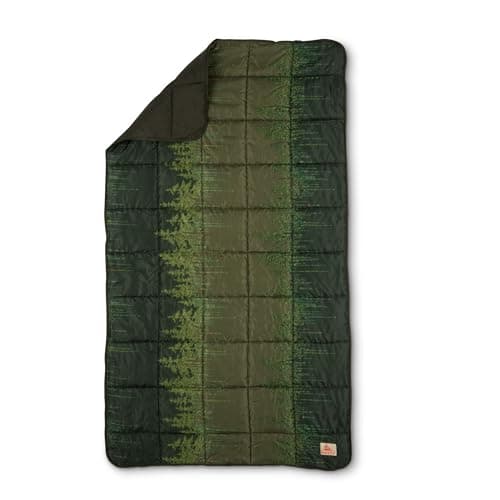
A blanket laid over the top of a sleeping bag adds insulation exactly where it can still work. The same blanket inside the bag compresses the fill and can make things worse. A Kelty Bestie Blanket at 1.54 lb with CloudLoft synthetic fill, or a Therm-a-Rest Argo at 78 by 72 in with snap loops designed to join a sleep system, both do this job and both stay useful around the fire in the evening.
For a cold snap, the emergency version is a second sleeping bag opened flat and laid over the top of everyone. It looks improvised because it is, and it works.
Cots, and when they help or hurt
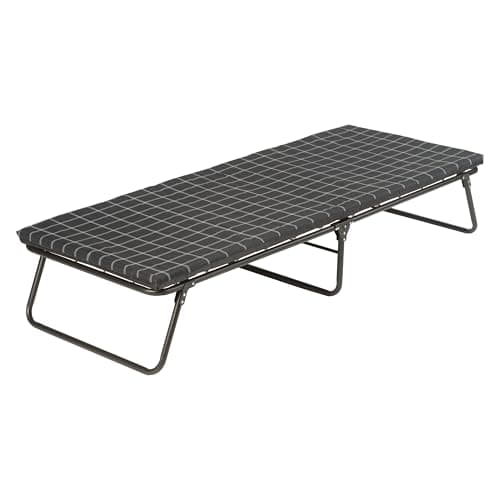
A cot lifts a child off the ground and creates an air gap, which is good. It also exposes their underside to moving air on all sides, which is bad, and the fabric bed itself has close to no insulation value. A cot without a pad on it is colder than a pad on the floor.
A Coleman ComfortSmart Deluxe Cot ships with a foam mattress, which is why it is the version worth having for children; at 80 by 30 in and rated to 300 lb it will still be in service when they are teenagers. The comparison across all three sleeping surfaces is in air mattress vs sleeping pad vs cot.
The night itself
Two practical habits that make more difference than they should. First, put a headlamp or a small lantern where each child can reach it without standing up — a child who is cold and cannot find the light will lie there getting colder rather than call out. Second, have a plan for the 2am toilet trip, because the alternative is a child holding on for three hours and losing heat doing it.
Finally, check them before you go to sleep yourself. Kicked-off bags are the most common cause of a cold child and the easiest thing in the world to fix at 11pm. The rest of the family camping routine is in family camping with kids, and the packing list that makes the clothing change possible is the family camping checklist.
The gear this page points to
Therm-a-Rest MondoKing 3D
Therm-a-Rest
R 7.0 and 4.25 in thick. If a child is currently on an uninsulated air bed, this one swap changes the night more than anything else here.
QWhy does my child get cold camping when I do not?
Children have a higher surface-area-to-volume ratio so they lose heat faster, less muscle mass so they generate less, and they are usually in a bag sized for an adult, which leaves a large volume of air for a small body to heat. Sleeping bag ISO ratings are measured with an adult manikin.
QWhat R-value pad does a child need?
R 2 is enough for summer camping on grass, and a Therm-a-Rest Z Lite Sol publishes R 2.0. For cold ground or shoulder season, aim for R 5 or more; the Therm-a-Rest MondoKing 3D publishes R 7.0. R-values are additive, so stacking two pads sums them.
QCan two children share one adult sleeping bag to stay warm?
No. Neither child can close the bag around themselves and the combined empty air volume is very large, so both end up colder. Give each child their own bag and shorten the foot end with spare clothing instead.
QShould a blanket go inside or over a sleeping bag?
Over the top. A blanket inside compresses the bag's own insulation and can make things worse. Laid on top it adds loft where the loft still works, which is why camping blankets with snap loops exist.
Sources
Every figure on this page comes from a published source. We have not tested this gear, so the numbers are the manufacturer's or the standard body's, not ours. How we research.