Trail & Tarp earns a commission from qualifying purchases made through links on this page, at no extra cost to you. Full disclosure.
First, confirm it is actually a hole
The short answer
A pad that goes soft overnight but holds air for hours is usually cooling air, not leaking. Air contracts as the temperature drops, so a pad inflated in a warm tent at 9pm is genuinely softer at 3am with nothing wrong with it. A pad that is flat within an hour has a hole. Top it up before sleeping and see whether the problem repeats before you go hunting.
Two other false alarms. A valve left slightly open leaks slowly and looks exactly like a pinhole. And a self-inflating pad that has not been opened for months takes several minutes and a few breaths to reach full loft — it is not failing, it is waking up.
Finding the hole
In order of how well they work:
Soapy water, at home. Inflate the pad hard, then sponge on water with a little washing-up liquid, panel by panel. Bubbles form at the leak within seconds. This is the most reliable method by a wide margin.
Submerge it, in sections. A bath works. Press each area under and watch for a bubble stream. Dry the pad completely afterwards, inside and out, before storing.
Listen and feel, in the field. Inflate hard, hold the pad close to your ear and press. A pinhole hisses faintly, and a wet lip or the back of a hand feels the jet.
Check the usual suspects first. Seams, the valve base, and anywhere the pad folds when packed. Most failures are at one of the three.
Mark the hole the moment you find it — a circle in permanent marker, or a piece of tape beside it. Pinholes are extraordinarily easy to lose again, and finding the same one twice is the most demoralising part of the job.
Patching it
Where you are
What to use
How long it lasts
At camp, needs to work tonight
Adhesive patch from the pad's own kit, or strong tape
The trip, if the surface was dry and clean
At camp, no kit
Tape both sides; sleep on a foam pad if you have one
One or two nights
At home, permanent
Fabric adhesive plus a patch, cured under a weight overnight
Years
Seam leak
Seam-grade urethane adhesive worked into the seam
Variable; sometimes not fixable
Valve leak
Replacement valve from the maker, or a warranty claim
As new
Match the repair to the situation. The field fix and the permanent fix are different jobs.
The permanent method, in five steps. Deflate fully. Clean the area with rubbing alcohol and let it dry completely — this is the step people skip and it is why patches lift. Apply a thin even layer of urethane adhesive slightly wider than the patch. Press the patch down from the center outwards to push air out. Weight it flat and leave it overnight, then inflate and test with soapy water again.
Most pads ship with a small repair kit, and most people never find out where it lives. Check before the trip. If yours is missing, a pad repair kit weighs almost nothing and belongs in the same bag as your general repair kit.
Do not blow a pad up with your mouth, if you can avoid it
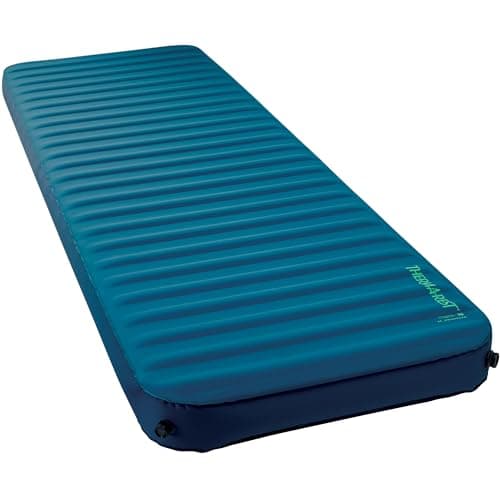
Breath carries moisture into the pad, and moisture inside insulation is what grows mould and eventually delaminates the internal baffles. Most modern pads ship with a pump sack for exactly this reason. If you have inflated by mouth for years, leave the pad open and warm for a day to dry it out. Self-inflating pads such as the Exped MegaMat 10 and the Therm-a-Rest MondoKing 3D do most of the work themselves and only need a few breaths to top off.
Delamination, which is not repairable
If a pad develops a bulge — a raised bubble or a section that inflates fatter than the rest — the internal baffles that hold its shape have come unstuck. That is delamination, it usually comes from heat or from moisture trapped inside, and there is no reliable home repair because the failure is inside a sealed chamber.
A delaminated pad still holds air and still insulates, so it is not immediately useless; it is just lumpy and it will get worse. Most manufacturers treat delamination as a warranty issue if the pad is not old, so contact them before writing it off.
Preventing the next one
Three habits cover almost all of it. Clear the ground properly before pitching — on hands and knees, by feel — because a pine cone or a thorn under a 20D floor finds a pad within one night. Use a groundsheet under the tent, which is half the argument in do you need a tent footprint. And store pads unrolled with the valve open, so no moisture is sealed inside and the foam is not permanently compressed.
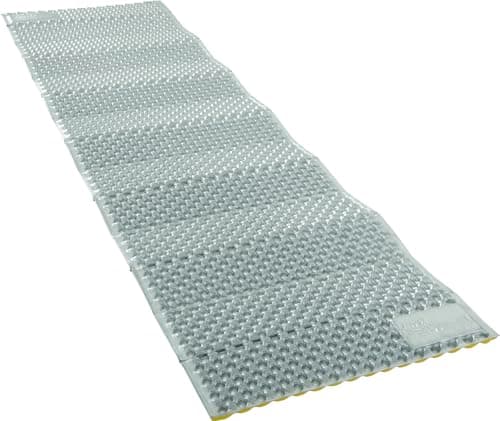
Carrying a foam pad as well is the other insurance. A Therm-a-Rest Z Lite Sol publishes R 2.0 at 14 oz and cannot puncture at all, which is why many people take one alongside an inflatable rather than instead of it. Stacked, their R-values add, per R-value explained.
When to stop repairing
A pad with several patches that still holds air is fine, and patches do not measurably reduce insulation. Retire it when the leaks start appearing along seams rather than in panels, when the fabric has gone stiff or crackly, or when a bulge appears. At that point you are chasing a material that has aged out, and the options are in the sleeping pad roundup. A pad with a hole is also the one thing this site says never to buy secondhand, for exactly the reasons on this page — see how to buy used camping gear.
The gear this page points to
Therm-a-Rest Z Lite Sol
Therm-a-Rest
R 2.0 at 14 oz with nothing to puncture. The backup that means a failed inflatable is an inconvenience rather than a ruined night.
Inflate it hard and sponge on soapy water panel by panel; bubbles appear at the leak within seconds. Submerging sections in a bath works too. Check the seams, the valve base and the fold lines first, because most failures are at one of those three.
QWhy does my sleeping pad go soft overnight without a leak?
Air contracts as it cools, so a pad inflated in a warm tent at 9pm is genuinely softer at 3am with nothing wrong. A pad that goes flat within an hour has a hole; one that just softens usually does not. Also check the valve is fully closed.
QHow do you patch a sleeping pad permanently?
Deflate fully, clean the area with rubbing alcohol and let it dry, apply a thin layer of urethane adhesive slightly wider than the patch, press the patch from the center outwards, then weight it flat overnight. Skipping the cleaning step is why patches lift.
QCan you repair a sleeping pad that has a bulge?
No. A bulge means the internal baffles have delaminated inside a sealed chamber, usually from heat or trapped moisture, and there is no reliable home repair. Contact the manufacturer, because many treat delamination as a warranty issue.
Sources
Every figure on this page comes from a published source. We have not tested this gear, so the numbers are the manufacturer's or the standard body's, not ours. How we research.