Camp Gear Repair Kit Essentials: Six Items That Save Trips
Trips do not usually end dramatically. They end because a pole snapped, a zip separated or a pad went flat, and each of those is a five-minute fix with the right ounce of kit.
Trail & Tarp earns a commission from qualifying purchases made through links on this page, at no extra cost to you. Full disclosure.
The six
The short answer
A pole repair splint, strong tape, adhesive patches for pads and fabric, spare buckles and cord, a needle and heavy thread, and zip ties. Together they weigh a few ounces, fit in a sandwich bag, and cover the great majority of failures that end camping trips. Add a multi-tool with pliers and you can fix nearly everything else.
Item
What it fixes
Rough weight
Pole repair splint
A snapped or split tent pole
About 1 oz
Strong tape (Tenacious Tape or gaffer)
Torn fabric, torn fly, split boot, temporary anything
1-2 oz on a card
Adhesive patches and urethane adhesive
Sleeping pad pinholes, tent floor punctures
1-2 oz
Spare buckles and 2 m of cord
A snapped hip belt or pack buckle; a lost guy line
1 oz
Heavy needle and strong thread
A ripped seam, a strap pulled off, a torn pocket
Under 1 oz
Zip ties, several sizes
Almost anything, badly but immediately
Under 1 oz
The whole kit is a few ounces, and every line item corresponds to a specific failure that ends trips.
Pole splint: the one that saves a night
A pole repair splint is a short alloy tube slightly wider than your tent pole. Slide it over the break, center it, and wrap both ends tightly with tape. The tent goes back up and the trip continues.
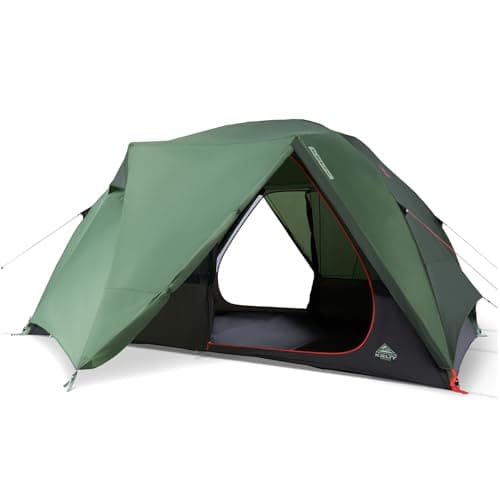
Many tents ship one in the pole bag and almost nobody knows it is there — check before your next trip. If yours does not have one, a splint kit costs less than a meal. It matters most on fiberglass poles, which splinter rather than bend: Kelty publishes 12.5 mm fiberglass mains on the Wireless 6, while a Naturehike Cloud Up 2 publishes one-piece 7001 aluminum, which bends and can often be worked straight. The materials comparison is in tent poles and stakes explained.
Tape, and which kind
Not all tape is equal for gear. Fabric repair tape designed for outdoor materials sticks to nylon and polyester and stays stuck through rain; gaffer tape is stronger and leaves residue; duct tape is the worst of the three on technical fabric because the adhesive migrates and the backing degrades.
Carry a card of fabric repair tape rather than a roll, wrapped round a pencil or a lighter to save space. For a tear in a tent fly or a sleeping bag shell, tape both sides of the tear and round the corners of the patch so it does not peel.
Round every corner
Whether you are cutting tape, a fabric patch or a pad patch, round the corners. A square patch peels from its corners the first time anything catches it; a rounded one stays down. This is a thirty-second habit that roughly doubles how long a field repair lasts.
Pad and mattress patches
A flat sleeping pad at 2am is the most common gear failure in camping, and it is easy to fix if you can find the hole. Most pads ship with a small repair kit; carry it, plus urethane adhesive for a permanent repair at home.
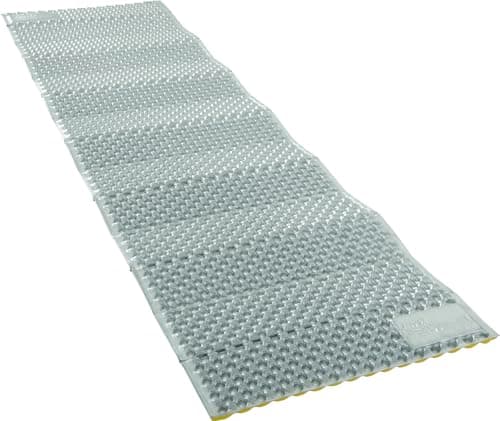
The field version is: find the leak, dry and clean the area as best you can, apply the adhesive patch, and weight it while it sets. The full method, including how to find a pinhole with soapy water, is in how to repair a sleeping pad. Carrying a closed-cell foam pad such as a Z Lite Sol as a backup is the other insurance, because foam cannot puncture at all.
Buckles and cord
Side-release buckles come in standard webbing widths — commonly 20, 25, 38 and 50 mm — so a snapped buckle is a replacement job rather than a written-off pack. Measure the webbing on your pack hip belt and sternum strap and carry a spare in that size.
Two meters of 2 mm cord covers a lost guy line, a broken shoulder strap lashing, a replacement zip pull and a dozen improvisations. Reflective cord is better, because tent guy lines are what people walk into at night — see how to pitch a tent in wind.
Needle and thread
A heavy needle and strong polyester thread fixes seams, reattaches straps and closes tears that tape cannot hold. Wind the thread around the needle and tape it, or push the needle into a cork; a loose needle in a bag finds a finger eventually.
The repair that most often needs it is a strap or a loop pulled off a pack, because the load goes through a small area and tape will not hold it. Sew a rectangle with a cross through it, which spreads load across the whole patch of fabric rather than along one line.
The tool that makes the kit work
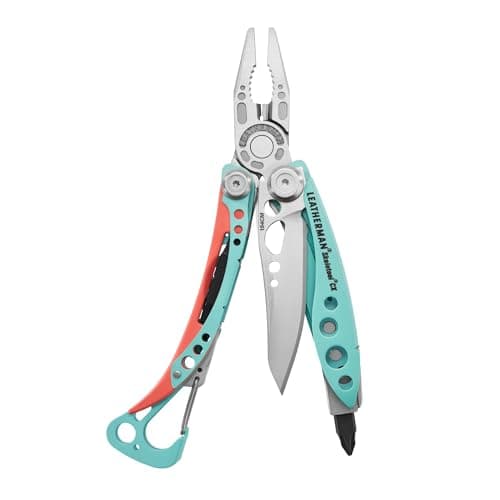
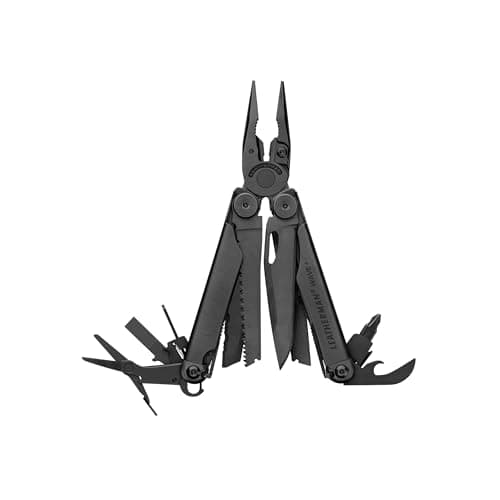
Pliers. A Leatherman Skeletool CX at 5 oz or a Wave+ at 8.5 oz turns several of these repairs from awkward to routine: straightening a bent stake, gripping a stuck stove fitting, and squeezing a widened zipper slider back into shape.
That last one is worth knowing on its own. A zip that separates behind the slider is usually a worn slider rather than a broken zip, and a gentle squeeze with pliers — a fraction at a time, testing after each — usually restores it. The comparison is in best multi-tools for camping.
Where to keep it, and what to check
One bag, in a known place, with the first aid kit rather than buried in a duffel — both get needed at the same sort of moment. Keep the pole splint with the tent instead, in the pole bag, because that is where you will look for it.
Check it at the start of each season: tape goes brittle, adhesive dries out in the tube, and the patch you used last year was never replaced. That check sits alongside the rest of the seasonal routine in how to store camping gear in the off-season.
The gear this page points to
Leatherman Skeletool CX Multi-Tool
Leatherman
5 oz with pliers, cutters, a 154CM blade and a bit driver. The pliers are what turn several of these repairs from awkward into routine.
A pole repair splint, fabric repair tape, adhesive patches and urethane adhesive for sleeping pads, spare buckles and 2 m of cord, a heavy needle and strong thread, and zip ties. The whole kit is a few ounces and fits in a sandwich bag.
QHow do you repair a broken tent pole in the field?
With a pole repair splint - a short alloy tube slightly wider than the pole. Slide it over the break, center it, and wrap both ends tightly with tape. Many tents ship one in the pole bag; check yours before the next trip.
QWhat tape is best for repairing camping gear?
Fabric repair tape designed for outdoor materials, which sticks to nylon and polyester and stays stuck through rain. Duct tape is the worst option on technical fabric because the adhesive migrates and the backing degrades. Round the corners of any patch so it does not peel.
QCan you replace a broken backpack buckle?
Yes. Side-release buckles come in standard webbing widths - commonly 20, 25, 38 and 50 mm - so measure the webbing and carry a spare in that size. It turns a trip-ending failure into a two-minute job.
Sources
Every figure on this page comes from a published source. We have not tested this gear, so the numbers are the manufacturer's or the standard body's, not ours. How we research.