How to Store Camping Gear in the Off-Season So It Survives the Winter
More camping gear is destroyed in storage than on trips. Every item on this page fails in a specific, predictable way, and every failure is prevented in an afternoon.
Trail & Tarp earns a commission from qualifying purchases made through links on this page, at no extra cost to you. Full disclosure.
The three rules that cover almost everything
The short answer
Store it dry, store it uncompressed, and store it somewhere with a stable temperature. Damp destroys coatings and grows mould; compression permanently flattens insulation; heat and UV degrade fabrics, adhesives and batteries. Almost every off-season failure is one of those three. The fourth, for anything electronic, is charge state.
The corollary is unwelcome: an unheated garage, a shed or a loft is the worst place for most camping gear, and it is where most camping gear lives. Temperature swings drive condensation, summer heat cooks adhesives and battery cells, and neither space is as dry as it looks.
Item by item
Item
How it fails in storage
How to store it
Tent
Polyurethane coating hydrolyzes when stored damp; goes tacky and flakes
Bone dry, loose in a large bag, indoors
Sleeping bag
Fill takes a permanent set when compressed for months
Loose in a large cotton or mesh sack, never a stuff sack
Sleeping pad
Foam compresses; moisture inside grows mould and delaminates baffles
Unrolled, valve open, flat under a bed
Boots
Leather cracks; adhesives fail in heat
Room temperature, insoles out, stuffed with paper
Rain shell
Creases become permanent leak lines; UV degrades coatings
Hung, not stuffed, out of sunlight
Backpack
Back panel and hip belt foam deform under load
Empty, straps loosened, upright, uncompressed
Stove and fuel
Seals perish; canisters must not overheat
Disconnect the canister; store fuel upright, cool, out of the sun
Batteries and power banks
Lithium-ion degrades fastest at full or empty charge
About half charge, cool, checked every few months
Water containers
Go stale when stored sealed and damp
Empty, open, cap off, fully dry
Merino and base layers
Moths eat protein fibers, attracted by residues
Washed clean, dry, sealed in a bag or lidded box
Every one of these is a documented failure mode, and every one is prevented by the same afternoon of work.
The end-of-season routine
Unpack everything, the same week. Not the same month. The tent that sits damp in a bag for three weeks is the tent that hydrolyzes.
Pitch the tent to dry it, indoors if necessary, and check the fly and floor coating by rubbing it between finger and thumb. Tacky or sour means it is finished — the test is in how to buy used camping gear.
Wash what needs washing. Sleeping bags if they have been used hard, base layers always, shells if they have stopped beading — per how to wash and reproof a rain jacket.
Deal with the kitchen. Empty and dry water containers, disconnect fuel, clean and re-oil cast iron, and check the stove hose for cracks.
Empty the food box completely. Anything edible left in a bin over winter is a rodent invitation.
Charge everything to about half and note the date. Then check again in three months.
Write down what broke and what was missing. This is the only moment you will remember, and it is next season's shopping list.
Sleeping bags and pads: the two that surprise people
A sleeping bag stored compressed in its stuff sack loses loft permanently, and synthetic fill is worse for this than down — the fibers take a set and never fully recover. Store bags loose in a large sack. Self-inflating pads such as an Exped MegaMat 10 or a Therm-a-Rest MondoKing 3D should be stored unrolled with the valve open, so the foam stays lofted and no moisture is sealed inside. Both rules cost nothing and both are routinely ignored.
Where to put it
The ideal is a cool, dry, dark indoor space with a stable temperature: under a bed, in a cupboard, in a spare room. Failing that, the coolest and driest part of a garage, up off a concrete floor, which wicks damp upward.
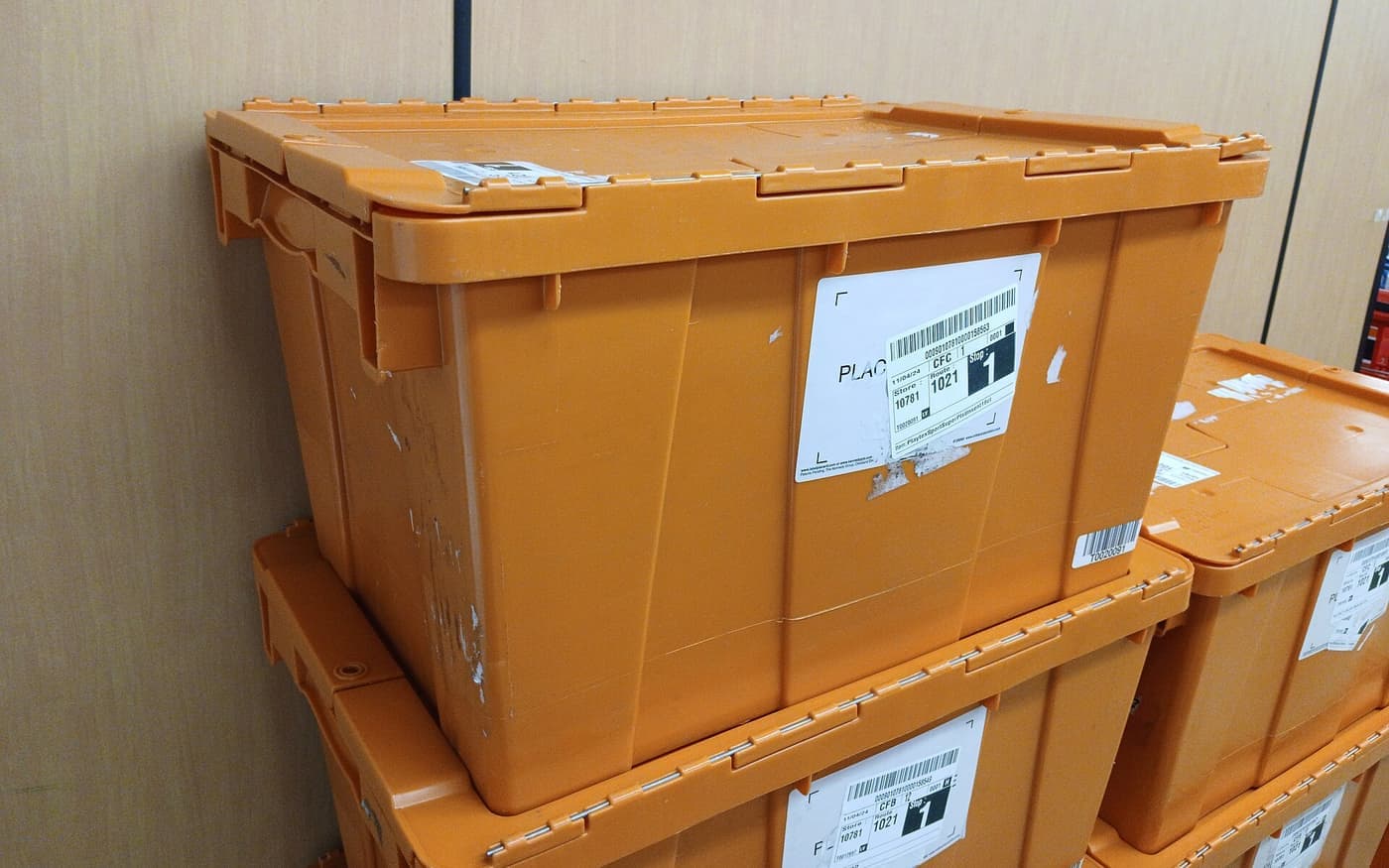
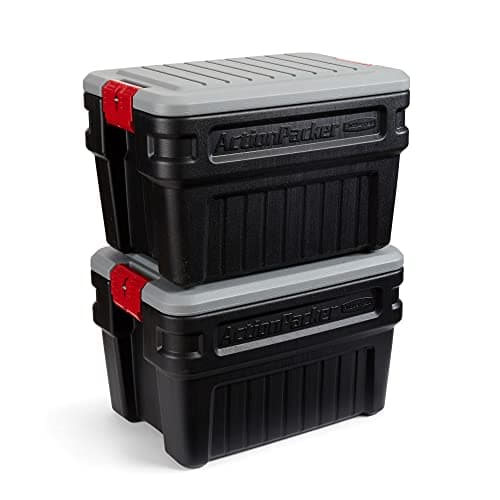
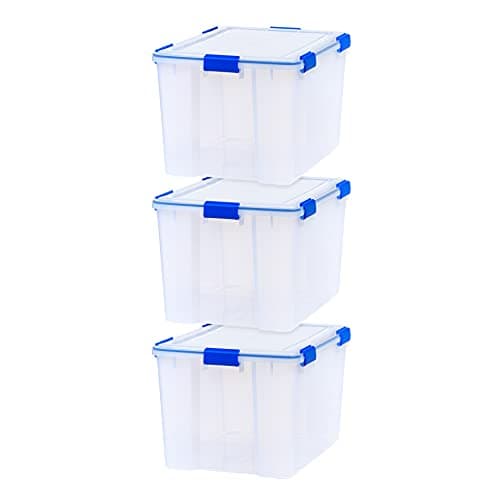
Rigid containers with sealing lids are the right vessel for hard gear. A Rubbermaid ActionPacker 24 Gal publishes a 50 lb load limit and a lid that takes a padlock, and an Iris WeatherPro is the sealed-lid alternative. Label the outside of everything, because a stack of identical bins is how items get lost for a season. The system is in best gear storage bins.
What does not go in a sealed bin: anything with residual moisture, and anything soft that should not be compressed. Bags, pads and shells want air and space, not a lid.
Batteries, which quietly die over winter
Lithium-ion cells degrade fastest when stored at full charge or fully flat, and heat accelerates it. Store power banks, power stations, headlamp packs and lantern batteries at roughly half charge in a cool place, and top them back up every few months.
Alkaline cells are the other hazard: they leak, and a leaked cell corrodes the contacts inside a lantern or headlamp beyond repair. Take alkalines out of anything that is going into storage. Lithium primary cells hold charge for years and do not leak in the same way, which is one more argument in rechargeable vs battery camping lights.
Pests
Two kinds. Rodents chew fabric and foam to build nests and are attracted by food residue, so an empty, clean food box and no crumbs in a tent bag matter more than any deterrent. Clothes moths eat protein fibers and are drawn by the residues in unwashed wool, which is why merino gets washed before storage rather than after.
Sealed rigid containers solve the rodent problem for hard gear; cedar blocks or a sealed bag solve the moth problem for wool. Neither works if the gear goes away dirty.
The check before the first trip
A month before the season starts, not the night before: pitch the tent, inflate the pads overnight and check they hold, charge everything, check the stove hose and O-rings, and read the note you wrote at the end of last season.
That hour is when you discover the pad has a slow leak or the stove needs a seal, at a point where both are solvable — the repairs are in how to repair a sleeping pad and camp gear repair kit essentials. Gear that has been stored properly and checked in advance is also gear that holds its value, which matters if you ever sell it on.
The gear this page points to
Rubbermaid ActionPacker 24 Gal
Rubbermaid
26 x 18.5 x 17 in with a 50 lb load limit and a lockable lid. The right vessel for hard gear, and the wrong one for anything damp or compressible.
QHow should you store a sleeping bag between trips?
Loose in a large cotton or mesh sack, never compressed in its stuff sack. Fill takes a permanent set when compressed for months, and synthetic is worse for it than down - the fibers never fully recover.
QCan you store camping gear in a garage?
Hard gear in sealed bins, yes, kept up off a concrete floor. Tents, sleeping bags, pads, shells and batteries are better indoors: garages swing in temperature, which drives condensation, and summer heat degrades adhesives, coatings and lithium cells.
QHow do you store a self-inflating sleeping pad?
Unrolled and flat with the valve open, under a bed or against a wall. That keeps the foam lofted and lets any internal moisture escape. Storing one rolled and sealed compresses the foam and can lead to mould and delaminated baffles.
QWhat charge should you store a power bank at?
About half. Lithium-ion degrades fastest at full charge or fully flat, and heat accelerates it. Store it cool at around 50% and top it back up every few months. Take alkaline cells out of anything going into storage, because they leak and corrode contacts.
Sources
Every figure on this page comes from a published source. We have not tested this gear, so the numbers are the manufacturer's or the standard body's, not ours. How we research.