Trail & Tarp earns a commission from qualifying purchases made through links on this page, at no extra cost to you. Full disclosure.
Why a hand-me-down adult bag does not work
The short answer
A sleeping bag warms you by trapping a layer of air that your body heats. Put a small child in an adult bag and they are heating two or three times the volume, with a body that produces less heat and loses it faster. The bag is not faulty; it is the wrong size, in the same way a coat four sizes too big is not warm. Sizing a child's bag is a warmth decision before it is a comfort one.
Two other facts stack against children. Their surface-area-to-volume ratio is higher, so they shed heat faster than an adult in the same conditions. And ISO 23537 ratings — the standardized manikin test that gives bags their comfort and limit figures — are measured with an adult manikin. No part of that test describes a seven-year-old, which is why an adult rating should be read as optimistic for a child.
How to size one
Measure the child's height, add about 6 in of headroom, and buy the bag whose published fits-to figure is closest without being far over. A little slack is fine; a lot of slack is cold air the child has to heat.
Child height
Bag length to look for
Typical category
Up to about 4 ft
About 4 ft 6 in
Junior / youth bag
4 ft to 5 ft
About 5 ft 4 in, or an extendable junior
Junior, or a short adult bag
5 ft to 5 ft 6 in
5 ft 6 in to 6 ft
Short or regular adult bag
Over 5 ft 6 in
Regular adult bag
Adult
Our sizing guide. Always check the maker's published fits-to height rather than a size label.
Extendable bags — a junior bag with a zipper at the foot that lets it grow a foot longer — are the design worth hunting for, because one purchase covers two or three seasons. Be aware that they come and go: Kelty's Big Dipper 30, which is the bag this page used to point at, has been discontinued and we could not find a current extendable junior bag on sale as of October 2026. If you find one, the length range is the specification to check.
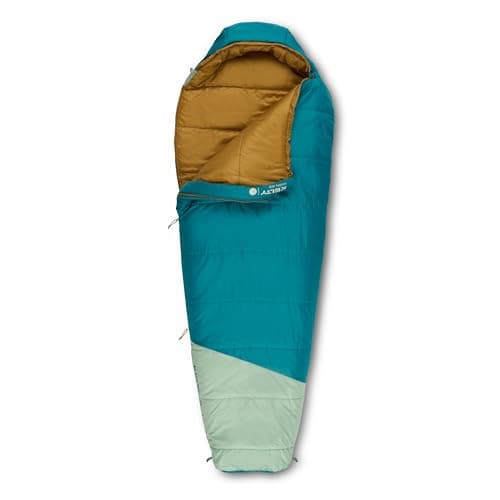
The approach that is actually buyable is a fixed-length bag sized generously. Kelty publishes a Mistral Kids 30 with a fits-to height of 5 ft, a 30 F rating, CloudLoft synthetic fill, 26 oz of it, a 2 lb 9 oz total weight and offset-quilt construction to keep cold spots out of the seams. Five feet covers most of childhood, and the empty volume before they grow into it is the thing to fix with clothing rather than with a second purchase.
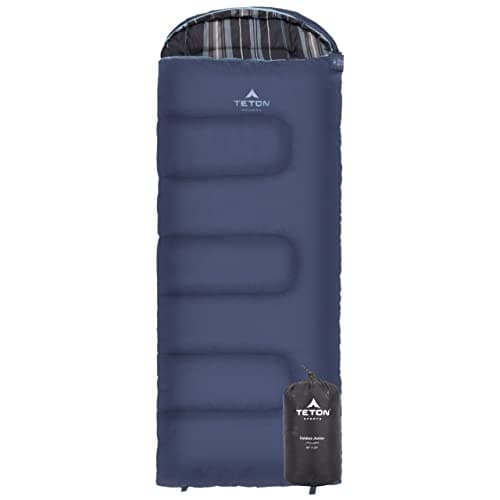
The other approach is a junior bag that is simply generous from the start. TETON publishes a Celsius Junior at 66 by 26 in with a 20 F rating, a 2.65 lb pack weight, a 70D/190T polyester taffeta shell and a polyester flannel lining. Sixty-six inches is longer than most kids' bags, which is deliberate: it stays usable well into the teens.
The free version of the fix
You do not have to buy a child-sized bag to solve the empty-volume problem. Stuff the foot of an adult bag with a dry fleece and tomorrow's clothes, or clip a strap around the bag a foot below the child's feet. Both shorten the bag without damaging it, and the clothing comes out pre-warmed in the morning. What does not work is putting two children in one adult bag: neither can close it around themselves and the combined empty volume is enormous. The rest of the warmth sequence is in how to keep kids warm camping.
Synthetic, always
Every children's bag worth considering is synthetic-filled, and it should be. A child's bag gets spilled on, dragged across a campsite, slept in with a snack, and washed far more often than an adult's. Synthetic fill keeps most of its loft when damp, washes with ordinary detergent, and survives the treatment.
Down would be lighter and pack smaller, and neither of those matters for a child who is not carrying it. It would also be ruined by the first spilled drink. The full comparison is in down vs synthetic sleeping bags.
What to look for beyond the size
A hood. Children lose a lot of heat from the head and will not think to pull a hood up unless it is there and easy.
A draft tube behind the zip. The cheapest bags omit it, and the zip line is where cold gets in.
A zip a child can operate alone. Chunky pulls, ideally two-way, so they can vent their feet without getting out.
A washable, spot-cleanable shell. TETON publishes a water-resistant, spot-cleanable shell on the Celsius Junior for exactly this reason.
A color they will accept. Not a technical specification and absolutely a factor in whether bedtime happens.
The pad matters more than the bag
Whatever bag you buy, a child on a bare tent floor is losing heat to the ground all night and no bag rating fixes that. Body weight crushes the insulation underneath flat, so warmth on that side comes from the pad.
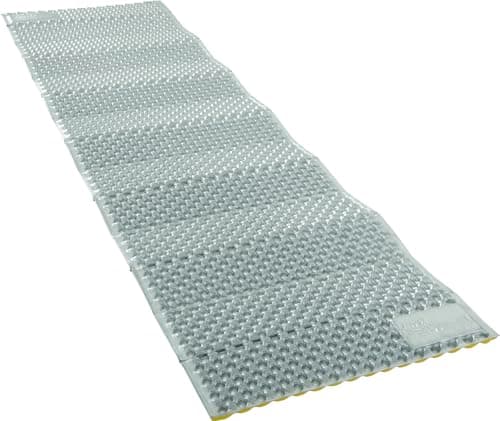
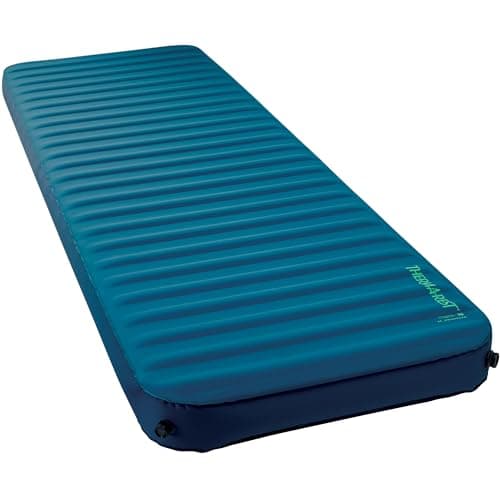
For summer, a Therm-a-Rest Z Lite Sol publishes R 2.0 at 14 oz and cannot puncture, which matters when the owner is nine. For cold ground, a MondoKing 3D publishes R 7.0 and 4.25 in of loft. R-values are additive, so stacking a foam pad under an inflatable sums them — see R-value explained.
Buying for a growth spurt
Resist buying deliberately huge. A bag two sizes too big is cold this year and will be worn out by the time it fits. The better play is an extendable junior bag now and a short adult bag at about 5 ft, which is where the adult range starts to fit properly anyway.
And children's bags hold their value on the secondhand market, because they are outgrown rather than worn out. That cuts both ways: buy one used with the loft test in how to buy used camping gear, and sell it on when it no longer fits. A spare stuff sack helps too, because the original is always the first thing lost.
The gear this page points to
Kelty Mistral Kids 30 Sleeping Bag
Kelty
Fits to 5 ft, 30 F, 26 oz of CloudLoft fill at 2 lb 9 oz, offset quilt. The generous fixed length that covers most of childhood.
Measure their height, add about 6 in of headroom, and match that to the maker's published fits-to figure. A little slack is fine; a lot of slack is cold air the child has to heat, which is why an adult hand-me-down leaves children cold.
QCan a child use an adult sleeping bag?
It works badly. A bag warms you by trapping air your body heats, so a small child in an adult bag is heating two or three times the volume with a body that produces less heat. Shorten it instead: stuff the footbox with clothing or strap the bag a foot below their feet.
QAre kids' sleeping bag temperature ratings accurate?
Treat them as optimistic. ISO 23537 ratings are measured with an adult manikin, and children lose heat faster because of a higher surface-area-to-volume ratio. Plan warmer than the number suggests, and put a real insulating pad underneath.
QShould a kids' sleeping bag be down or synthetic?
Synthetic, without hesitation. A child's bag gets spilled on, dragged and washed often. Synthetic fill keeps most of its loft when damp and washes with ordinary detergent; down would be ruined by the first spilled drink.
QWhat happened to the Kelty Big Dipper 30?
It has been discontinued. The Big Dipper 30 was the extendable junior bag this page recommended - a 4 ft 4 in body that opened to 5 ft 4 in through a zipper at the foot - and as of October 2026 it is no longer sold and we could not find a current extendable junior bag from any brand. Kelty's equivalent today is the Mistral Kids 30: the same 30 F rating and CloudLoft synthetic fill at a fixed length, with a published fits-to height of 5 ft.
Sources
Every figure on this page comes from a published source. We have not tested this gear, so the numbers are the manufacturer's or the standard body's, not ours. How we research.