The Best 6-Person Tents, Where the Box and the Tape Measure Disagree
Six-person tents are where camping stops being an endurance event. They are also where the listed floor size and the measured one start to drift apart.
A six-person rating assumes six sleeping pads laid edge to edge with nothing else inside. Six standard 20 by 72 in pads take 60 square feet, and these tents publish 85 to 100 square feet total. That leaves 25 to 40 square feet for gear, movement and the space around the door. Four people and their belongings is the honest number.
The other way to plan is by bed. Two queen airbeds are 60 by 80 in each, 66 square feet together, and they have to sit side by side without touching the walls. Coleman publishes a fits-two-queens figure for the Skydome 6 at 85 sq ft, which is about as tight as that layout gets.
Compared on published numbers
Tent
Floor
Area
Peak height
Weight
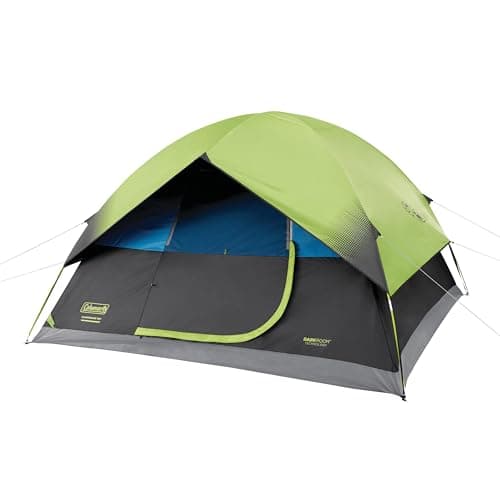
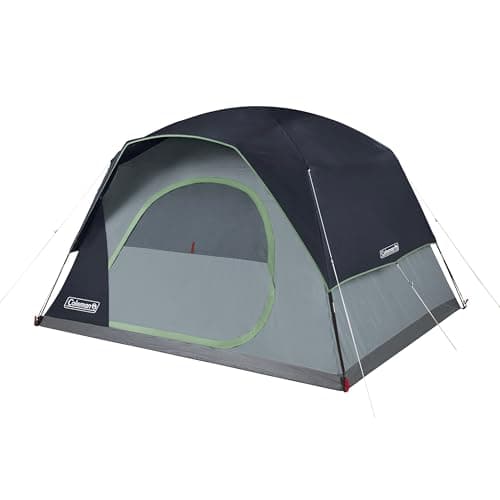
Coleman Skydome 6
10 x 8 ft 6 in
85 sq ft
72 in
about 16.8 lb
Coleman Sundome 6
10 x 10 ft listed
100 sq ft listed
72 in
about 16 lb
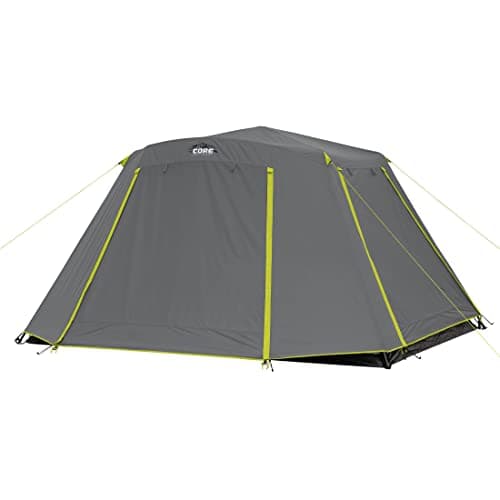
CORE 6 Instant Cabin
11 x 9 ft
99 sq ft
72 in
27 lb
Eureka Copper Canyon LX 6
10 x 10 ft
100 sq ft
84 in
21 lb 15 oz
Figures as published by each manufacturer. OutdoorGearLab measured the Sundome 6 floor at 9 ft 8 in x 9 ft 7 in.
Weight is the spread that surprises people: 16 lb to 27 lb across tents with nearly identical floor plans. The extra 11 lb on the CORE buys a one-minute pitch, which is a good trade if you are carrying it from the car and a poor one at a walk-in site.
Cabin or dome
Domes — Sundome, Skydome — have sloping walls that shed wind and rain well and waste floor area at the edges. Lighter, and they pack smaller.
Cabins — Copper Canyon, CORE instant — have near-vertical walls that make the whole floor usable and give real standing height. They catch wind, and they weigh more.
If your camping is wooded state-park loops in summer, buy the cabin and enjoy it. If you camp in spring and fall, on open ground, or anywhere the forecast is a genuine question, buy the dome.
The listed floor is not always the measured floor
OutdoorGearLab measured the Coleman Sundome 6 at 9 ft 8 in by 9 ft 7 in against a listed 10 by 10 ft. This is normal across the category rather than a Coleman problem: some makers measure the floor fabric flat, some measure it pitched, some measure the pole footprint. Treat any published floor figure as accurate to within a few inches per side, and never plan a two-airbed layout with less than six inches of slack.
Poles are where the money went, or did not
None of these publishes a wind rating, because there is no standard test to publish against. Pole material is the closest proxy available, and fiberglass is the norm at this price. Fiberglass is heavier and cheaper than aluminum, and when it fails it splinters instead of bending, which means it cannot be splinted at the campsite.
Buy the Skydome 6 if you want one tent that works in April and October and takes two queen beds. Buy the Sundome 6 if budget is the constraint and you camp in summer. Buy the Copper Canyon LX 6 if you stay put for a week and want to stand up. Buy the CORE 6 if the person pitching it is doing it alone in the dark.
If the number you are housing is genuinely four, the four-person size is a false economy — best 4-person tents explains why. The head-to-head on the two brands people cross-shop most is in Coleman vs CORE tents.
The picks in full
1. Best overall
Coleman Skydome 6-Person Tent
Coleman
85 sq ft under a 6 ft ceiling, pitching in under five minutes, and rated by Coleman for two queen airbeds.
Coleman publishes a 10 ft by 8 ft 6 in floor at 85 sq ft, a 6 ft center height, a weight of about 16.8 lb, a setup under five minutes and room for two queen airbeds.
Two queens is the specification most families are actually shopping for, and 85 square feet is roughly the minimum floor that takes them with clearance from the walls. The pre-attached poles and full-coverage fly are the reasons to pay over the Sundome.
The drawback
85 sq ft is 15 square feet less than the Sundome 6 lists. You are trading floor area for a full fly and a faster pitch, and six adults will not fit.
A listed 10 by 10 ft floor under a 72 in ceiling at about 16 lb, from the most widely stocked tent line in America.
Coleman lists a 10 by 10 ft floor, a 72 in center height, about 16 lb packed and a 28 by 9 by 9 in pack size. Six feet of center height means most adults can stand under the middle, which is the line between a tent you change clothes in and one you do not.
The measured-versus-listed gap is worth knowing rather than worrying about. Four square feet across 100 is not the difference between a good night and a bad one; it is the difference between planning for four people and planning for six.
The drawback
OutdoorGearLab measured the floor at 9 ft 8 in by 9 ft 7 in against the listed 10 by 10 ft, and the fly is partial rather than full coverage.
99 sq ft at 11 by 9 ft under a 72 in ceiling, up from 60 seconds, in 68D polyester rated to 1200 mm.
CORE publishes an 11 by 9 ft floor, a 72 in center height, 68D polyester rated to 1200 mm hydrostatic head, a 27 lb weight and a pitch from 60 seconds. CORE publishes two capacities: six in standard bags, or three plus gear.
That second number is unusually honest and it is the one to plan against. The 1200 mm figure is also the only published waterproof rating in this group, which makes it easy to compare and easy to over-read — see tent waterproof ratings explained.
The drawback
27 lb, and the pre-attached telescoping poles make a long bundle that does not compress. CORE itself rates the realistic capacity at three people plus gear.
100 sq ft of square floor under a genuine 7 ft peak, with near-vertical walls that make the corners usable.
Eureka publishes a 10 by 10 ft floor at 100 sq ft, an 84 in peak height, a weight of 21 lb 15 oz, a steel-and-fiberglass frame and one door.
This is the tallest tent in the group and the only one where standing height applies across most of the floor rather than at a single point. The one-door layout is the real cost, more than the weight.
The drawback
21 lb 15 oz on a steel-and-fiberglass frame, and one door. Six people sharing a single exit at 2am is a design decision you will feel.
Four people with their gear. Six standard 20 by 72 in sleeping pads occupy 60 square feet and these tents publish 85 to 100 square feet, which leaves almost nothing for belongings or movement.
QWill two queen air mattresses fit in a 6-person tent?
In the larger ones, yes. Two queens are 60 by 80 in each, 66 square feet together, and they need clearance from the walls. Coleman publishes a fits-two-queens rating for the Skydome 6 at 85 square feet, which is about the minimum that works.
QIs a cabin tent or a dome tent better for six people?
A cabin gives more usable floor and real standing height because the walls are near vertical; a dome sheds wind and rain better and packs smaller. Choose the cabin for long summer stays in sheltered sites, the dome for shoulder season and open ground.
QWhy is my tent smaller than the listed floor size?
Makers measure differently. OutdoorGearLab measured the Coleman Sundome 6 at 9 ft 8 in by 9 ft 7 in against a listed 10 by 10 ft. Plan any airbed layout with at least six inches of slack per side.
How we picked
Everyone else in this category will tell you they tested twenty of these. We have not tested any of them, and we would rather say so than pretend. There is no gear closet here and no test lab.
What we did instead: pulled the published specifications from each manufacturer's own spec sheet or manual, named the standard behind every rating so you can check what it actually promises, did the arithmetic that turns a spec into a decision, and pulled today's real retail price rather than quoting one from memory. Every pick states a drawback, because a list where nothing is wrong with anything is an advert.
The limits of that method, stated plainly: published specs do not capture zipper quality, seam durability, or how a tent behaves at 2am in a storm. Where that matters, we say so on the pick. The full method is here.