The Best Tents for Tall Campers, Measured in Both Directions
Tall campers have two separate problems: a floor too short to lie flat in and a ceiling too low to sit up under. Most tents solve one and ignore the other.
A tall camper needs about six inches of floor beyond their height for a pillow and clearance, so a 6 ft 4 in person wants at least 82 inches of usable floor and preferably 90. Touching the tent wall with your head or feet is how a sleeping bag gets wet from condensation, regardless of how waterproof the tent is.
This is the specification nobody prints on the front of the box. Capacity ratings describe width, not length, so a four-person tent and a two-person tent can have identical floor lengths. Read the floor dimensions, take the smaller number if the tent is rectangular, and subtract a few inches for the taper at the walls.
Peak height is the second problem and a different one. On a dome the peak applies at one point and the ceiling falls away fast. On a cabin with near-vertical walls it applies nearly everywhere. Two tents both publishing 72 inches can be completely different rooms.
Compared on the two numbers that matter
Tent
Floor
Longest dimension
Peak height
Wall shape
Weight
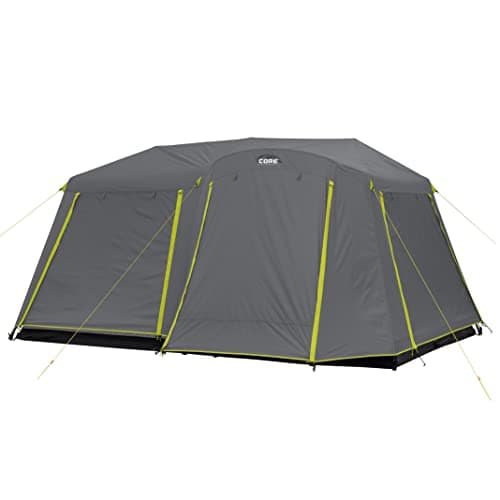
CORE 9 Instant Cabin
14 x 9 ft
168 in
78 in
near vertical
40 lb
Eureka Copper Canyon LX 6
10 x 10 ft
120 in
84 in
near vertical
21 lb 15 oz
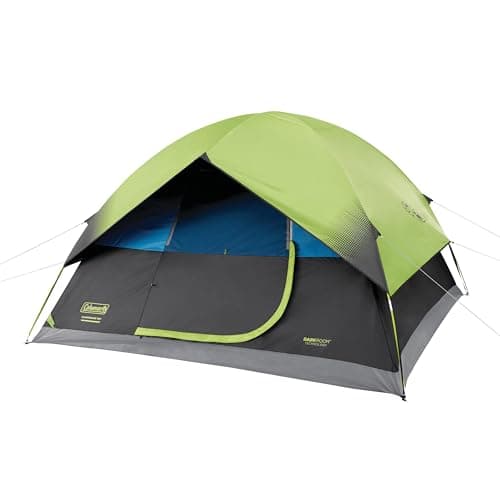
Coleman Sundome 6
10 x 10 ft listed
116 in measured
72 in
dome
about 16 lb
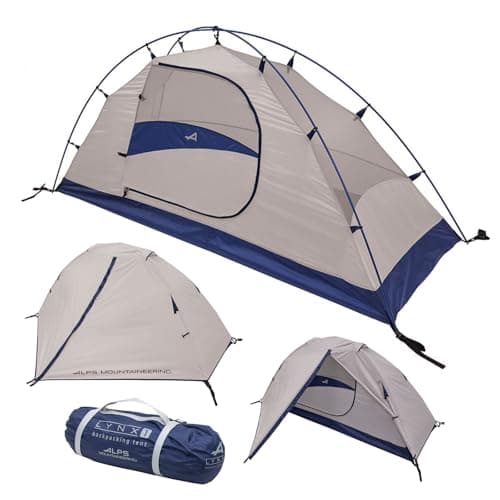
ALPS Lynx 2
90 x 60 in
90 in
46 in
dome
5 lb 12 oz
Figures as published by each manufacturer. Sundome 6 measured floor from OutdoorGearLab.
The condensation problem tall campers get more of
Warm, moist air from breathing hits the cold inner wall and condenses. When you fit the tent exactly, your bag touches that wall, and the moisture transfers into the insulation instead of running down to the floor. By morning the foot of the bag is damp and measurably colder, which is why tall campers report being cold in bags rated well below the night's temperature.
Two fixes, both cheap. Buy the length so nothing touches, and vent aggressively even when it is cold, because closing every vent to stay warm is what produces the water. The mechanism is in how to stop tent condensation, and the warmth consequence in why you get cold in a sleeping bag.
Check the bag and the pad, not just the tent
A long sleeping bag runs about 78 to 84 inches and a long sleeping pad about 77 to 80, against 72 inches for a regular. Buying a tent with a 90 in floor and then sleeping in a 72 in bag with your feet off the end of the pad solves nothing. Size the whole sleep system together — the ratings side is in sleeping bag temperature ratings explained.
The cot option
For tall car campers there is a second route: a long cot in a tall tent. An 84-inch cot gets you off the ground, removes the floor-length problem from the tent, and gives you a surface you can sit on the edge of to put boots on — which for a tall person is the most useful piece of furniture at a campsite.
It costs interior height, because a cot raises you 15 to 21 inches closer to the ceiling, so it only works under a cabin roof. The sizes and weight limits are in best cots for big and tall campers.
What to change if you already own the tent
Sleeping on the diagonal buys a tall camper six to ten inches in most rectangular tents and costs nothing. Beyond that, moving gear into the vestibule frees the length you are currently using for a pack, and a ceiling gear loft moves small items off the floor entirely.
If your current tent is simply too short, that is not something you can fix, and the sizing logic for the replacement is in what size tent do I need.
The picks in full
1. Best overall
Eureka Copper Canyon LX 6
Eureka
120 in of floor in both directions under an 84 in peak, with near-vertical walls so the height is not confined to the middle.
Eureka publishes a 10 by 10 ft floor at 100 sq ft, an 84 in peak height, a 21 lb 15 oz weight and a steel-and-fiberglass frame with one door.
Both numbers work for a tall camper. A hundred and twenty inches of floor in either direction means a 6 ft 6 in person lies straight with a foot of clearance at each end, and 84 inches of ceiling means almost nobody stoops. The near-vertical walls are what separate this from a dome quoting the same peak.
The drawback
21 lb 15 oz on a steel-and-fiberglass frame, and one door. The vertical walls that give you the height also catch every gust.
14 by 9 ft of floor under a 78 in ceiling, up in about two minutes on a pre-attached frame.
CORE publishes a 14 by 9 ft floor, a 78 in center height, 68D polyester rated to 1200 mm hydrostatic head, a 40 lb weight and a pitch from two minutes. Fourteen feet is 168 inches, the longest floor dimension here by a wide margin.
CORE also publishes a realistic capacity of four plus gear against a nine-person rating, which is exactly the kind of figure a tall camper should be reading.
The drawback
40 lb, and a packed bundle long enough to argue with a car trunk. The 68D fabric is rated 1200 mm, which is adequate rather than good.
A listed 10 by 10 ft floor under a 72 in ceiling at about 16 lb, for a fraction of the cabin prices.
Coleman lists a 10 by 10 ft floor, a 72 in center height, about 16 lb packed and a 28 by 9 by 9 in pack size. OutdoorGearLab measured the floor at 9 ft 8 in by 9 ft 7 in.
Even at the measured figure that is 116 inches, which handles a 6 ft 6 in camper lying straight. For a tall person whose actual complaint is touching the ends of a tent, this is the cheapest fix in the category.
The drawback
Measured at 9 ft 8 in by 9 ft 7 in rather than the listed 10 by 10 ft, and the 72 in peak is a dome peak, so it applies at the center only.
A 90 by 60 in floor at 5 lb 12 oz total, with two doors and 20 sq ft of vestibule.
ALPS publishes a 90 by 60 in floor at 37.5 sq ft, 20 sq ft of vestibule across two doors, a 46 in peak, 5 lb 12 oz total and a 75D floor rated to 2000 mm.
Ninety inches is 7 ft 6 in, and that is the number that matters: a 6 ft 4 in camper in a 76 in sleeping bag fits with room for a pillow. Most two-person backpacking tents are 84 to 88 in long, and that difference is the whole reason to look at this one.
The drawback
A 46 in peak. Ninety inches lets a tall person lie flat, and nobody over about 5 ft 6 in is sitting up straight in it.
At least six inches of floor beyond your height, so a 6 ft 4 in camper wants 82 inches minimum and preferably 90. Read the floor dimensions rather than the capacity rating, because capacity describes width, not length.
QWhy does my sleeping bag get wet at the foot of the tent?
Condensation. Moist air from breathing condenses on the cold inner wall, and if your bag touches that wall the water transfers into the insulation. Buy enough floor length that nothing touches, and vent the tent even when it is cold.
QIs peak height the same across all tents?
No, and it is measured at one point. On a dome the ceiling falls away steeply from the peak, so a 72 in figure means headroom in the center only. On a cabin with near-vertical walls, the same figure applies across most of the floor.
QAre there backpacking tents long enough for tall campers?
Some. The ALPS Lynx 2 publishes a 90 by 60 in floor against 84 to 88 in for many two-person tents. Peak height stays low regardless, so expect to lie flat comfortably and sit up hunched.
How we picked
Everyone else in this category will tell you they tested twenty of these. We have not tested any of them, and we would rather say so than pretend. There is no gear closet here and no test lab.
What we did instead: pulled the published specifications from each manufacturer's own spec sheet or manual, named the standard behind every rating so you can check what it actually promises, did the arithmetic that turns a spec into a decision, and pulled today's real retail price rather than quoting one from memory. Every pick states a drawback, because a list where nothing is wrong with anything is an advert.
The limits of that method, stated plainly: published specs do not capture zipper quality, seam durability, or how a tent behaves at 2am in a storm. Where that matters, we say so on the pick. The full method is here.