The Best Camping Coffee Makers, Judged on What They Cost You to Clean
Every camping coffee maker makes acceptable coffee. They differ enormously in what happens afterward, in a field, with limited water and nowhere to put wet grounds.
Group at a campground: a 30 oz French press. Anyone who hates cleanup: a pour-over cone. One person, or anything carried on your back: an AeroPress Go. All three make coffee that is better than instant and worse than a good cafe, and the difference between them in the cup is smaller than the difference between fresh grounds and stale ones.
Maker
Capacity
Packed size
Cleanup
Needs
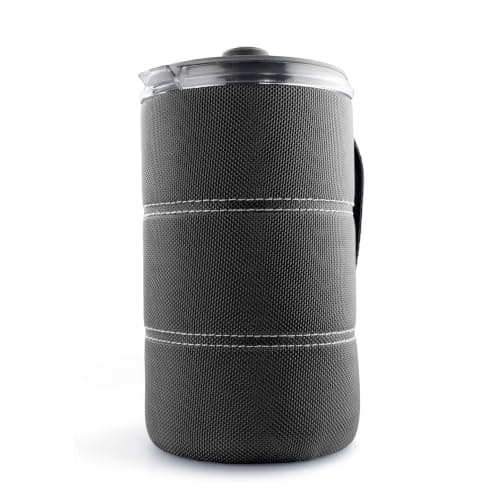
GSI 30 fl oz JavaPress
30 fl oz
4.5 x 4.2 x 7.7 in
Wet grounds on a mesh plunger
Hot water only
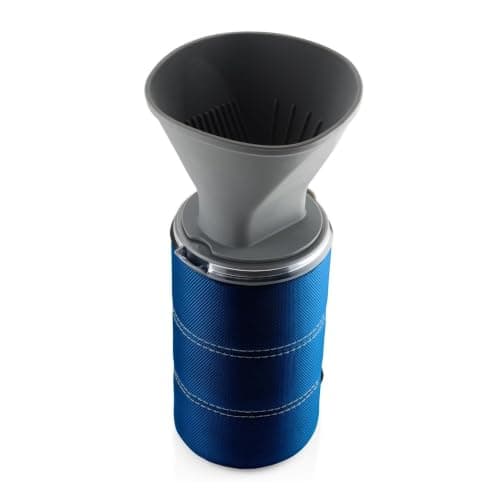
GSI 30 fl oz JavaDrip
30 fl oz
4.5 x 4.2 x 7 in, cone nests inside
Tip out the cone, rinse
A pouring kettle helps
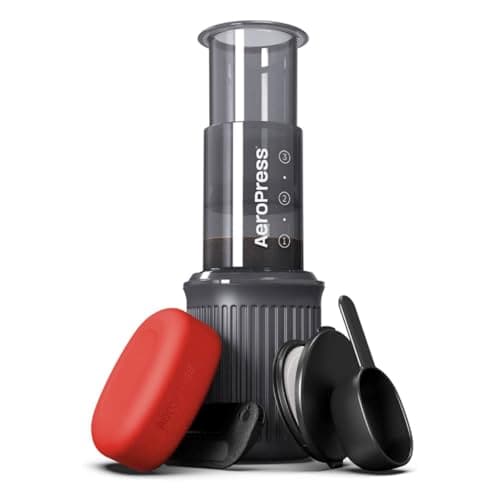
AeroPress Go
8 oz per press
4.5 x 3.6 in, nests in its own mug
Dry puck ejects in one piece
Hot water and hand pressure
Published figures from each manufacturer. Cleanup and needs are our summary of the method, not a maker claim.
The cleanup problem is the real specification
Nobody abandons a camping coffee maker because the coffee was bad. They abandon it because on the second morning, cold and slightly hungover, they looked at a plunger caked in wet grounds and made tea instead.
Three things make cleanup hard in a campsite that are trivial at home: you may not have running water, you cannot pour grounds down a drain, and you have nowhere to put a wet mesh part while you deal with everything else. Wet coffee grounds are also the single most effective wildlife attractant in a camp kitchen after bacon fat, which means they go in a sealed bag and travel out with you.
Rank the three methods by that criterion and the order inverts from the usual coffee-snob ranking: press worst, pour-over middle, AeroPress best. If you already know you are the sort of person who leaves washing up until later, buy the one that does not punish you for it.
This page is about dedicated coffee makers, not methods
If you are still deciding how to make coffee at camp — percolator, instant, cowboy coffee in the pot, or one of these — start with camp coffee methods compared, which puts all of them side by side including the ones that need no extra kit at all. This page assumes you have decided you want a device and are choosing between them.
Water, and the part everyone underestimates
A 30 oz pot of coffee is nearly a liter of water that has to be boiled, plus rinse water afterward. Over a weekend, coffee for four is comfortably the largest single water draw in a camp kitchen after washing up. If you are on a site with a tap that is invisible; if you are carrying water, it is a real planning input, covered in how much water do you need camping.
It also drives the stove decision. Boiling a liter on a two-burner propane stove ties up a burner for five or six minutes at exactly the time you want it for eggs. Either boil first and use the insulated sleeve to keep it hot, or use a dedicated fast boiler. The output figures for each are in the camp stove roundup, and the fuel choice behind them in propane vs butane.
What we did not do
We have not tasted coffee from any of these, and we would not tell you which one tastes best if we had — that is a preference, not a specification. Every number above is the manufacturer's published figure with a link to where it was read, and the judgments are about capacity, packing and cleanup, which are things a spec sheet can support. See how we research.
We have also left out percolators and stovetop moka pots. Both work, both are heavier than anything here, and both are covered in the methods comparison rather than duplicated as product picks.
The picks in full
1. Best for a group at a campground
GSI Outdoors 30 fl. oz. JavaPress
GSI Outdoors
30 fl oz of French press in a BPA-free copolyester carafe that cannot shatter, wrapped in an insulated sleeve, at 4.5 by 4.2 by 7.7 in.
GSI publishes a 30 fl oz capacity, dimensions of 4.5 by 4.2 by 7.7 in, a BPA-free shatter-resistant copolyester carafe, and a kit comprising the carafe, a pour-through lid, an insulated sleeve with handle and the plunger mechanism. It is hand wash only, with no dishwasher or microwave use.
The reason to choose a press over anything else at a campground is throughput. Thirty ounces is roughly four small mugs or two generous ones, made in one operation, with no standing over a cone pouring water in stages. When four people want coffee at once and one stove burner is already committed to breakfast, that matters more than the flavor differences people argue about.
The copolyester carafe is the part worth paying attention to. Glass presses exist and they are a genuinely bad idea in a car boot full of hard objects. The insulated sleeve is not a gimmick either: coffee in a plastic carafe at 7am in October goes lukewarm fast.
The drawback
Hand wash only, not dishwasher or microwave safe, and a press full of wet grounds is the messiest cleanup of the three here.
Published specs
Capacity
30 fl oz
Dimensions
4.5 x 4.2 x 7.7 in
Carafe
BPA-free copolyester, shatter-resistant
Included
carafe, pour-through lid, insulated sleeve with handle, plunger
The same 30 fl oz carafe with a collapsible #4 drip cone that nests inside it for packing, and a reusable filter you tip out in one motion.
GSI publishes a 30 fl oz capacity, dimensions of 4.5 by 4.2 by 7 in, copolyester and silicone construction, and a kit of carafe with lid, insulated sleeve, a #4 drip cone and a reusable #4 java filter. The drip cone collapses to nest inside the carafe for packing, and the lid holds the cone upright while brewing and again when you lift it out so it does not drip on the table.
Cleanup is the whole argument. A press leaves a slurry of wet grounds bonded to a mesh plunger, and rinsing it uses water you may be carrying and produces greywater you have to dispose of properly. A pour-over cone lets you tip a compact puck of grounds straight into a bag and give the cone a ten-second rinse. Over a weekend that is the difference between making coffee twice a day and making it once.
The reusable filter also removes the failure mode where you discover you left the paper filters at home. If you prefer paper, standard #4 cones fit, which is a genuinely useful piece of standardization.
The drawback
Pour-over is slower and more attentive than a press. You stand there with a kettle for two or three minutes rather than walking away.
11.4 oz all in, 4.5 by 3.6 in packed, with the press, filters, stirrer, scoop and mug nesting inside each other, and a two-minute brew and clean.
AeroPress publishes an 8 oz brew capacity per press, a packed weight of 11.4 oz (323 g) with all accessories, packed dimensions of 4.5 in high by 3.6 in wide, a stated two-minute brew and clean, polypropylene construction, and a kit including micro-filters, a filter holder for 25 filters, a stirrer, a scoop and a mug with a silicone lid. It is dishwasher safe on the top rack.
The cleanup mechanism here is the best of the three and it is worth describing, because it is why people who own one keep using it. You press the plunger through to the end, unscrew the cap, and push the plunger the rest of the way — a dry, compact puck of grounds and paper falls out in one piece. Wipe the seal, done. No slurry, no mesh, almost no water.
The cost is capacity. Eight ounces is one mug. For a solo backpacker that is exactly right, and the whole thing nests into its own cup, which is why it goes on trips where a 30 oz carafe would not. For a family of four at a campground it is the wrong tool. Pair it with a fast boiler like the Jetboil Flash and coffee happens before anyone else is awake.
The drawback
8 oz per press. Making four cups means doing this four times, and the plunger takes real hand pressure.
Published specs
Brew capacity
8 oz (1 cup) per press
Packed weight
11.4 oz / 323 g with accessories
Packed size
4.5 in H x 3.6 in W
Brew time
2-minute brew and clean
Included
micro-filters, filter holder, stirrer, scoop, mug with silicone lid
It depends on group size. For two to four people at a campground, a 30 fl oz French press such as the GSI JavaPress makes a full pot in one go. For one person or for backpacking, an AeroPress Go weighs 11.4 oz with everything and nests into its own mug.
QWhich camping coffee maker is easiest to clean?
The AeroPress, by a clear margin: the plunger ejects a dry puck of grounds and paper in one piece, so cleanup is a wipe. A pour-over cone is second. A French press is the messiest, because wet grounds bond to the mesh plunger and need rinsing.
QHow much coffee does a 30 oz camping press make?
About four small mugs or two large ones. That is roughly a liter of water to boil, which ties up a stove burner for several minutes, so it is worth brewing before you start cooking rather than alongside.
QWhat do I do with used coffee grounds when camping?
Bag them and take them out with you. Grounds are a strong wildlife attractant and should not be tipped on the ground or into a sink. This is one reason a pour-over or AeroPress is easier at camp than a press: the grounds come out compacted and dry enough to bag directly.
How we picked
Everyone else in this category will tell you they tested twenty of these. We have not tested any of them, and we would rather say so than pretend. There is no gear closet here and no test lab.
What we did instead: pulled the published specifications from each manufacturer's own spec sheet or manual, named the standard behind every rating so you can check what it actually promises, did the arithmetic that turns a spec into a decision, and pulled today's real retail price rather than quoting one from memory. Every pick states a drawback, because a list where nothing is wrong with anything is an advert.
The limits of that method, stated plainly: published specs do not capture zipper quality, seam durability, or how a tent behaves at 2am in a storm. Where that matters, we say so on the pick. The full method is here.