Cooler vs 12V Fridge: Where the Crossover Actually Is
A cooler costs nothing to run and loses a third of its volume to ice. A fridge costs power and gives it all back. The crossover happens later than fridge marketing suggests.
Trail & Tarp earns a commission from qualifying purchases made through links on this page, at no extra cost to you. Full disclosure.
The short version
The short answer
For trips of up to about three nights with a shop nearby, a cooler wins on every measure that matters. Beyond about four nights, or anywhere with no ice supply, a 12V compressor fridge starts to win — but only if you also solve the power problem, which is the part that gets skipped. A fridge without a plan for charging it is a heavy, empty box by the second morning.
Ice cooler
12V compressor fridge
Running cost
Ice, every day or two
Electricity, and a battery to store it
Usable space
Roughly two-thirds; ice takes the rest
All of it
Temperature control
None; it is as cold as the ice
Set a number, it holds it
Weight, empty
Light to moderate
Heavy, and it does not get lighter
Fails when
The ice runs out
The battery runs out
Needs from you
Ice runs and drainage
Charging, and somewhere to run a cable
Handles freezing
No
Yes, most will freeze
How the two behave in the situations that decide a trip.
The 2:1 rule, and what it costs you
A cooler performs on a ratio of roughly two parts ice to one part contents by volume. That is not a marketing number, it is what the physics of holding food below 40 F for several days requires, and it means a third or less of a cooler's stated capacity is usable for food.
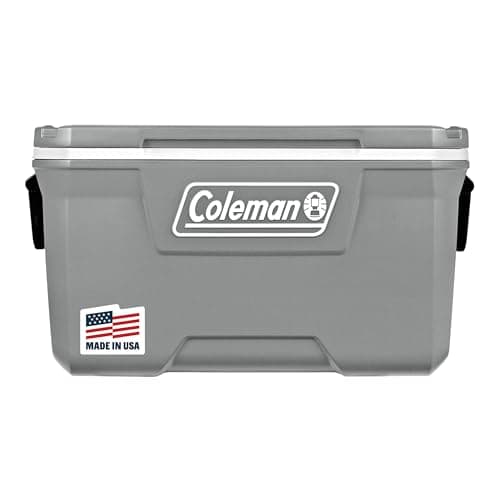
A Coleman Classic 70-Quart publishes a claim of up to 3 days at 90 F and holds up to 50 cans and 35 lb of ice. Loaded honestly at 2:1 for a multi-day trip, that 70 qt is closer to 23 qt of food. A 70 qt fridge is 70 qt of food. That is the fridge's strongest argument and it is a real one, especially in a small car where the cooler is already the largest object.
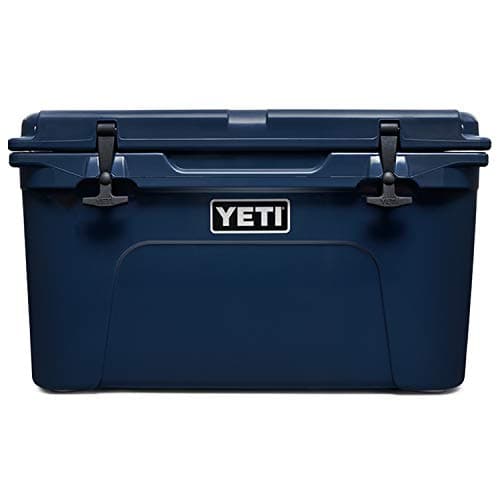
The counter is what that volume costs. Rotomolded coolers such as a YETI Tundra 45 or a RTIC 52 hold ice for longer precisely because they have thick walls and a full-perimeter gasket, so their external size is much larger than their internal size too. The retention arithmetic is in how long does ice last in a cooler.
The power problem, done properly
This is where fridge buyers get caught. A typical portable 12V compressor fridge draws somewhere around 30 to 60 watt-hours per day in mild conditions, and considerably more in heat, because the compressor cycles more often. Manufacturers publish their own figures, and they vary enormously with ambient temperature, how full the fridge is and how often it is opened.
Run one off a vehicle's starter battery overnight and you may not start the car in the morning; that is the classic failure. The workable options are a leisure battery with a split-charge relay, a hookup pitch, or a portable power station sized for the job.
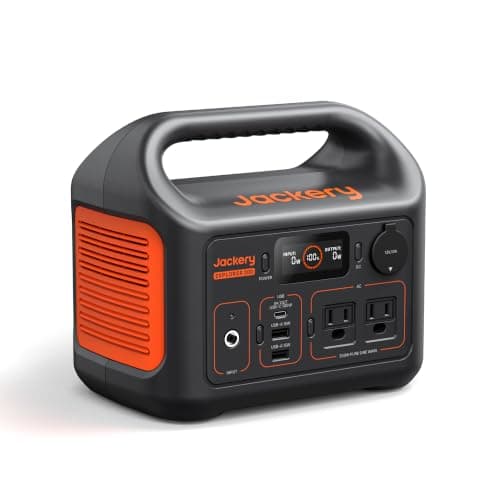
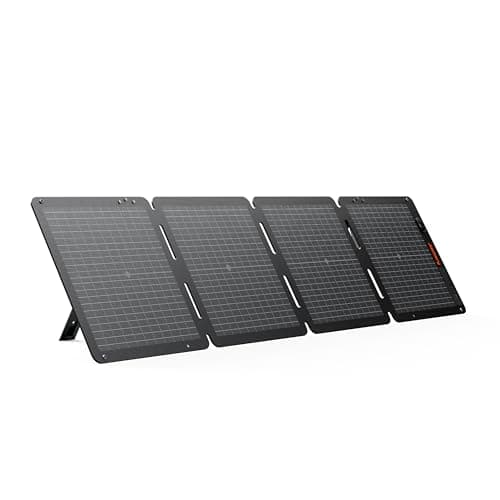
On the last route, the arithmetic is unforgiving. A Jackery Explorer 300 and an Anker SOLIX C300 are 292 Wh and 288 Wh respectively — comfortably enough for phones, lights and a camera for a weekend, and marginal for a fridge for more than a night or two. Adding a 100 W solar panel changes that, but only in sun. The sizing method is in what size power station do I need.
The honest crossover
One to three nights with ice available: cooler, comfortably. Four to seven nights, or a trip with no ice supply, or repeated long trips every year: the fridge starts to make sense, and it makes complete sense once you have a leisure battery or a hookup anyway. If you camp two or three weekends a year, a fridge is a large amount of money and weight to solve a problem a bag of ice solves for the price of a coffee.
What a cooler still does better
Silence. A compressor cycles on and off all night. In a quiet campground, next to a tent, that is a real thing.
Nothing to fail. No electronics, no compressor, no cable. A cooler that gets rained on, dropped or left in the sun still works.
Doubling as furniture. Coleman publishes a lid rated to sit on at 250 lb for the Classic. Nobody sits on a fridge.
Cost. A good cooler and several seasons of ice still cost a fraction of a fridge plus the power system to run it.
Cold drinks on demand, if you run a second small cooler for drinks so the food cooler stays shut.
Getting more out of the cooler you own
Before spending money on a fridge, exhaust the free improvements. Pre-chill the cooler overnight with a sacrificial bag of ice. Chill everything before it goes in, so ice is not spent cooling warm food. Use block ice rather than cubes, because a block has less surface area and melts far more slowly. Fill the air gaps. Keep it in shade and under a reflective cover. And run a separate drinks cooler, because drinks get opened twenty times a day and food gets opened three times.
Done together, those habits routinely add a day or two to a cooler's performance, which moves the crossover further out. The full method is in how to keep food cold camping.
Food safety applies to both
The USDA keeps perishable food out of the 40 to 140 F danger zone and limits time above 40 F to two hours, or one hour above 90 F. A fridge holds a set temperature and tells you what it is; a cooler does neither, which is why a cheap thermometer inside a cooler is one of the best few dollars in a camp kitchen.
Whichever you use, plan the meal order so the highest-risk items are eaten first, and store everything scented away from the tent overnight — a fridge is not animal-proof either. That is in how to store food safely when camping.
There is a third option this page deliberately leaves out
Everything above compares two things: an ice cooler and a 12V compressor fridge. Between them sits a 12V thermoelectric cooler, which plugs into the same socket as a fridge, costs a fraction of one, and is not a fridge. It cools a fixed number of degrees below the air around it — the makers publish 36 F and 40 F below ambient — so it never sets a temperature and cannot freeze, but it also never needs ice and never gives up a third of its volume to it.
That makes it the right answer for a specific buyer: someone whose real complaint is the ice rather than the temperature, camping outside high summer. Best 12V coolers for camping has the picks and, more usefully, the arithmetic for which outside temperatures leave food above the 40 F line.
What we did not do
We have not tested either category, and we have deliberately not named a specific 12V fridge model. No standard test governs cooler ice retention or fridge power draw, so cross-brand comparison in this category is unusually weak, and we are not going to publish a daily watt-hour figure for a product we have not measured. Where we quote a number above it is the manufacturer's own, with a link. See how we research.
The gear this page points to
Coleman Classic 70-Quart Cooler
Coleman
70 qt with a maker's claim of up to 3 days at 90 F and a lid rated to sit on at 250 lb. Loaded at 2:1 that is about 23 qt of actual food.
QIs a 12V fridge better than a cooler for camping?
It depends on trip length. Up to about three nights with ice available, a cooler wins on cost, weight, silence and reliability. Beyond four nights, or with no ice supply, a fridge wins - provided you have solved the power problem with a leisure battery, a hookup or a power station.
QHow much usable space does a cooler actually have?
Roughly two-thirds, because a cooler needs about two parts ice to one part contents by volume to hold food below 40 F for several days. A 70 qt cooler loaded honestly for a multi-day trip is closer to 23 qt of food; a 70 qt fridge is 70 qt of food.
QCan you run a camping fridge off a car battery?
Not off the starter battery overnight - that is the classic way to find the car will not start. Use a leisure battery with a split-charge relay, a powered pitch, or a portable power station sized for the draw, ideally topped up by solar.
QHow can I make my cooler last longer before buying a fridge?
Pre-chill the cooler overnight, chill everything before it goes in, use block ice rather than cubes, fill the air gaps, keep it in shade under a reflective cover, and run a separate drinks cooler so the food cooler stays shut. Together those routinely add a day or two.
Sources
Every figure on this page comes from a published source. We have not tested this gear, so the numbers are the manufacturer's or the standard body's, not ours. How we research.