The Best Insulated Food Jars, and Why the Hours Claim Is About Soup
Every food jar is sold on a number of hours. That number is measured with hot liquid in a preheated jar, and a jar of stew packed cold at 7 am behaves nothing like it.
Fill the jar with boiling water, leave it five minutes, tip it out, then add the food. Published retention figures are measured from a preheated flask filled to capacity with hot liquid. Skip the preheat and the first thing your stew does is warm up a pound of cold steel, which costs you hours off the label. Solid food also holds heat less well than liquid, so a jar of chili never matches a jar of soup.
This is the single most useful thing on the page and nobody prints it on the box. A vacuum flask does not create heat, it only slows the loss, and a cold stainless body is a large heat sink sitting directly against your lunch. Thirty seconds of kettle water removes that sink entirely.
The same trick works in reverse for cold: fill with cold water and ice for a few minutes before loading, and the 24-hour cold figures become realistic rather than aspirational. It is the same physics as pre-chilling a cooler, which is covered in how long does ice last in a cooler.
What to look for
Specification
What to want
Why
Capacity matched to the meal
14 oz for one portion, 24 oz for a big one or two
empty space is air the vacuum has to heat along with the food
Published hot and cold hours
both figures stated by the maker
a maker that publishes only one number is telling you about one of them
Wide mouth
wide enough for a normal spoon and for cleaning
a narrow neck means the last third is unreachable and unwashable
Lid that serves as a bowl
yes, if you eat in gloves
it replaces a separate bowl and makes the bottom of the jar reachable
Pressure-release valve
yes
sealed hot food goes into partial vacuum and jams the lid shut
Stainless grade
18/8
it is the grade that resists the salt and acid in actual food
What decides whether a food jar delivers a hot lunch, rather than how long the number on the label is.
Compared on published numbers
Jar
Capacity
Hot
Cold
Weight
Spoon
Warranty
THERMOS Stainless King
24 oz / 0.71 L
up to 14 h
up to 24 h
1.2 lb
folding spoon, lid is a bowl
not published here
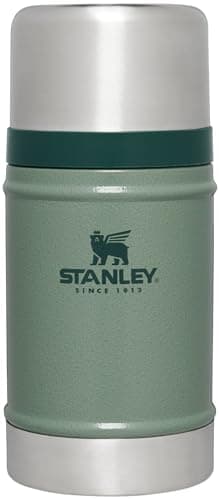
Stanley Classic 24 oz
24 oz / 0.71 L
15 h
18 h
1.36 lb (listings vary to 1.6 lb)
none
lifetime
Stanley Classic 14 oz
14 oz / 0.4 L
7 to 8 h per retailer
not published separately
not consistently published
stainless spork on the lid
lifetime
Figures as published by each manufacturer or its retail listing. Prices on this page carry their own as-of date.
The soft figures in that table are deliberate. Retailers disagree about the 14 oz jar's retention and about both Stanley weights, and rather than pick the most flattering number we have said so. Where a maker publishes a clean figure — the Thermos at 14 and 24 hours, the Stanley 24 oz at 15 and 18 — that is the maker's own claim.
Hot food is a different argument in winter
In summer a food jar is convenience. In winter it is the fastest way to put heat into a person who has got cold, and it does it without unpacking a stove, finding fuel that works in the cold, or standing still for fifteen minutes in wind. That is why it earns a place in a winter day pack when it would not in July.
It also solves the specific problem that canister stoves struggle with low temperatures, which is the whole argument of propane vs butane camp stoves. Boiling water at the car in the morning and carrying the result is a way to sidestep fuel performance entirely for one meal.
What not to put in a vacuum food jar
Carbonated drinks, which build pressure as they warm and can force a lid. Dry ice, for the same reason and worse. Boiling-hot food sealed immediately, which is what creates the partial vacuum that jams lids — let it stand a minute, then close. And dairy left for a full working day: a jar that holds food at a pleasant eating temperature for fourteen hours is also holding it in the range where bacteria multiply, so a food jar is not a substitute for keeping cold things cold. If the plan is to keep food safe rather than warm, that is a food storage question, not an insulation one.
This is not a mug, and the difference is the mouth
The site covers drinking vessels separately in best camping mugs and insulated drinkware, and the distinction is real rather than a category quibble. A travel mug has a narrow drinking aperture and a lid designed to meter liquid; a food jar has a mouth wide enough to get a spoon and a dishcloth into. Trying to eat stew from a travel mug and trying to drink coffee from a food jar are both bad experiences.
Buy the THERMOS Stainless King if you want one jar to cover hot lunches and cold food. Up to 14 hours hot and 24 cold is the most complete pair of published figures here, the lid-as-bowl makes the bottom of the jar reachable, and the folding spoon means you cannot forget cutlery. This is the one most people should stop reading at.
Buy the Stanley Classic 24 oz if the gap between packing and eating is genuinely long, or if the lifetime warranty on the vacuum seal matters to you. Fifteen hours is the longest hot claim on the page; accept that it is shorter on cold and that you supply your own spoon.
Buy the Stanley Classic 14 oz with spork if the jar goes in a pack rather than a car and feeds one person. Matching 14 ounces to one portion is free performance, the pressure-release lid actually opens at lunchtime, and the spork clipped to the cap is the detail you will be glad of. Whichever you buy, preheat it.
The picks in full
1. Best overall, and the only one that publishes both numbers properly
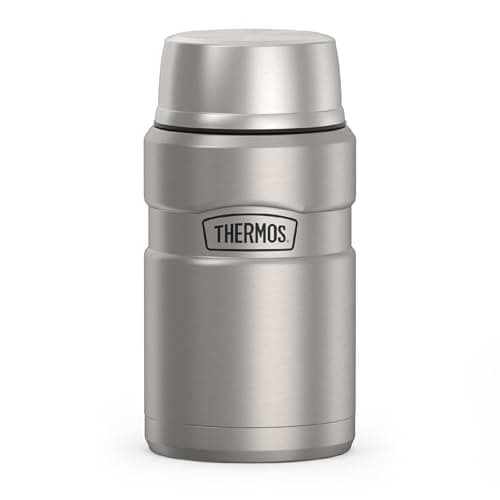
THERMOS Stainless King Food Jar, 24 oz
THERMOS
24 oz with published retention of up to 14 hours hot and 24 hours cold, at 1.2 lb, with a lid that serves as a bowl and a folding spoon in the cap.
THERMOS publishes a 24 oz / 0.71 L capacity, retention of up to 14 hours hot and up to 24 hours cold, double-wall vacuum insulation in 18/8 stainless steel, a 1.2 lb weight, a 7.2 by 3.7 by 3.7 in body, a folding spoon, and a lid that doubles as a serving bowl.
The lid-as-bowl is the detail that makes this the pick rather than a tie. Eating stew out of a tall narrow jar means the last third is down a steel tube you cannot see into, and a spoon handle that is too short. Decanting into the lid solves it, and it means one item does the jar, the bowl and the spoon — which on a cold day with gloves on is worth more than an hour of retention.
Twenty-four hours cold is the quietly useful figure. A food jar is not only a winter item: the same vacuum that holds heat holds cold, and this is the thing that gets yogurt, cut fruit or leftovers through a summer day in a car without a cooler.
The drawback
Fourteen hours hot is a shorter claim than Stanley's 15, and at 7.2 in tall it does not fit a bottle pocket. A 24 oz jar is also more than one person usually eats, so you will carry air on short days.
24 oz with a published 15 hours hot and 18 hours cold in 18/8 stainless, backed by a lifetime warranty.
Stanley publishes a 24 oz / 0.71 L capacity, retention of 15 hours hot and 18 hours cold, 18/8 stainless steel construction, BPA-free materials, an empty weight given as 1.36 lb with other retailer listings running to 1.6 lb, and a lifetime warranty.
Fifteen hours is the longest hot claim on this page, and if the use case is genuinely long — food packed at 6 am and eaten at 8 pm after a day out — that hour over the Thermos is the reason to pick it. For a normal lunch it is a difference you will never observe.
The lifetime warranty is the real argument. Vacuum flasks fail in one specific way: the seal between the walls goes, the vacuum is lost, and the jar becomes a steel cup that holds heat for twenty minutes. There is no repairing that, so a lifetime warranty on the one component that defines the product is a meaningful promise rather than marketing.
The drawback
Retailers publish its empty weight anywhere from 1.36 to 1.6 lb, so the figure is not settled, and 18 hours cold is well short of the Thermos's 24. No spoon is included and the lid is not a bowl.
3. Best size for one person, and the one with the spork
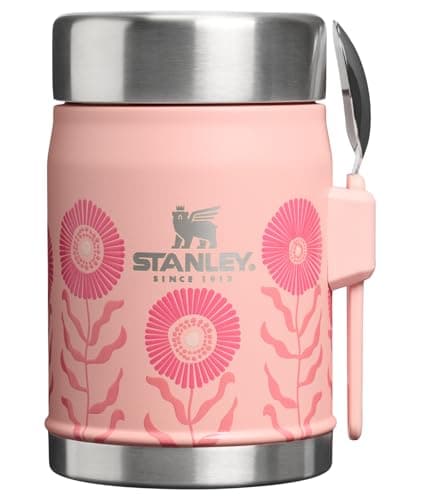
Stanley Classic Legendary Food Jar with Spork, 14 oz
Stanley
14 oz / 0.4 L in recycled 18/8 stainless with a leakproof pressure-release lid and a stainless spork clipped to the cap.
Stanley publishes a 14 oz / 0.4 L capacity, recycled 18/8 stainless steel, BPA-free materials, double-wall vacuum construction, a leakproof lid with a pressure-release valve, a stainless spork that clips to the lid, and a lifetime warranty. Published retention for this size varies between retailers from 7 hours to about 8.
Fourteen ounces is the honest portion size and the reason this is here. A 24 oz jar packed with one person's lunch is two-thirds full, and the empty third is air that the vacuum has to keep warm along with the food — a half-full flask loses heat noticeably faster than a full one. Matching the jar to the meal is free performance.
The pressure-release valve is worth understanding rather than ignoring. Hot food in a sealed vacuum jar builds pressure as it cools and then goes into partial vacuum, which is what makes a lid impossible to open at lunchtime. A valve vents that, and it is the difference between a jar you can open with cold hands and one you cannot.
The drawback
Retailer retention figures for this size disagree — 7 hours in some listings, up to 8 in others — so treat it as most of a working day rather than a number. Fourteen ounces is one portion and will not stretch to two.
Published specs
Capacity
14 oz / 0.4 L
Retention
retailer figures range from 7 to 8 hours; see the note on solids below
Material
recycled 18/8 stainless steel, BPA free
Construction
double-wall vacuum, leakproof lid with a pressure-release valve
QHow long does an insulated food jar keep food hot?
Between about 7 and 15 hours depending on the jar and how you load it. THERMOS publishes up to 14 hours hot for the 24 oz Stainless King and Stanley publishes 15 for its 24 oz Classic, but both figures assume a preheated jar filled to capacity. Fill a cold jar two-thirds full with solid food and you will get a fraction of that.
QDo you need to preheat a thermos?
Yes, and it is the single biggest thing you can do. Fill it with boiling water, wait five minutes, tip it out, then add the food. A cold stainless body is a large heat sink pressed against your lunch, and warming it up is the first thing your food does if you skip this step.
QWhat size food jar do I need?
Fourteen ounces for one person's meal and 24 ounces for a large portion or two people. Size it to the meal rather than buying big: empty space in a flask is air the vacuum has to keep warm alongside the food, so a half-full jar loses heat noticeably faster than a full one.
QCan you put carbonated drinks in a vacuum food jar?
No. Carbonated drinks build pressure as they warm and can force the lid, and the same applies far more dangerously to dry ice. Also avoid sealing boiling-hot food immediately - let it stand a minute first, because a sealed jar of cooling food goes into partial vacuum and that is what makes a lid impossible to open at lunchtime.
QIs a food jar the same as a travel mug?
No, and the difference is the mouth. A travel mug has a narrow drinking aperture and a lid that meters liquid; a food jar has a mouth wide enough to admit a spoon and a dishcloth. Eating stew from a travel mug and drinking coffee from a food jar are both unpleasant, which is why this site covers them on separate pages.
How we picked
Everyone else in this category will tell you they tested twenty of these. We have not tested any of them, and we would rather say so than pretend. There is no gear closet here and no test lab.
What we did instead: pulled the published specifications from each manufacturer's own spec sheet or manual, named the standard behind every rating so you can check what it actually promises, did the arithmetic that turns a spec into a decision, and pulled today's real retail price rather than quoting one from memory. Every pick states a drawback, because a list where nothing is wrong with anything is an advert.
The limits of that method, stated plainly: published specs do not capture zipper quality, seam durability, or how a tent behaves at 2am in a storm. Where that matters, we say so on the pick. The full method is here.