Trail & Tarp earns a commission from qualifying purchases made through links on this page, at no extra cost to you. Full disclosure.
What this list is and is not
The short answer
This is a contents checklist, not medical guidance. We do not publish treatment instructions, dosages or first aid procedure — we are not qualified to, and getting it wrong is dangerous. The single best purchase in this category is a wilderness first aid course, and it is not a product. What follows is a list of what to have, based on what campsites actually generate.
The injuries that fill a camping kit are mundane and repetitive: blisters from new boots, small burns from a stove or a fire ring, cuts from knives and tent pegs, insect stings, headaches and upset stomachs. None of them is dramatic; all of them are miserable at 10pm with a phone torch and no supplies.
Start with a pre-built kit
A bought kit is not better stocked than one you assemble carefully — it is finished. A self-assembled kit is usually missing the one thing you need, because the thing you need is the thing you did not think of.
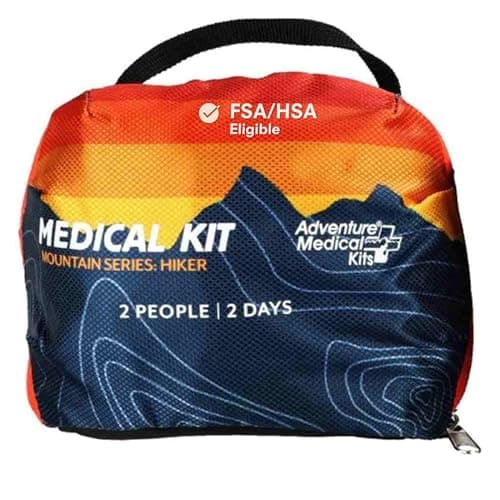
Adventure Medical Kits sizes its Mountain Series by people and days: the Hiker publishes coverage for 2 people for 1 to 2 days at under 8 oz, with a trauma pad, butterfly closures, gauze, tape and a wilderness first aid booklet, in a water-resistant reflective bag. A Surviveware Small is the other common starting point. The comparison is in best camping first aid kits.
The blister section, which is the one you will use
Moleskin or blister-specific dressings, several
Adhesive tape, and a small pair of scissors that actually cuts it
Antiseptic wipes
A needle, for the debates you will have about draining blisters
Keep this section where you can reach it without unpacking, because the whole skill is stopping at the hot-spot stage rather than the blister stage. Two minutes then saves a day later, and the prevention sequence is in how to break in hiking boots.
The rest of the kit, by category
Category
Contents
Why it is on the list
Wounds
Adhesive bandages in several sizes, gauze pads, adhesive tape, butterfly closures, antiseptic wipes
Cuts from knives, tent pegs and cookware
Burns
Sterile non-adhesive dressings, cling film or a burn gel dressing
Stove and fire ring contact; the second most common camp injury
Tools
Tweezers, tick removal tool, small scissors, safety pins, disposable gloves
Splinters, ticks, and cutting dressings to size
Support
An elastic wrap bandage, a triangular bandage
Sprains and improvised slings
Personal medication
Everything anyone in the group takes, in original packaging, plus spares
The single most important category, and the easiest to forget
Emergency contacts, allergies, insurance details, a first aid booklet
Somebody else may need to read it
A pre-built kit typically covers rows one to four and none of rows five to seven.
The three things a bought kit never has
Your prescriptions, in original labeled packaging with a written list. Anything for a known allergy, including an epinephrine auto-injector if somebody has been prescribed one, and a group who know where it is. Written emergency information — contacts, conditions, allergies, insurance — because the person who needs to read it may not be you. Add all three before the first trip.
Kit for the trip you are actually taking
With children: child-appropriate medication, more plasters than seems reasonable, and a digital thermometer.
With a dog: a tick tool, vet-appropriate items, and the vet's number. Check the dog nightly — see camping with a dog.
In tick country: a proper tick removal tool and a habit of checking every evening, alongside the clothing treatment in best bug protection for camping.
One kit, one known place, and everybody in the group knows where. In a car camping setup that is the top of the dry box or a door pocket, not the bottom of a duffel. A reflective bag helps at night; AMK publishes exactly that on the Mountain Series.
Check it twice a year. Restock anything used, replace expired medication, and confirm the tape has not gone brittle and the wipes have not dried out. That review sits naturally alongside the seasonal kit check in how to store camping gear in the off-season.
The item that is not in the bag
Knowing what to do. A wilderness first aid course teaches assessment, when to evacuate and how to improvise, and none of that comes from a kit. It is the highest-value thing in this whole category and the only recommendation on this page that is not a product.
Alongside it: knowing where the nearest medical facility is before you need it, having a charged phone, and having told somebody your plan. The campfire and stove risks that generate most camp burns are in campfire safety basics and carbon monoxide and stove safety when camping.
The gear this page points to
Adventure Medical Kits Mountain Series Hiker
Adventure Medical Kits
Sized for 2 people for 1-2 days at under 8 oz, with a trauma pad, butterfly closures and a wilderness first aid booklet in a reflective bag.
Blister treatment, adhesive bandages in several sizes, gauze and tape, antiseptic wipes, burn dressings, tweezers and a tick tool, gloves, an elastic wrap, over-the-counter painkillers and antihistamine, and every prescription anyone in the group takes.
QIs a pre-built first aid kit good enough for camping?
As a starting point, yes - a bought kit is finished, where a self-assembled one is usually missing the item you did not think of. What no bought kit contains is your prescriptions, anything for a known allergy, and written emergency information. Add those before the first trip.
QWhat size first aid kit do I need for camping?
Kits are usefully sized by people and days rather than by piece count. Adventure Medical Kits publishes coverage for 2 people for 1 to 2 days at under 8 oz for its Mountain Series Hiker, which is a far more useful way to choose than counting items.
QHow often should you check a camping first aid kit?
Twice a year. Restock anything used, replace expired medication, and check that tape has not gone brittle and wipes have not dried out. Do it alongside the seasonal storage check for the rest of the kit.
Sources
Every figure on this page comes from a published source. We have not tested this gear, so the numbers are the manufacturer's or the standard body's, not ours. How we research.