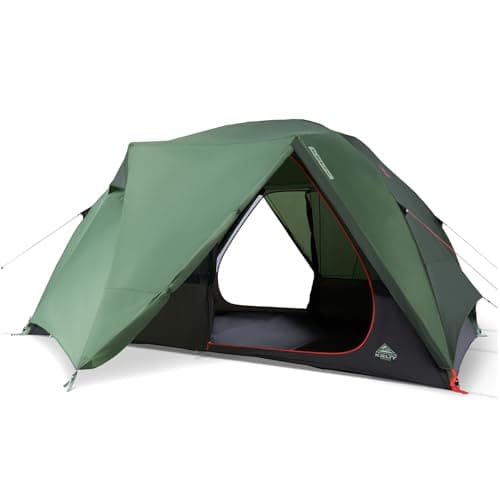
Kelty Wireless 6
Kelty
Two 19.5 sq ft vestibules on an 86.5 sq ft floor. The dog sleeps inside and the muddy dog gear does not.
$389.95 · Check price on Amazon
#ad how this is funded · price as of October 23, 2026
A dog does not make camping harder in one big way. It makes it slightly harder in eleven small ways, all of which are solvable if you know about them in advance.
Trail & Tarp earns a commission from qualifying purchases made through links on this page, at no extra cost to you. Full disclosure.
The short answer
Pet rules vary enormously and they are set per site, not per agency. Most National Park Service campgrounds allow leashed pets in developed areas, and most restrict them from trails and backcountry; National Forest and state park rules differ again. The NPS pet policy requires pets to be on a leash no longer than six feet, and a great many state and private campgrounds use the same rule.
Check three things on the campground's own page before you book: whether dogs are allowed at all, whether they are allowed on the trails you were planning to walk, and whether there is a breed or number limit. A site that welcomes dogs in the campground and bans them from every trail is a common and disappointing combination if you find out on arrival.
A dog is a sleeper, and the site's usual arithmetic applies: 20 to 25 sq ft per person for car camping, and a medium dog occupies roughly the space of a small person once it has stretched out sideways at 3am, which it will.
The practical answer is a tent one size up from what you would otherwise buy, and ideally one with a large vestibule so muddy paws and wet gear have somewhere to live that is not the sleeping area. A Kelty Wireless 6 publishes two vestibules at 19.5 sq ft each on an 86.5 sq ft floor, which is exactly the shape that suits a dog: the dog sleeps inside, the dog's things do not.
Claws and tent floors are the other consideration. A dog turning circles on a 68D polyester floor is fine; the same dog on a 20D backpacking floor is a hole waiting to happen. Put a mat or an old blanket down as a dedicated dog area — it protects the floor, it gives the dog a defined place, and it can be shaken out and left outside. The floor argument is in do you need a tent footprint.
Every argument this site makes about sleeping pads applies to dogs. A dog lying directly on a tent floor is conducting heat into the ground all night, and short-coated breeds in particular get genuinely cold in conditions their owners find mild.
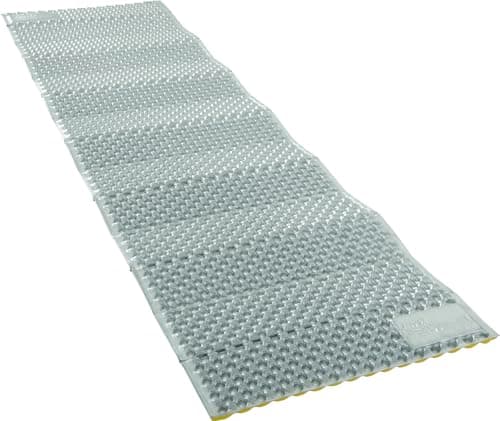
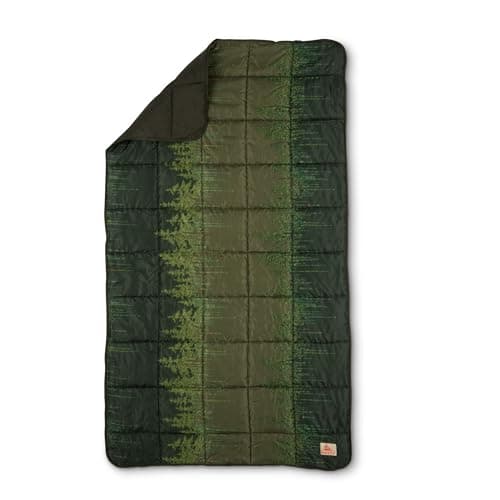
A closed-cell foam pad is the ideal dog bed: a Therm-a-Rest Z Lite Sol publishes R 2.0 at 14 oz and cannot be punctured, which matters when the user has claws. Add a camping blanket over the top in cold weather. Never give a dog an inflatable pad; it will be a flat inflatable pad by morning.
| Situation | What the dog needs | Why |
|---|---|---|
| Warm summer night | A mat, off the bare floor | Comfort and floor protection |
| Cool night, short coat | Foam pad plus a blanket | Ground conduction, same as for people |
| Wet trip | A towel and a dedicated dry mat | A wet dog in a tent makes everything damp |
| Hot day | Shade and water, not exercise | Dogs cool by panting and struggle in heat |
Bring the dog's water, do not let it drink from streams and ponds if you can help it, and add its needs into the trip total. Giardia and other protozoa affect dogs as well as people, and stagnant water carries risks that a filter on your bottle does nothing about because the dog is not drinking through it.
Practically: a collapsible bowl, water offered every time you stop, and a share of the family supply counted into the arithmetic in how much water do you need camping. Portion the food into daily bags at home so nobody is measuring kibble by headlamp.
Dog food is camp food, for storage purposes
Dog food, dog bowls and dog treats are scented items, and they belong in the same sealed container as everything else overnight. A sack of kibble left beside the tent is one of the most reliable ways to attract animals to a campsite. The full list of what counts as scented and where it should go is in how to store food safely when camping.
A six-foot leash is the standard requirement and it is not enough on its own for a campsite, because you cannot hold it for eight hours. The usual setup is a tie-out cable and stake giving the dog a defined area around your pitch, with the short leash used for walking. Attach the tie-out where it cannot wrap around a tent guy line, which is the classic first mistake.
Barking is the reason most campgrounds that ban dogs banned them. A dog in a new environment with people walking past all evening will bark more than at home, and there is no fix available at 10pm. If your dog is reactive to strangers, a pitch at the edge of a site with less foot traffic is worth requesting when you book.
Bag it and bin it, including on trails. Dog waste is not the same as wildlife waste: it is higher in nitrogen and phosphorus from a processed diet, it does not break down the way campers assume, and Leave No Trace guidance treats it as waste to pack out rather than something to leave. Carry more bags than you think you need and a sealed pouch to keep them in until you find a bin.
A single night close to home tells you almost everything: whether the dog settles in a tent, whether it barks at passers-by, whether it needs a blanket, and whether the setup you planned actually works. Doing that before a three-night trip four hours away is the same advice this site gives about every other part of camping, in the weekend camping trip guide and start here.
Kelty
Two 19.5 sq ft vestibules on an 86.5 sq ft floor. The dog sleeps inside and the muddy dog gear does not.
#ad how this is funded · price as of October 23, 2026
Therm-a-Rest
R 2.0 closed-cell foam at 14 oz. An ideal dog bed precisely because there is nothing in it to puncture.
#ad how this is funded · price as of October 23, 2026
Kelty
1.54 lb of synthetic fill to go over a short-coated dog on a cold night, and it washes.
#ad how this is funded · price as of October 23, 2026
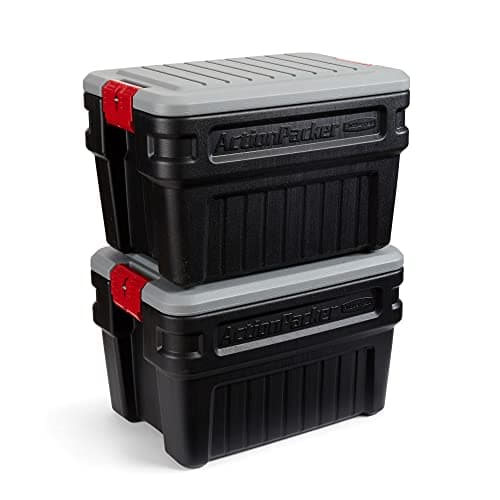
Rubbermaid
One sealed bin for lead, bowls, towel, food and mat, so the dog kit does not migrate through everybody else's bags.
#ad how this is funded · price as of October 23, 2026
Usually in developed campgrounds, and often not on trails or in the backcountry. Rules are set per site rather than per agency, and the National Park Service requires pets to be leashed on a lead no longer than six feet. Check the specific campground's page before booking.
Inside the tent, on its own mat or pad. A dog on a bare tent floor conducts heat into the ground all night, and claws are hard on thin floors. Closed-cell foam is ideal because there is nothing in it to puncture; never give a dog an inflatable pad.
Yes, one size up. A medium dog takes roughly the space of a small person once it stretches out. A tent with large vestibules is worth more than extra floor, because it gives muddy paws and wet gear somewhere to live outside the sleeping area.
In the same sealed container as your own food. Dog food, bowls and treats are scented items and a sack of kibble beside the tent is one of the most reliable ways to attract animals to a campsite.
Every figure on this page comes from a published source. We have not tested this gear, so the numbers are the manufacturer's or the standard body's, not ours. How we research.