The Best Camping Gear for Families, and What Scales Instead of Multiplying
Outfitting four people is not outfitting one person four times. Four items get bigger and you still only buy one; four more you genuinely need one each. Getting that split wrong is how a first family trip costs twice what it should.
Four items get bigger and you still only buy one: the tent, the cooler, the table and the main light. Four items are genuinely one each: the sleeping bag, the sleeping pad, the headlamp and the chair. Buying four of the first group wastes money and boot space. Sharing anything in the second group is what makes a first family trip the last one.
That split is the whole page. It is also the thing nobody tells you in a shop, where the incentive runs the other way, and it is why two families who spend the same money can end up with completely different trips. The shared items are shelter and infrastructure: one of each, sized up. The per-person items are the ones touching a body or holding a body, and there is no version of those that four people share.
Item
One or one each
Why
Tent
one, two sizes up from your headcount
capacity ratings assume bodies with no gear and no gap
Cooler
one big one, plus a small drinks box
one well-packed cooler holds cold far better than two half-full ones
Table
one
a flat surface is a place, not a possession
Main lantern
one
it lights a space; four bright lanterns is glare from four directions
Sleeping bag
one each, sized to the person
a bag warms you by trapping air you heat - a bag too big for a child leaves them cold
Sleeping pad
one each, or one double for the adults
all the insulation under you comes from the pad, not the bag
Headlamp
one each, including the children
one light for four people means three people stand in the dark
Camp chair
one each
nobody shares a chair, and a child without one sits in the dirt
Our summary of where buying one bigger thing works and where it does not.
Two honest exceptions to the per-person column. The adults can share a sleeping surface, and usually should, because one double pad removes the cold gap two singles leave. And a headlamp for a three-year-old is a toy rather than equipment, so buy the cheap one and expect it to be lost.
What to look for
Floor area per person, not the number on the box. Divide the published floor area by your headcount and look for 20 to 25 sq ft each. A “six person” tent at 85 sq ft is a genuine four-person tent by that measure.
Center height against the tallest adult. Six feet means standing to dress a child. Four feet means kneeling, for the whole trip, every time.
Cooler capacity, halved. Published quarts assume no ice. At a realistic two-to-one ice ratio, plan on roughly a third of the stated volume as actual food.
R-value on every pad, including the children's. Cold ground takes heat out of a small body faster than a big one. Three to four is the three-season figure; children are the ones who will complain first if you under-buy.
Runtime at the setting you will actually use. A 1,000 lumen lantern running two hours at full output is a 50 lumen lantern running 100 hours in practice. The low number is the useful one.
One-handed operation. You will be holding a child, a pan or a torch. A catch, valve or zip that needs two hands gets used half as often.
The five systems at family scale
System
Pick
The number that matters
Shelter
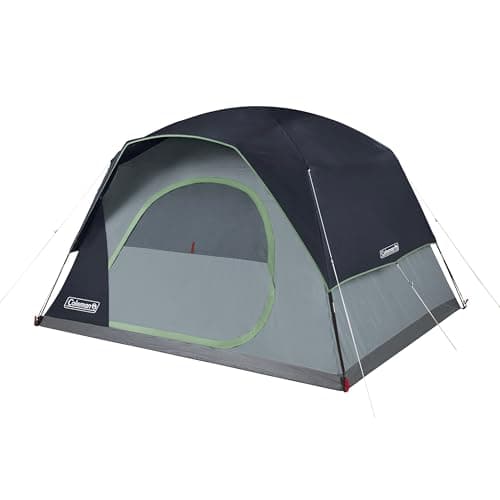
Coleman Skydome 6-Person
85 sq ft floor, 6 ft center height
Sleep, adults
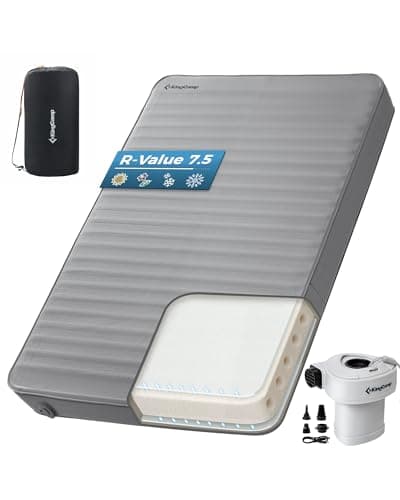
KingCamp Premium Double
R-value 7.5, 79 x 50.4 in
Kitchen, cold
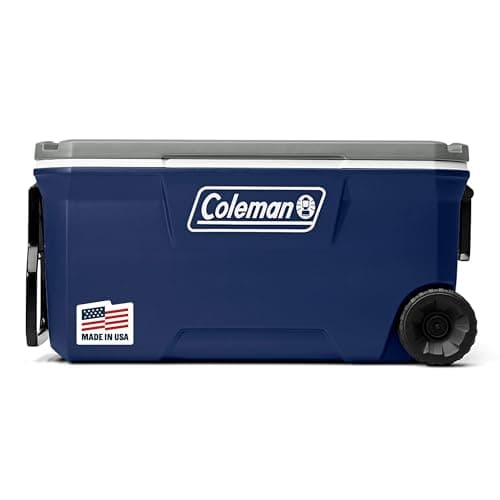
Coleman Classic 100-Quart Wheeled
100 qt, 6 in wheels, lid rated to 250 lb
Surface
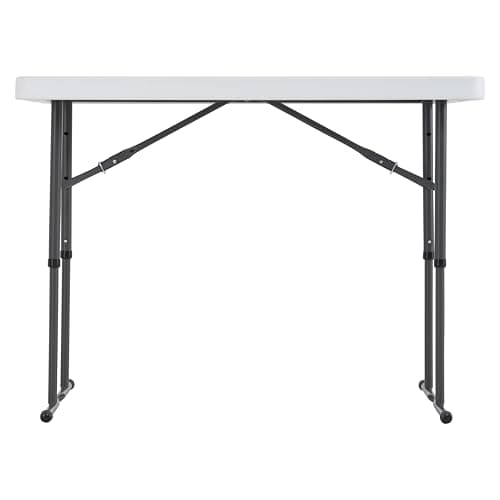
Lifetime 4-Foot Adjustable Table
48 x 24 in, heights 24 / 29 / 36 in
Light
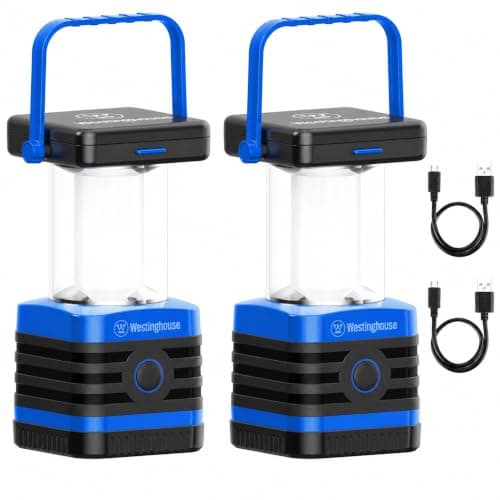
Coleman OneSource 1000-Lumen
1,000 lm high, up to 100 h on low
Figures as published by each manufacturer. Live prices render beside each pick above with their own as-of date.
Those five cover the shared half of the list. The per-person half is a bag, a pad, a headlamp and a chair multiplied by your headcount, and it is where the total actually lands — four of anything adds up faster than one big thing does.
Buy in this order
If the money arrives in stages rather than all at once, the order below gets a family camping soonest for the least outlay. It is deliberately not the order a shop would suggest.
Order
Buy
Because
1
Pads, one per person
the pad decides whether anybody sleeps; this is the thing people skip and then blame the bags
2
Tent, two sizes up
the only item you genuinely cannot improvise
3
Table
cheap, and it changes the campsite more than anything else at the price
4
Sleeping bags, sized per person
a mild-weather bag is fine for a first season; borrow for the children if you can
5
Cooler
a cheap box plus more ice works for one weekend while you save
6
Main lantern plus a headlamp each
phones genuinely cover one trip; they will not cover two
7
Chairs
last, and the one place secondhand is an easy win
Our suggested order. Nothing here needs to be bought all at once.
On what this costs: a full family-of-four kit from the picks above plus four of each per-person item lands in the mid hundreds rather than the low hundreds, and the per-person column is most of it. Prices move, so the live figure beside each pick is the one to trust rather than any number in prose. If the total is the obstacle, the staged order above plus buying the chairs and table used takes a surprising amount off it, and best camping gear on a budget works the same problem from the other end.
Only three things genuinely need to be child-sized
The sleeping bag, the chair and the headlamp. A bag far too long leaves a child heating two or three times the air volume they should be, which is exactly why an adult hand-me-down makes children cold; a chair too big leaves their feet dangling and their back unsupported; an adult headlamp at 300 lumens pointed at a sibling is a problem. Everything else — pads, the tent, the table, the lantern — is size-agnostic, and a foam pad bought for a six-year-old still works for the adult who inherits it. The specific child-scaled picks are in best camping gear for kids, and the bag-sizing method is in kids' sleeping bags and how to size them.
The per-person half, briefly
This page is about the shared items because those are the ones where families lose money. The per-person items still need to be right, and the short version is this. Each child gets a bag whose published fits-to height is close to their own, not an adult bag with the foot stuffed — though a 30 F junior bag that fits to 5 ft covers most of childhood from one purchase. Each person gets a pad with a real R-value; a closed-cell foam pad at R 2.0 cannot puncture, which with children is worth more than a thicker air pad. Each child gets their own light, and a lantern they can carry and not break at 200 lumens with an IPX7 rating survives being dropped in a stream. Each person gets a chair, and a chair with a built-in cooler at 325 lb capacity is the adult version that stops one person getting up every time somebody wants a drink.
What changes about the trip, not the kit
Two things matter more than any purchase on this page. The first is that a family trip runs on a shorter clock than an adult one: arrive with enough daylight to pitch, feed everybody and still have an hour spare, because pitching a six-person tent in the dark with tired children is the single most common reason a family decides camping is not for them.
The second is that the first trip should be close to home and short. One night, an hour's drive, a site with toilets and running water. You will find out what you forgot while it is still easy to go home, and nobody's abiding memory of camping is a three-hour drive to a field in the rain. The planning side of that is in family camping with kids, and the packing list that stops the forgetting is the family camping checklist.
If you are starting from nothing at all and would rather read one page than ten, the five-systems on-ramp at start here is the shorter version of this argument without the family-specific sizing.
The picks in full
1. Best family tent, and the size rule that matters
Coleman Skydome 6-Person Tent
Coleman
85 sq ft of floor and 6 ft of center height for a family of four, pitching in under five minutes.
Coleman publishes a 10 ft by 8 ft 6 in floor (85 sq ft), a 6 ft center height, a weight of about 16.8 lb, a fit for two queen airbeds and a setup time under five minutes.
Buy a six-person tent for a family of four. That is the single most useful rule in this whole category and it is not upselling: tent capacities are measured as bodies laid shoulder to shoulder with no gear, no gap and no room to sit up. Eighty-five square feet across four people is about 21 sq ft each, which lands inside the 20 to 25 sq ft per person that actually works for car camping. The same tent sold as a four-person gives you around 15 each, and you feel the difference on the first wet afternoon.
Six feet of center height is the other number doing real work. It is the difference between kneeling to dress a child and standing to do it, and on a rainy day it decides whether the tent is somewhere you can spend two hours or somewhere you lie down waiting. The full argument, and the step up to a cabin shape if standing room matters more than packed size, is in best family camping tents and what size tent do I need.
The drawback
A single door, so somebody climbs past somebody at 2am. The 10 by 8 ft 6 in floor also will not take two queen airbeds and a path between them, whatever the airbed claim suggests.
A published R-value of 7.5 across 79 by 50.4 in of self-inflating foam, so two adults get one level surface with no cold gap down the middle.
KingCamp publishes an R-value of 7.5, an inflated size of 79 by 50.4 by 3.0 in, a rolled size of 31.9 by 10.2 in, a 9.7 lb weight, self-inflating construction, a 30D stretch TPU top and two universal air nozzles, with an inflatable outer bag that doubles as a pump.
The family-specific reason to buy one double rather than two singles is the gap. Two separate pads drift apart overnight and leave an uninsulated strip exactly where two people's shoulders meet, and a parent who wakes cold at 3am is the person who then deals with whichever child also wakes up. One pad removes the gap. An R-value of 7.5 is more insulation than a three-season trip strictly needs, which is the right way to be wrong about a pad.
Self-inflating matters more with children around than without. A foam core draws its own air while you are doing six other things, so the bed is close to ready without anybody standing on a pump for ten minutes. The full comparison, including a lighter summer-only option, is in best double sleeping pads.
The drawback
9.7 lb rolled to 31.9 by 10.2 in, which is a real chunk of a car boot. It is also one air chamber, so when one of you turns the other knows about it.
3. Best family cooler, and the wheels are the point
Coleman Classic 100-Quart Wheeled Cooler
Coleman
100 quarts holding up to 80 cans and 50 lb of ice, on 6 in wheels, with a sit-on lid rated to 250 lb.
Coleman publishes a 100 qt capacity holding up to 80 cans and 50 lb of ice, a maker's ice claim of up to five days at 90 F, TempLock FX insulation in both the lid and the body, heavy-duty 6 in wheels, a Have-A-Seat lid rated to 250 lb with four cup holders, and a tethered leak-resistant drain plug.
The wheels are the family-specific feature and the reason this beats a bigger-is-worse argument. A loaded cooler is a two-adult carry, and on a family trip both adults are usually already carrying something or someone. Wheeling it from the car to the pitch is the difference between one trip and four.
Capacity is where families most often under-buy, because a cooler that looks enormous in a shop looks ordinary once it holds milk, a pack of sausages, yogurt, fruit, four days of lunches and the ice needed to keep all of it cold. The working rule is roughly two parts ice to one part food by volume, so plan on about a third of the stated volume as actual groceries. Divide the number on the lid in your head and you will buy the right size once.
Treat the five-day figure as a laboratory ceiling rather than a plan. Every opening dumps cold air, and children open coolers. The fixes are free and they matter more than the brand: pre-chill the box and the food the night before, pack it full, keep drinks in a second small cooler so the food box stays shut, and leave the meltwater in. The physics is in how long does ice last in a cooler.
The drawback
A hundred quarts is a lot of cooler: loaded it is heavy enough that the wheels are not optional, and empty it still occupies a large fixed block of boot space. The five-day ice claim assumes a full load and a closed lid, which a family opening it hourly will not deliver.
4. Best family table, and the most underrated purchase here
Lifetime 4-Foot Adjustable Folding Table
Lifetime
A 48 by 24 in HDPE top rated to 350 lb, adjustable to 24, 29 or 36 in, with a ten-year warranty.
Lifetime publishes a 48 by 24 in HDPE top, three heights at 24, 29 and 36 in, a 350 lb capacity, a 24.9 lb weight and a ten-year warranty.
Most people buy this last and should buy it third. With four people, the ground stops being a surface almost immediately: it is where the stove cannot safely go, where food gets dropped, where a toddler is already sitting. A table is the item that turns a campsite from a pile of bags into somewhere you can cook, eat, play cards and change a child, and it is cheaper than almost anything else on this page.
The adjustable heights are the family feature, not a gimmick. The 24 in setting is a children's table that keeps small hands away from a hot stove at the other end of camp; 29 in is dining height for adults; 36 in is a standing prep counter that saves your back. The 350 lb rating also means it tolerates a child sitting on it, which will happen. Layout advice, including keeping the stove downwind of the prep surface, is in the camp kitchen setup guide.
The drawback
24.9 lb and a rigid 4 ft panel, so it takes a fixed slab of boot space that a roll-top camp table would not. Three fixed heights rather than continuous adjustment.
1,000 lumens on high and 50 on low, with up to 100 hours of runtime at the low setting from a 4,800 mAh rechargeable battery.
Coleman publishes 1,000 lumens on high and 50 on low, a runtime of two hours on high and up to 100 hours on low, a 4,800 mAh lithium-ion battery and an IPX4 water-resistance rating.
A family needs one bright area light and then much less than people expect. The job of the big lantern is the hour around dinner: cooking, finding things, eating, washing up. After that, 50 lumens is plenty and the 100 hour low setting means one charge covers a long weekend. Buying four bright lanterns is the commonest lighting mistake at a family pitch, because the result is glare from every direction and nobody's eyes adjust.
Rechargeable is the right call with children in the party, for a reason that is not about running cost: there are no loose AA cells to be left where a toddler finds them. Where the per-child lights come in is covered below, and the whole-campsite approach, including why a string of low lights beats a second lantern, is in best campsite lighting setup.
The drawback
Two hours at full output is the honest number, so the 1,000 lumen figure is for cooking rather than for the evening. IPX4 is splash resistance, not submersion.
A six-person tent. Capacity ratings count bodies laid shoulder to shoulder with no gear and no gap, so divide the published floor area by your headcount instead and look for 20 to 25 sq ft each. The Coleman Skydome 6-Person publishes 85 sq ft, which is about 21 sq ft per person for a family of four; the same tent sold as a four-person gives you around 15 each.
QWhat camping gear should a family buy first?
Sleeping pads, one per person. The pad supplies all of the insulation between a person and the ground, and cold ground pulls heat out faster than cold air does, so a cheap pad under an expensive bag is the commonest reason a first family trip goes badly. Tent second, table third, then bags, cooler, lights and chairs.
QWhat size cooler does a family of four need?
Plan on 70 to 100 quarts for a weekend, and divide the number in your head. Published capacity assumes no ice; at a realistic two parts ice to one part food, you get roughly a third of the stated volume as actual groceries. Get wheels if you can - a loaded cooler is a two-adult carry and on a family trip both adults are usually carrying something else. A second small cooler for drinks is worth more than a bigger single box, because it keeps the food cooler shut.
QDoes every child need their own sleeping bag and headlamp?
Yes to both, and they are two of only three things that genuinely need to be child-sized. A sleeping bag warms you by trapping a layer of air your body heats, so a bag far too long leaves a child heating two or three times the volume they should be. A single light for four people means three people stand in the dark, which with children is how trips go wrong at bedtime.
QCan a family share one big sleeping pad?
The adults can and usually should, because two single pads drift apart overnight and leave an uninsulated strip exactly where two people's shoulders meet. Children should have their own, sized to them and with a real R-value - a closed-cell foam pad is the sensible choice because it cannot puncture.
QHow much does it cost to kit out a family of four for camping?
A complete kit from the picks here plus four of each per-person item lands in the mid hundreds rather than the low hundreds, and the per-person column - four bags, four pads, four headlamps, four chairs - is most of it. Nothing needs buying at once: pads and a tent get you camping, and the chairs and table are the easiest things to buy used. Live prices render beside each pick above, which is the figure to trust.
How we picked
Everyone else in this category will tell you they tested twenty of these. We have not tested any of them, and we would rather say so than pretend. There is no gear closet here and no test lab.
What we did instead: pulled the published specifications from each manufacturer's own spec sheet or manual, named the standard behind every rating so you can check what it actually promises, did the arithmetic that turns a spec into a decision, and pulled today's real retail price rather than quoting one from memory. Every pick states a drawback, because a list where nothing is wrong with anything is an advert.
The limits of that method, stated plainly: published specs do not capture zipper quality, seam durability, or how a tent behaves at 2am in a storm. Where that matters, we say so on the pick. The full method is here.