The Best Hand Warmers for Camping, Compared on Runtime and What Happens When They Run Out
Buy rechargeable if you want one object you keep for years, and buy disposable if you want ten pairs in the glovebox that cannot go flat. The mistake is buying one type expecting the other type's strength.
Trail & Tarp earns a commission from qualifying purchases made through links on this page, at no extra cost to you. Full disclosure.
Quick picks
#
Product
Best for
Price
1
Best overall
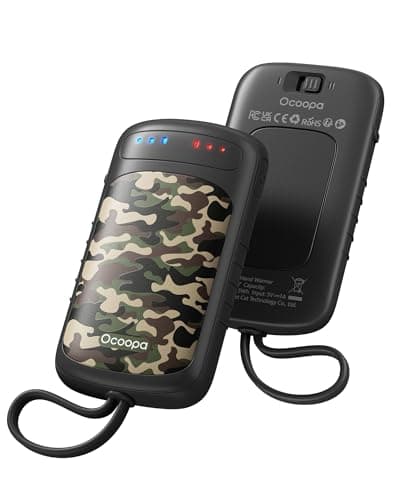
OCOOPA MagTwins UT2s Rechargeable Hand Warmers
A magnetically joinable pair, 5,000 mAh each, 8-plus hours per warmer on low, four heat levels to 137 F, in a brushed aluminum body that also charges a phone.
One pair of warmers you keep for years, on a trip where you can charge things in the car
Buy disposable air-activated warmers if the trip has no power and you do not want to manage charge state — they cost cents per hour and cannot go flat. Buy a rechargeable pair if you want one object for years and can charge it in the car. Buy a refillable catalytic warmer if you need the longest single run and are willing to carry fuel. The three types fail in completely different ways, and that is the whole decision.
Hand warmers are the cheapest meaningful upgrade to a cold-weather camping kit, and they are bought wrong constantly — usually by someone who buys one rechargeable pair, forgets to charge it, and concludes hand warmers do not work. They work. The failure was a charging habit, not the physics.
Compared on published numbers
Warmer
Type
Runtime
Heat
Reusable
Needs
OCOOPA MagTwins UT2s
rechargeable
8+ h per warmer on low
4 levels to 137 F
yes
USB-C charge
HotHands 10-pair pack
disposable, air-activated
up to 10 h each
average 135 F
no
nothing
Zippo 12-Hour
refillable catalytic
12 h per fill
not published
yes
lighter fluid, a flame to start
OCOOPA UT5 Duoheat
rechargeable
up to 8 h
3 levels, 98 to 125 F
yes
USB-C charge
Figures as published by each maker on 2026-10-17. Zippo publishes no temperature for its warmer and OCOOPA publishes no capacity for the UT5 Duoheat; those cells say so rather than carrying an estimate.
Read that table as three columns of trade-off. Runtime is best on the Zippo. Convenience is best on the HotHands. Everything else — adjustability, reuse, charging a phone off the same object — belongs to the rechargeables.
Cold makes lithium batteries worse, and nobody puts that on the box
A lithium-ion cell delivers less of its rated capacity as the temperature falls, because the chemistry slows down. That is the same reason your phone dies at a winter trailhead with 40% showing. A rechargeable hand warmer is a lithium cell plus a heating element, so the runtime figure on the listing is a room-temperature number and the real figure in freezing air is lower.
None of the makers here publishes a cold-weather runtime, so we are not going to supply one. What you can do with that fact is practical: keep the spare warmer inside your jacket rather than in an outside pocket, and treat a published 8 hours as an evening rather than a day. The same discipline applies to every battery at a cold campsite — see best power banks for camping for the charging side of it.
A hand warmer is not a treatment for cold hands that have stopped working
Hands that are numb, white or clumsy are past the point a 135 F pouch fixes. Get out of the wind, get the hands into an armpit or a groin, get warm liquid into the person, and get them into a sleeping bag if the shivering will not stop. A hand warmer prevents that state; it does not treat it. The campsite version of this is in winter camping for beginners, and the kit side is in best camping first aid kits.
Where they go, in order of how much difference it makes
Inside a glove or mitten, against the back of the hand. The highest-value placement by a wide margin, because the blood that warms your fingers passes right there. A mitten has room for a warmer and a glove often does not, which is one more argument for mittens — see best gloves for camping.
In a jacket chest pocket. Warms your core slightly and gives you somewhere to park your hands between tasks. This is where the second warmer of a pair should live.
In the foot of a sleeping bag, briefly. Works, with one rule: never a rechargeable, and never left on against skin overnight. Disposable warmers are air-fed, so a sealed sleeping bag starves them anyway. If you are cold in your bag the problem is almost always underneath you rather than around you — why you get cold in a sleeping bag has the arithmetic.
In a boot. The weakest placement. Boots are tight and airless, which suppresses a disposable warmer and crushes a rechargeable one. Dry socks and a boot dryer do far more for cold feet, and down booties do more again once you are off your feet.
What these cost, and the only honest way to compare that
Every price on this page is pulled live from the retailer and stamped with the date it was read, on each buy button. We do not type prices into the page, because a number typed in September is a lie in December.
What the prices tell you when you look at them: the disposable pack is the cheapest thing here by a factor of several, and it is also the only one with a cost per trip rather than a cost once. Ten pairs that run 10 hours each is 100 warmer-hours for the price of a sandwich. A rechargeable pair is more up front and effectively free after the second winter, provided you charge it.
What to buy
Buy the HotHands 10-pair pack first, whatever else you do. It is the cheapest way to find out how much hand warmth changes a cold evening, and the unused pairs keep.
Add the OCOOPA MagTwins if cold hands are a recurring problem for you rather than an occasional one, and you camp somewhere you can charge in the car. Buy the Zippo instead if your nights are long and your trips are unpowered. Buy the UT5 Duoheat if you are buying for somebody else and want something slim, boxed and sized for anyone.
And treat all of them as the last layer rather than the first. Warm hands start with a windproof shell, a hat and a dry base layer — how to layer for camping covers the order, and neck gaiters and balaclavas covers the other end of the same problem.
The picks in full
1. Best overall
OCOOPA MagTwins UT2s Rechargeable Hand Warmers
OCOOPA
A magnetically joinable pair, 5,000 mAh each, 8-plus hours per warmer on low, four heat levels to 137 F, in a brushed aluminum body that also charges a phone.
OCOOPA publishes 5,000 mAh per warmer, which the listing presents as 10,000 mAh because there are two of them. Each one runs 8-plus hours on low, carries four heat settings up to 137 F, charges over USB-C, and will also top up a phone roughly one and a half times from full.
The magnets are the reason to pick this pair over cheaper rechargeables. Joined, the two make a single palm-sized block you can wrap both hands around — which is the shape that actually warms cold hands, because the heat goes into your palms rather than into a coat pocket. Separated, one goes to each hand, or one goes to whoever in the group is suffering most. No other configuration decision matters as much as that.
The unibody aluminum shell is a quiet advantage too: metal spreads the heat instead of concentrating it over the heating element, which is why the cheap plastic-shelled ones feel scalding in one spot and lukewarm everywhere else.
The drawback
The listing's headline 16-hour figure is the two warmers added together, not one unit, and at 137 F on the top setting these get hot enough that you will not hold one bare-handed for long. A flat battery is a paperweight until you can charge it.
Published specs
Count
2 warmers, magnetically joinable
Battery
5,000 mAh each; 10,000 mAh the pair
Runtime
8+ h per warmer on low; the listing's 16 h figure is the two added together, not one unit
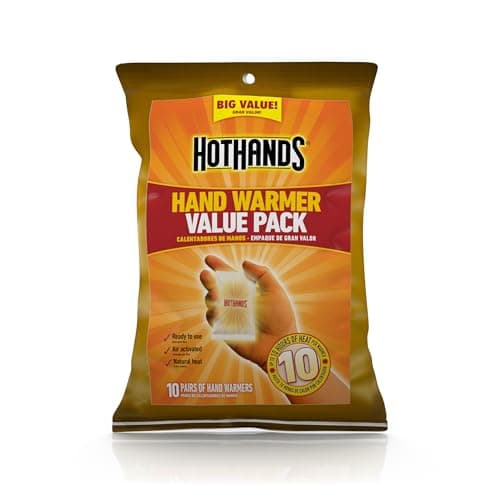
Ten pairs of air-activated single-use warmers, up to 10 hours each at an average 135 F, with no battery, no cable and nothing to forget.
HotHands publishes up to 10 hours per warmer at an average 135 F, air-activated, and lists its contents: iron, water, vermiculite, charcoal, polymer and salt. That is iron rusting on purpose — a slow exothermic oxidation, which is why opening the pouch to air is the entire activation procedure and why you cannot stop it once it starts.
For a beginner outfitting a household, this is the one to buy first. There is no charge state to manage, no proprietary cable, and nothing that fails in the cold the way a lithium cell does. They live in the glovebox or the first aid kit and they work two winters later.
Two practical notes. They need air, so a warmer sealed inside a tight boot or an airtight glove underperforms. And they are warmers, not heaters: a pair in your gloves is transformative, a pair loose in a coat pocket is barely noticeable.
The drawback
Single use. Ten pairs is one cold weekend for a family of four, you cannot turn them off once opened, and they produce ten pairs of pouches to pack out.
Published specs
Count
10 pairs, single-use
Runtime
up to 10 h per warmer
Activation
air-activated; ready in minutes once opened
Heat
average 135 F
Contents
iron, water, vermiculite, charcoal, polymer and salt
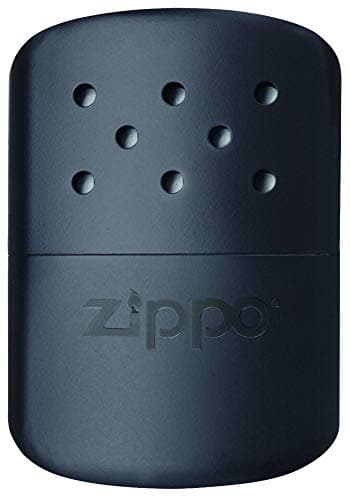
Twelve hours per fill of lighter fluid, flameless and catalytic, in a metal case with a warming bag and filling cup in the box.
Zippo publishes 12 hours per fill, flameless catalytic heat, a metal body, and a warming bag plus filling cup included. The burner is a platinum catalyst: lighter fluid vapor oxidizes on the catalyst surface without an open flame, which is why it puts out heat for half a day from a tablespoon of fuel.
Twelve hours from one unit is longer than anything else here, and the fuel does not care how cold it is — a real advantage over a lithium battery, which loses usable capacity as the temperature drops. If your winter nights are long, this is the technical winner.
It is also the fussiest. You light the burner, you slide it into the pouch, and you accept that your hands smell faintly of naphtha. Carrying lighter fluid is also a consideration if you fly to a trip rather than drive.
The drawback
You have to buy fuel separately, it smells of lighter fluid, the catalytic burner needs a flame to start, and Zippo publishes no temperature figure at all so you cannot compare its heat to anything on this page.
Published specs
Runtime
12 h per fill
Fuel
refillable; lighter fluid, sold separately
Heat type
flameless catalytic
Body
metal
In the box
warming bag and filling cup
Note
Zippo publishes no temperature figure for this warmer
4. Best cheap rechargeable, and the easiest thing to wrap
OCOOPA UT5 Duoheat Rechargeable Hand Warmers, 2-Pack
OCOOPA
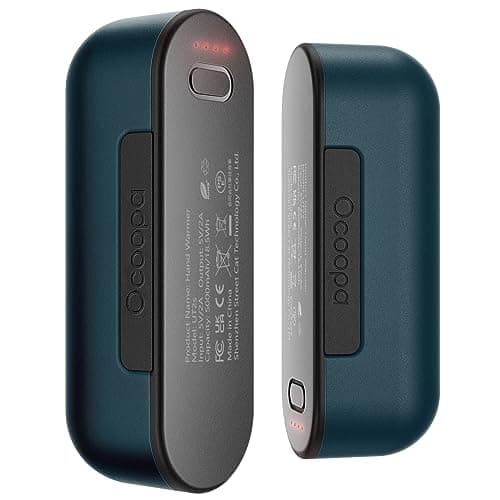
Two warmers at 2.36 oz and 0.6 in thick, three levels from 98 to 125 F, up to 8 hours a charge, on UL-certified cells.
Published as 2.36 oz each and 0.6 in thick, with three settings from 98 to 125 F, up to 8 hours on a charge, an LED charge display, USB-C charging and UL-certified cells (the listing cites file E535516).
Thickness is the spec that matters on a warmer you intend to use inside a glove, and 0.6 in is thin enough that it does not fight the glove. The 98 F bottom setting is the other useful part: a warmer you can leave on all evening without cooking your hands is a different product from one with a single scorching setting.
We are naming this one partly because of what it is: a sub-$20 boxed pair that needs no sizing and no taste. If you are shopping the stocking stuffer end of the season, this is the warmth category's answer.
The drawback
OCOOPA publishes no mAh capacity for this model, so the 8-hour claim cannot be sanity-checked against a battery size. Lower top temperature than the MagTwins and a plastic shell rather than aluminum.
QAre rechargeable or disposable hand warmers better for camping?
Disposable for a trip with no power, rechargeable for regular use with a car to charge in. Disposable air-activated warmers run up to 10 hours each, cost cents per hour and cannot go flat; a rechargeable pair runs about 8 hours per warmer, is adjustable, and is worthless if you forgot to charge it. Most camping households are best served by owning both.
QHow hot do hand warmers get?
HotHands publishes an average of 135 F for its air-activated warmers. The OCOOPA MagTwins runs four levels up to 137 F and the UT5 Duoheat three levels from 98 to 125 F. Zippo publishes no temperature figure for its 12-hour catalytic warmer, so it cannot be compared with the others on heat.
QCan you put a hand warmer in a sleeping bag?
A disposable warmer, briefly and not against bare skin, and even then it is throttled because the bag starves it of the air it needs. Never a rechargeable one. If you are cold in a sleeping bag the cause is almost always insufficient insulation under you rather than the bag itself.
QDo hand warmers work inside gloves?
Yes, and that is the best place for them, against the back of the hand where the blood supply to the fingers passes. Mittens have the room for it; close-fitting gloves often do not. A sealed, airtight glove will also suppress a disposable warmer, which needs air to react.
QHow long do rechargeable hand warmers last in freezing weather?
Less than the published figure, because lithium-ion cells deliver less of their rated capacity as temperature drops. None of the makers on this page publishes a cold-weather runtime, so treat a published 8 hours as an evening rather than a day and keep the spare inside your jacket.
How we picked
Everyone else in this category will tell you they tested twenty of these. We have not tested any of them, and we would rather say so than pretend. There is no gear closet here and no test lab.
What we did instead: pulled the published specifications from each manufacturer's own spec sheet or manual, named the standard behind every rating so you can check what it actually promises, did the arithmetic that turns a spec into a decision, and pulled today's real retail price rather than quoting one from memory. Every pick states a drawback, because a list where nothing is wrong with anything is an advert.
The limits of that method, stated plainly: published specs do not capture zipper quality, seam durability, or how a tent behaves at 2am in a storm. Where that matters, we say so on the pick. The full method is here.