The Best Camping Gear for Older Campers: Getting Up Is the Design Brief
Almost all camping gear is designed for people who can get off the floor easily. Three measurements change that, and none of them appear on the front of the box.
Seat height around 18 in, sleeping surface either thick or off the ground entirely, and a tent with enough height to stand while dressing. Those three change camping for an older body more than any amount of money spent elsewhere.
None of this is about capability. It is about not spending the weekend getting up off the floor, which is the specific thing that makes people decide camping is no longer for them.
What to look for
Item
The spec that matters
Target
Camp chair
seat height, and rigid armrests to push from
17 to 19 in
Sleeping
thickness, or height off the ground
4 in of pad, or a cot at knee height
Tent
center height and wall shape
enough to stand, or at least kneel upright
Tent door
a low sill and a wide opening
step over, not climb through
Lighting
low-setting runtime, and a light per person
a lit path from tent to table
Cooler and bins
wheels, or two of them half-loaded
nothing over about 40 lb loaded
What to read on the spec sheet, and what to aim for.
The tent height point is worth expanding. Most dome tents reach their published height at one point in the middle, so “6 ft center height” does not mean you can stand anywhere useful. Cabin-style tents hold height across the floor, which is the trade in dome vs cabin tents.
A cot is usually the single best upgrade
If getting up from ground level is the problem, no pad solves it — a thicker pad is still the floor. A cot puts the sleeping surface at roughly chair height, which turns getting up into standing rather than climbing. It also keeps you off cold ground and creates storage underneath. The trade is bulk, weight and a colder underside in winter that needs a pad on top anyway. The options are in best camping cots and best cots for big and tall campers.
Warmth, because the margin is smaller
Older bodies generate and hold less heat, so the same night feels colder and the consequences arrive faster. Two practical responses, neither expensive.
First, over-specify the pad rather than the bag. Heat loss to the ground is the dominant pathway and R-value is what stops it. Second, add a liner, which adds warmth for a few ounces and washes easily. The full explanation is in why you get cold in a sleeping bag.
Weight, and splitting the load
The other thing that quietly ends camping trips is the carry from the car to the site. A loaded cooler, a tent, a bin of kitchen gear and two chairs is several heavy trips over uneven ground, usually at the end of a long drive.
Two fixes, neither expensive. Split heavy items across more containers so nothing exceeds about 40 lb loaded — two half-full bins beat one full one, and two smaller coolers beat one large box. And use wheels: a wagon turns four trips into one and rolls over grass and gravel that a hand truck will not.
On the gear itself, prefer items you can operate one-handed and without kneeling: a stove with a push ignition rather than matches, a tent you can pitch standing up, and a cooler with a latch rather than a lid that needs lifting clear. None of those costs more than the alternative; they are just rarely the specification anyone compares on.
Site choice matters as much as gear
Book a site near the bathhouse. The single most useful decision, and it costs nothing.
Choose level, firm ground. A slope transfers into your back all night and makes standing up harder.
Look for accessible sites. Many campgrounds have designated ones with firm surfaces and closer parking, and they are frequently unbooked.
Pitch with short carries. Park close, and use a wagon rather than multiple trips — camping wagons.
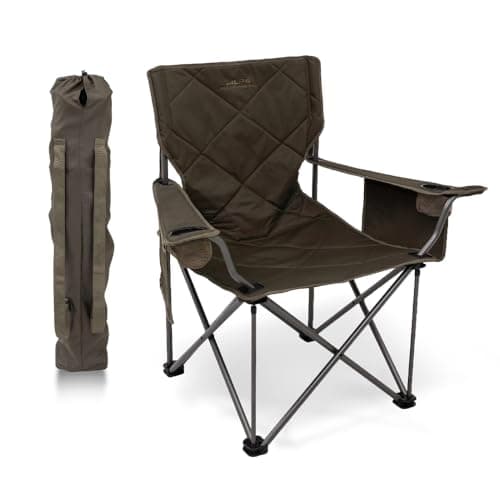
An 18 in seat height on an 800 lb-rated frame, 38 in tall, in 600D polyester.
ALPS publishes an 800 lb capacity, an open size of 38 by 38 by 20 in, an 18 in seat height, a 13 lb weight and 600D polyester.
Eighteen inches is standard dining-chair height, which is the height your knees and hips already know. The 800 lb frame rating matters as stiffness rather than capacity: a frame that does not flex is one you can push up from. The detail is in chairs for bad backs and older campers.
The drawback
13 lb and 38 by 38 in open. It is the biggest chair here and two of them fill a trunk.
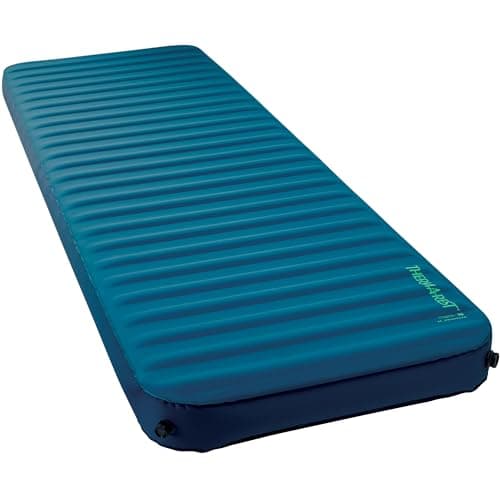
4.25 in of self-inflating thickness at R 7.0, 77 by 25 in.
Therm-a-Rest publishes R 7.0, a 4.25 in thickness, 77 by 25 in in the large and a 4 lb 6 oz weight.
Thickness does two jobs here: it stops hips and shoulders reaching the ground, and the R 7.0 stops the ground drawing heat out all night, which older campers feel sooner. The cot alternative is compared in air mattress vs sleeping pad vs cot.
The drawback
4 lb 6 oz and bulky. It is also still on the floor — if getting up from ground level is the problem, a cot is the better answer.
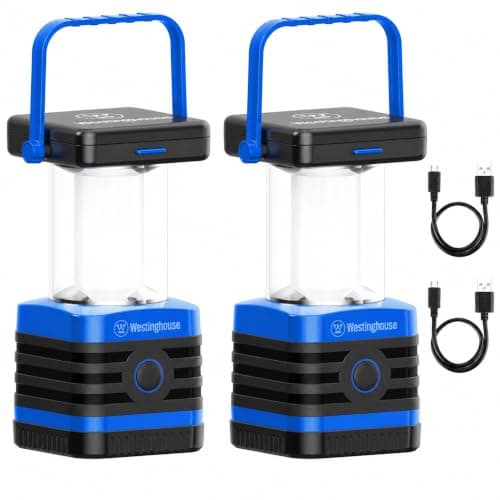
50 lm for up to 100 hours, or 1,000 lm when you need to find something.
Coleman publishes 1,000 lm high and 50 lm low, 2 hours on high and up to 100 hours on low, a 4,800 mAh lithium-ion battery and IPX4 water resistance.
Lighting matters more with age than most gear lists admit: contrast sensitivity falls, and guylines and tent pegs at ankle height are the most common trip hazard on any campsite. A lit site is a safer site — best campsite lighting setup.
One with a seat height around 17 to 19 in and rigid armrests to push up from. That is standard dining-chair height, where your knees sit level with your hips and you can rise by leaning forward. The ALPS King Kong publishes 18 in on an 800 lb-rated frame, and the high rating means the frame does not flex as you stand.
QIs a cot or an air mattress better for seniors?
A cot, if getting up from the ground is the difficulty, because it puts the sleeping surface at roughly chair height. A thicker pad improves comfort but is still floor level. Cots are colder underneath, so put a pad on top in cool weather.
QHow do older campers stay warm at night?
Over-specify the sleeping pad rather than the bag. Most heat is lost into the ground, and R-value is what stops it, so a pad at R 7 does more than a warmer bag on a thin pad. A liner adds a few ounces of extra warmth and washes easily.
QWhat should older campers look for in a campsite?
A site near the bathhouse, level firm ground, and close parking. Many campgrounds have designated accessible sites with firm surfaces that often go unbooked. Those choices do more for comfort than any single piece of gear.
How we picked
Everyone else in this category will tell you they tested twenty of these. We have not tested any of them, and we would rather say so than pretend. There is no gear closet here and no test lab.
What we did instead: pulled the published specifications from each manufacturer's own spec sheet or manual, named the standard behind every rating so you can check what it actually promises, did the arithmetic that turns a spec into a decision, and pulled today's real retail price rather than quoting one from memory. Every pick states a drawback, because a list where nothing is wrong with anything is an advert.
The limits of that method, stated plainly: published specs do not capture zipper quality, seam durability, or how a tent behaves at 2am in a storm. Where that matters, we say so on the pick. The full method is here.