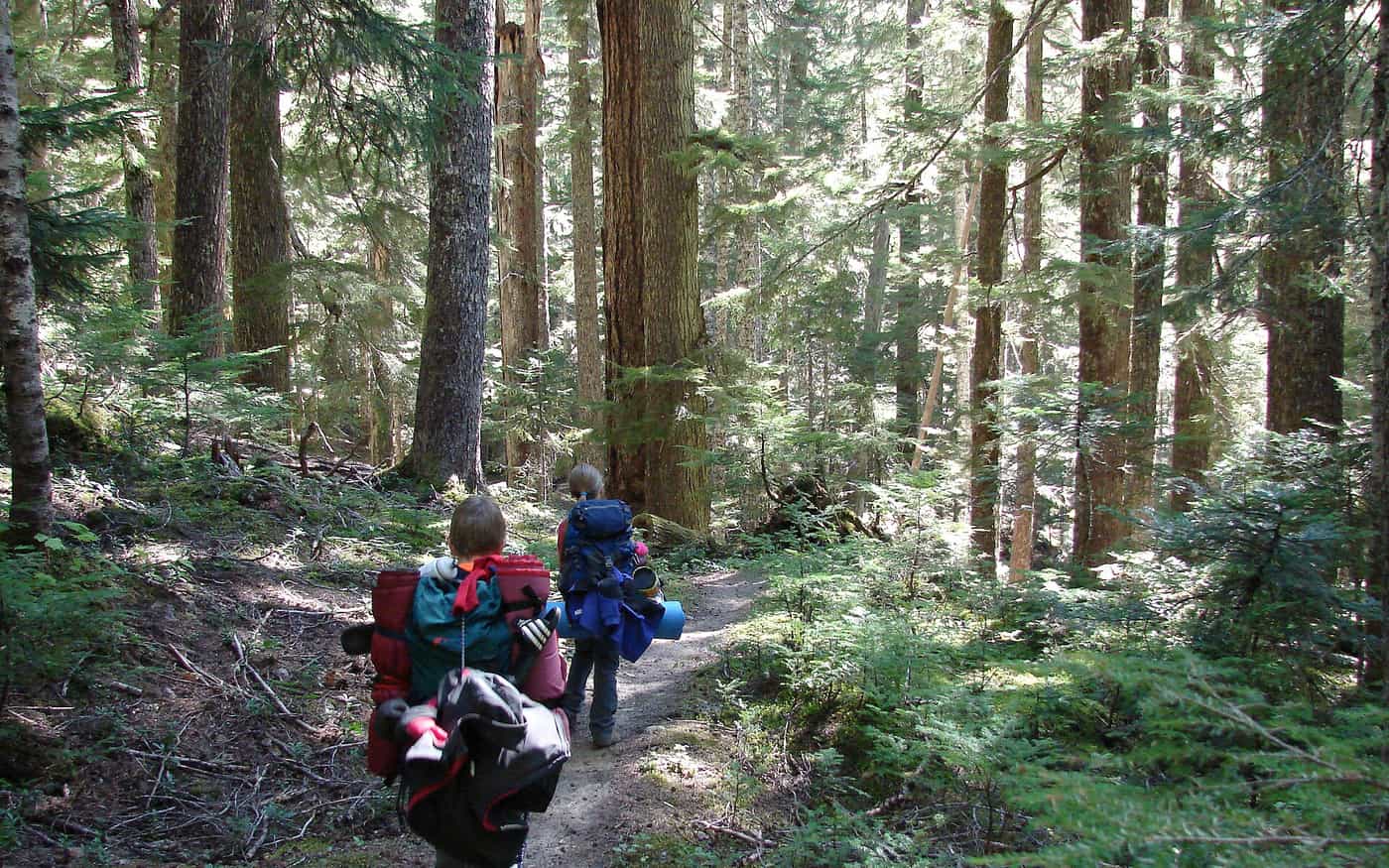
A day walk needs water, food, a warm layer, a shell, a first aid kit, a headlamp, a map and a phone. That is 15 to 20 liters. Anything larger gets filled with things you did not need, and a full 35 L pack on a three-hour walk is just a heavier three-hour walk. All three packs here sit at 20 to 22 L for that reason.
Pack
Volume
Weight
Shell
Back panel
Frame
Osprey Daylite Plus
20 L
1.29 lb
300D recycled polyester, 600D base
Padded
None
Gregory Nano 22 H2O
22 L
1 lb 3.4 oz
not published
Grooved foam
None
Osprey Talon 22
22 L
2.4 lb
not published
AirScape ventilated
Framesheet
All figures as published by the manufacturers. Where a maker does not publish a shell denier we have left it blank rather than estimating one.
What goes in it, and what it weighs
A sensible day load for one adult, with rough weights: two liters of water at about 4.4 lb, food at 1 lb, an insulating layer at 1 lb, a shell at 10 to 14 oz, a first aid kit at 8 oz, a headlamp at 3 oz, and a map and compass at 2 oz. Call it 8 to 9 lb.
Water is over half of that, which is the single most useful thing to know about day-pack weight. It is also why the person carrying for a family ends up at 15 lb or more, and why the frame in the Kelty stops being a luxury. If your day loads are consistently over 15 lb, you want a real hip belt and the fitting method in how to fit a backpack.
A daypack is not a small backpacking pack
None of these has a load-bearing hip belt, and that is the line between the categories. A backpacking pack such as an Osprey Rook 65 publishes a 30 to 40 lb load range because its frame and belt put roughly 80% of the weight on your hips. A daypack hangs its load from your shoulders, which is fine to about 15 lb and unpleasant above it. Buy for the load, not for the volume.
The features that actually matter
A reinforced base. Packs die from the bottom up. Osprey publishes 600D on the base against 300D on the body for exactly this reason.
Two side pockets that fit a real bottle. Mesh pockets that only hold a slim bottle are a daily irritation.
A hip strap, even a webbing one. Not load-bearing, but it stops the pack swinging on descents.
A sternum strap. Keeps the shoulder straps from sliding outward, which is what makes a pack feel like it is pulling backwards.
Somewhere for wet things. An external stash pocket for a damp shell means the inside of the pack stays dry.
Two features that matter less than the marketing suggests: laptop sleeves, which are dead weight on a trail, and integrated rain covers, which are useful but easily replaced by a dry bag inside the pack — the approach that actually keeps things dry, because a cover does nothing about water running down your back into the top.
Fitting a daypack
Daypacks are usually one size, so the fit adjustment you have is strap length and position. Load the pack to a realistic weight first, then tighten the shoulder straps until they follow your shoulders with no gap, set the sternum strap an inch or two below your collarbone, and snug the hip strap if there is one.
Two symptoms and their fixes. If the pack pulls you backwards, the heavy items are too far from your back — repack with water and food against the spine. If the straps dig into your neck, the pack is riding too high, which on a one-size pack usually means it is too small for your torso rather than too heavy.
What we did not do
We have not loaded or walked in any of these. Every volume, weight, dimension and fabric figure above is the manufacturer's published specification with a link to where it was read, and the day-load arithmetic is our own from published component weights. See how we research, and how to clean and care for a backpack for keeping whichever you choose usable.
The picks in full
1. Best all-round daypack
Osprey Daylite Plus Daypack
Osprey
20 L at 1.29 lb in bluesign-approved 300D recycled polyester with a 600D base, both with a PFC-free DWR finish.
Osprey publishes a 20 L volume (1,220 cu in), dimensions of 18.9 by 11.02 by 9.45 in, a 1.29 lb weight, a face fabric of 300D recycled polyester with PFC-free DWR, a 600D recycled polyester accent and base, and bluesign approved GRS-certified recycled construction.
The two-denier construction is the detail that matters. A pack wears out at the bottom, where it is put down on rock and gravel; doubling the denier there and keeping the body light is exactly the right allocation of weight, and it is the same logic as a duffel with a reinforced base.
One point two nine pounds is genuinely light for a 20 L pack with a structured back panel, and it is the reason this one ends up used for everything — walks, day trips, a flight cabin bag. What it does not have is a load-bearing hip belt, so treat 15 lb as the practical ceiling. Beyond that you want the harness described in how to fit a backpack.
The drawback
No hip belt worth the name, so above about 15 lb the load sits entirely on your shoulders.
22 L at 1 lb 3.4 oz with integrated hydration routing, a grooved foam back panel and a top drawcord closure.
Gregory publishes a 22 L volume, a 1 lb 3.4 oz weight, dimensions of 20.25 by 11.25 by 8.75 in, a grooved foam back panel, padded shoulder straps with a magnetic sternum buckle, integrated hydration routing, an easy-pull top drawcord opening with a zippered lid pocket and key clip, a zippered side stash pocket and a side mesh bottle pocket.
Hydration routing is the reason to pick this one. A reservoir with a hose over the shoulder means people drink continuously rather than only when someone suggests a stop, and on a hot day that difference is measurable in how the group feels by mid-afternoon. The water arithmetic is in how much water do you need camping.
The magnetic sternum buckle is a small thing that turns out to matter: it is the one fastening you do while walking, often with cold hands, and a magnet closes it one-handed. The grooved foam back is a fair trade for weight, though it is warmer against your back than a tensioned mesh panel.
The drawback
A drawcord top is slower to get into than a zip, and a grooved foam panel ventilates less than a suspended mesh one.
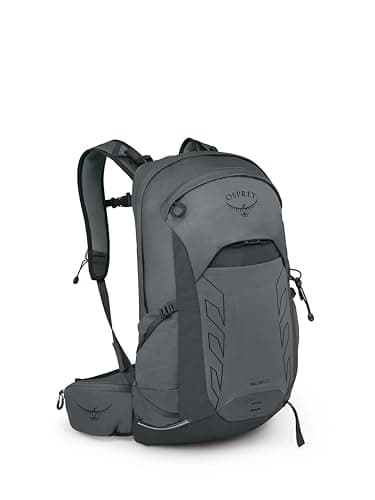
22 L over a framesheet and an AirScape ventilated back panel, with an adjustable torso and a real hipbelt, at 2.4 lb.
Osprey publishes a 22 L volume, a 2.4 lb / 38.4 oz weight, dimensions of about 19.3 by 11.8 by 7.9 in, an AirScape ventilated back panel over a framesheet, an adjustable torso length and a continuous padded hipbelt.
A framesheet in a daypack is the differentiator here. It keeps the pack's shape under an uneven load, transfers some weight onto your hips rather than hanging all of it from your shoulders, and stops hard objects pressing into your back. On a walk carrying a first aid kit, water, food and a jacket for four people, that is noticeable.
The ventilated panel is the other reason to consider it in warm weather: an air gap between your back and the pack is the difference between a damp shirt and a soaked one. The adjustable torso matters more than it sounds, because a daypack that does not match your back length puts the load in the wrong place — see how to fit a backpack.
The drawback
2.4 lb is roughly double the other two here. You are carrying the suspension everywhere, and it is wasted weight if you only ever take a jacket and a sandwich.
Twenty to 22 liters covers a full day: two liters of water, food, an insulating layer, a shell, a first aid kit, a headlamp and a map. Larger packs get filled with things you did not need, and the weight comes with you.
QHow much does a day hiking load weigh?
About 8 to 9 lb for one adult, and water is over half of it - two liters is roughly 4.4 lb. Someone carrying for a family easily reaches 15 lb, which is the point at which a daypack without a load-bearing hip belt starts to hurt.
QDo daypacks need a hip belt?
A webbing hip strap stops the pack swinging on descents and is worth having. A load-bearing padded belt is a different thing and belongs on a backpacking pack; if your day loads are consistently over 15 lb, you want that rather than a daypack.
QIs a hydration reservoir better than water bottles?
For hot days, yes, because people drink continuously from a hose rather than only when somebody suggests a stop. Gregory publishes integrated hydration routing on the Nano 22 for that reason. Bottles are easier to refill, monitor and clean.
How we picked
Everyone else in this category will tell you they tested twenty of these. We have not tested any of them, and we would rather say so than pretend. There is no gear closet here and no test lab.
What we did instead: pulled the published specifications from each manufacturer's own spec sheet or manual, named the standard behind every rating so you can check what it actually promises, did the arithmetic that turns a spec into a decision, and pulled today's real retail price rather than quoting one from memory. Every pick states a drawback, because a list where nothing is wrong with anything is an advert.
The limits of that method, stated plainly: published specs do not capture zipper quality, seam durability, or how a tent behaves at 2am in a storm. Where that matters, we say so on the pick. The full method is here.