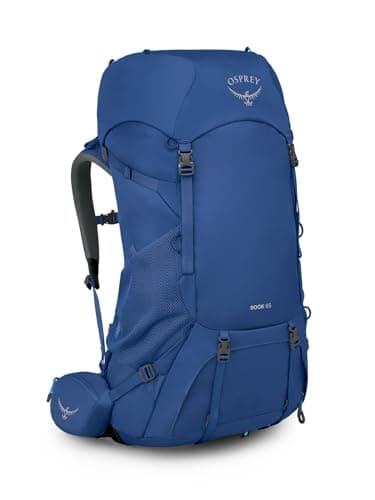
Osprey Rook 65
Osprey
An adjustable 18-22 in torso range with a published 30-40 lb load range and an integrated rain cover, at 3.6 lb.
$190.00 · Check price on Amazon
#ad how this is funded · price as of October 23, 2026
A backpack that hurts is almost never too heavy. It is almost always the wrong length, or tightened in the wrong order.
Trail & Tarp earns a commission from qualifying purchases made through links on this page, at no extra cost to you. Full disclosure.
The short answer
Measure from the C7 vertebra — the bump at the base of your neck when you tip your head forward — down the line of your spine to the point level with the top of your hip bones. That measurement in inches is your torso length, and it is the number every pack size chart uses. Height is close to irrelevant: two people the same height routinely differ by three inches of torso, because leg length varies far more than back length.
Getting a second person to measure it is much more accurate than doing it yourself. Stand straight, have them find C7, then have them place their hands on the top of your iliac crest — the shelf of your hip bones — with thumbs meeting at your spine. The distance between those two points is the number.
| Pack | Published torso range | Volume | Weight | Adjustment |
|---|---|---|---|---|
| Osprey Rook 65 | 18 - 22 in, adjustable | 65 L | 3.6 lb | Adjustable harness |
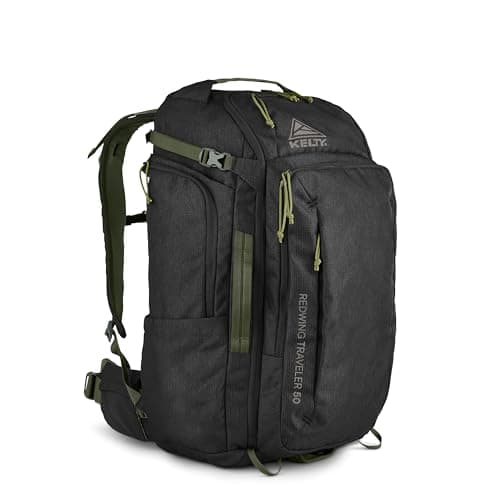
| Kelty Redwing 50 | 16 - 20 in | 50 L | 3 lb 4 oz | FIT-Pro adjustment |
| TETON Sports Scout 3400 | 15 - 19.5 in, adjustable | 55 L | 4.5 lb | Adjustable harness, 26-60 in belt |
Those ranges are why a pack that fits your friend perfectly may be unwearable for you. A 16 in torso in an Osprey Rook 65, published at 18 to 22 in, is outside the range at the short end and no amount of strap adjustment fixes it — the hip belt will sit above the hip bones and the load will hang off your shoulders all day.
An empty pack tells you nothing. Every strap behaves differently under load, and a harness that feels fine empty can dig at 30 lb. Put 20 to 30 lb in it before you adjust anything — water bottles, books, whatever is to hand — and load it the way you actually would, with the heavy items against your back at mid-height. That packing order is in how to pack a backpacking backpack.
The order matters more than any individual strap, and almost everyone does it wrong by starting at the shoulders. Loosen everything first, then:
The test: can you shrug the shoulder straps loose?
With the pack fitted properly, loosen the shoulder straps by an inch. If the pack stays put and the weight stays on your hips, the fit is right: roughly 80% of the load should be carried by the hip belt. If the pack drops and the weight lands on your shoulders, the hip belt is too high, too loose, or the torso length is wrong. This one check finds almost every fitting problem.
| Symptom | Most likely cause | Fix |
|---|---|---|
| Sore shoulders, hips fine | Load riding on shoulders | Hip belt too loose or too high; re-seat on the iliac crest |
| Bruised or aching hip bones | Belt too tight, or sitting on the bone rather than around it | Reposition so the padding wraps the crest, then loosen slightly |
| Pack pulling you backward | Load lifters slack, or heavy items too far from your back | Tighten load lifters to 45 degrees; repack heavy items against the spine |
| Straps digging into the neck | Torso length too short for you | Adjust the harness up, or size up the frame |
| Gap between shoulder straps and shoulders | Torso length too long for you | Adjust the harness down, or size down the frame |
| Numb hands or arms | Sternum strap too tight, or straps too far outboard | Loosen the sternum strap and re-set shoulder strap position |
Some packs come in fixed sizes, some have a harness that slides up and down a ladder of attachment points. For a first pack, adjustable is worth a lot: you can dial the fit in over several trips rather than committing on the shop floor, and a growing teenager can use the same pack for years.
An Osprey Rook 65 publishes an adjustable 18 to 22 in range with a 30 to 40 lb load range and an integrated rain cover. A TETON Sports Scout 3400 publishes an adjustable 15 to 19.5 in torso range and a 26 to 60 in waist belt, which is an unusually wide span and the reason it works for smaller and younger walkers. A Kelty Redwing 50 publishes 16 to 20 in with FIT-Pro adjustment at 3 lb 4 oz.
Two different measurements, and packs often let you swap the belt independently. The belt needs to close with the padding wrapping your hip bones and several inches of webbing left to pull — if you are at the end of the adjustment on either extreme, the belt is the wrong size even if the torso length is right.
Women-specific and youth versions of most packs differ mainly in shorter torso ranges, more curved shoulder straps and a differently angled hip belt. They are not a marketing exercise; if the standard fit is not working, they are the first thing to try.
Load it to trip weight and walk with it — around the block, up a hill, for an hour. Problems that are invisible in ten minutes are obvious in sixty, and the fix costs nothing at home and ruins a day on a trail.
Two things to check on that walk: whether the hip belt slips down as you move, and whether anything rubs. A slipping belt usually means it needs to be higher and snugger; rubbing usually means a seam sitting on bone and can often be solved by moving a load rather than adjusting a strap. The same principle applies to boots, in how to break in hiking boots. Carry blister tape for both.
And keep the weight honest. A loaded pack around 20% of body weight is the beginner target, which for a 160 lb adult is about 32 lb. Above that, no fitting technique makes the pack comfortable — you are simply carrying too much, and the answer is in the backpacking gear list.
Osprey
An adjustable 18-22 in torso range with a published 30-40 lb load range and an integrated rain cover, at 3.6 lb.
#ad how this is funded · price as of October 23, 2026
TETON Sports
15-19.5 in adjustable torso and a 26-60 in waist belt, which is why it fits smaller and younger walkers other packs do not.
Kelty
50 L at 3 lb 4 oz with FIT-Pro adjustment across a 16-20 in torso range. The lightest of the three, and the shortest range.
#ad how this is funded · price as of October 23, 2026
Find the C7 vertebra, the bump at the base of your neck when you tip your head forward, and measure down your spine to the point level with the top of your hip bones. That distance in inches is your torso length. Have someone else measure it; self-measuring is much less accurate.
Hip belt first, then shoulder straps, then load lifters to about 45 degrees, then the sternum strap, then re-snug the hip belt. Starting at the shoulders is the most common mistake and puts the load in the wrong place.
Roughly 80%. The test is to loosen the shoulder straps by an inch with the pack loaded: if it stays put and your hips still carry the weight, the fit is right. If the pack drops onto your shoulders, the belt is too high, too loose, or the torso length is wrong.
No. Torso length does, and two people of the same height often differ by three inches of torso because leg length varies far more than back length. Every manufacturer's size chart is built on torso measurement, not height.
Every figure on this page comes from a published source. We have not tested this gear, so the numbers are the manufacturer's or the standard body's, not ours. How we research.