A pack is a fixed volume. Compressing soft items into hard cylinders does not reduce the total volume you are carrying — it converts fillable soft shapes into rigid ones that leave air gaps between them. Two or three cylinders in a pack waste more space than the compression saved. Compress the sleeping bag. Let everything else stay soft and fill the corners.
This is the single most useful thing in this category and it runs against the instinct that smaller is always better. A stuffed-loose sleeping bag in the bottom of a pack actually molds to the pack shape better than a compressed one, which is why many ultralight packers do not use a compression sack at all.
Where compression genuinely pays is when the item has to fit a specific space: a bag in a pack's dedicated bottom compartment, or a puffy jacket in a daypack lid. The packing order that makes this work is in how to pack a backpacking backpack.
Compared on published numbers
Sack
Type
Fabric
Sizes
Weight
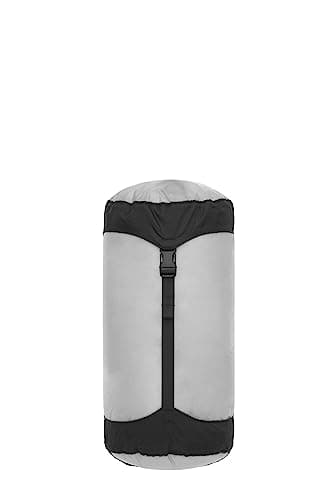
Sea to Summit Ultra-Sil Compression
compression
30D Ultra-Sil Cordura; dry version adds a 40D 2,000 mm base
5, 8, 13, 20, 35 L
2.6 oz at 10 L
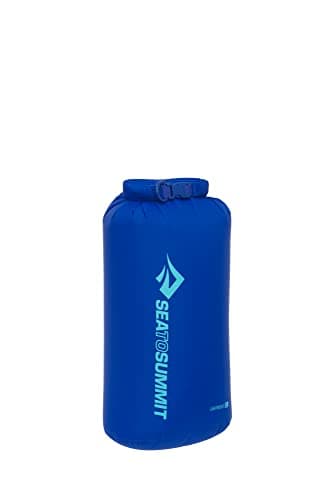
Sea to Summit Lightweight Dry Bag
stuff and dry
not published on the listing we read
multiple
not published
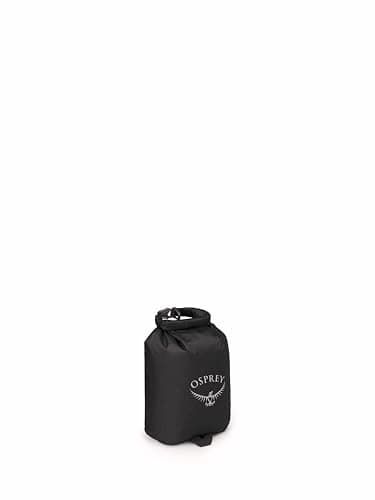
Osprey Ultralight Dry Sack
stuff and dry
not published on the listing we read
multiple
not published
Figures as published by each manufacturer. Only Sea to Summit publishes full fabric and weight detail for the compression sack.
Never store a sleeping bag compressed
This is the mistake that quietly destroys more sleeping bags than anything else. Down and synthetic fill both lose loft permanently when kept compressed for months, and loft is the entire mechanism by which a bag is warm. A bag stored in its compression sack over a winter may never recover its rating.
Compress it for the trip and hang it or keep it in a large breathable sack at home. Most bags ship with one for exactly this reason and most people throw it away. The rest of the care routine is in how to wash a sleeping bag.
Compression sacks are not dry bags unless they say so
A standard compression sack has stitched seams and cinch straps passing through the fabric, which is a set of holes by definition. It will keep rain off for a few minutes and it is not waterproof. Sea to Summit publishes a separate dry version with an air-permeable waterproof base rated to 2,000 mm; that one is. If the thing inside must stay dry — a sleeping bag, a down jacket — use a genuine dry bag or line the pack, and see best dry bags for camping.
How to sort a pack so you can find things
Sleep system. Bag compressed, at the bottom, in the dedicated compartment if the pack has one.
Clothing. Stuff sack, uncompressed, used to fill the gaps around everything else. This is the layer that makes a pack carry well.
Small and urgent. Headlamp, first aid, map, in a bright-colored sack near the top or in the lid.
Wet and dirty. Its own bag, always, so a wet fly does not soak the clothing.
Different colors matter more than they sound. Finding a specific sack by color in a dark tent is the difference between a two-second job and emptying the pack.
Volume, and how to pick a size
Compression sacks are sold by their uncompressed volume, which is what confuses people. Sea to Summit publishes a 10 L sack that compresses to about 3.3 L; you buy the size that the item fits into loosely, not the size you want it to end up.
As rough guidance, a three-season synthetic sleeping bag wants 13 to 20 L uncompressed, a down bag 8 to 13 L, and a puffy jacket 5 to 8 L. Buying too small means forcing the item in, which is what tears the seams.
What fails, and how to avoid it
Compression straps and their anchor points, always. The fabric is fine; the load path where a webbing strap meets a 30-denier panel is not. Cinch evenly, a little at a time, going around the sack rather than pulling one strap to its limit.
Roll-top closures fail differently: they leak when rolled fewer than three times. Three full rolls before clipping is the rule, and it is the single most common reason a dry bag lets water in. A set of assorted roll-top sacks in different colors is the practical starting point for most people.
Which to buy
Buy one Sea to Summit Ultra-Sil Compression sack sized to your sleeping bag, and buy it in the dry version if the bag is down. Then buy three or four plain stuff sacks in different colors for clothing, food and small items, and resist the urge to compress any of them.
For gear that genuinely has to survive immersion — a canoe trip, a river crossing — that is a different product entirely, and it is in best dry bags for camping.
The picks in full
1. Best overall
Sea to Summit Ultra-Sil Compression Sack
Sea to Summit
30D Ultra-Sil Cordura in sizes from 5 to 35 L, at 2.6 oz in the 10 L, compressing to about a third of its open volume.
Sea to Summit publishes 30D Ultra-Sil Cordura nylon, sizes of 5, 8, 13, 20 and 35 L, weights of 2.6 oz for the 10 L and 2.7 oz for the 14 L, compression of the 10 L down to about 3.3 L, a Hypalon roll-top with a non-wicking closure, and a dry version with a 40D air-permeable waterproof base rated to 2,000 mm.
The air-permeable base on the dry version is the clever part. It lets air out as you compress and does not let water in, which is what stops a waterproof compression sack becoming an inflated balloon you cannot squash.
The drawback
30 denier is light fabric under real tension. Over-cinching a compression sack is how the seams and the Hypalon anchor points eventually give way.
A roll-top dry bag that keeps contents dry and lets them stay soft enough to fill the gaps in a pack.
Sea to Summit publishes a lightweight roll-top dry bag designed to keep contents dry rather than to reduce their volume.
This is the workhorse of the category and the one most people should own several of. Its job is organization and waterproofing, and deliberately not compression, for reasons the body of this page explains.
The drawback
No compression at all, which is the point and also means a stuff sack full of clothing takes exactly as much room as the clothing does.
An ultralight roll-top sack for splitting a pack into things you can locate without unpacking it.
Osprey publishes an ultralight roll-top dry sack intended for organizing and protecting small items inside a larger pack.
The value here is not waterproofing but findability. A pack sorted into three or four colored sacks means the headlamp is locatable in the dark without emptying everything onto wet ground.
The drawback
Ultralight fabric is thin, and a sack this light is for organizing rather than for protecting anything sharp or heavy.
No. A pack is a fixed volume, and compressing soft gear into hard cylinders leaves air gaps between them that waste more space than the compression saved. Compress the sleeping bag, and let clothing stay soft so it fills the corners.
QCan I store a sleeping bag in a compression sack?
Never for more than a trip. Down and synthetic fill both lose loft permanently when kept compressed for months, and loft is the entire mechanism by which a bag is warm. Store it hanging or in a large breathable sack.
QAre compression sacks waterproof?
Not unless they say so. A standard compression sack has stitched seams and straps passing through the fabric, which are holes by definition. Sea to Summit publishes a separate dry version with a waterproof, air-permeable base rated to 2,000 mm.
QWhat size compression sack do I need?
Buy for the item's uncompressed volume, not the size you want it to end up. Roughly 13 to 20 L for a three-season synthetic bag, 8 to 13 L for a down bag, and 5 to 8 L for a puffy jacket. Too small means forcing it, which is what tears seams.
How we picked
Everyone else in this category will tell you they tested twenty of these. We have not tested any of them, and we would rather say so than pretend. There is no gear closet here and no test lab.
What we did instead: pulled the published specifications from each manufacturer's own spec sheet or manual, named the standard behind every rating so you can check what it actually promises, did the arithmetic that turns a spec into a decision, and pulled today's real retail price rather than quoting one from memory. Every pick states a drawback, because a list where nothing is wrong with anything is an advert.
The limits of that method, stated plainly: published specs do not capture zipper quality, seam durability, or how a tent behaves at 2am in a storm. Where that matters, we say so on the pick. The full method is here.