The Best Rain Pants for Hiking and Camping, Judged on the Zips
Rain pants are the one waterproof layer people skip, and the reason is always the same: they are a nuisance to put on over boots in the rain. The zips are therefore the specification.
The zips decide whether you own them or carry them
The short answer
Rain pants get put on in the rain, standing up, already wearing boots. Full-length side zips let you wrap them on and zip up without taking anything off. Lower-leg zips mean loosening or removing a boot. No zips means sitting down on wet ground to get your feet through. That is the specification that determines whether a pair of rain pants is used or just carried, and it matters more than any waterproof number.
This is not a small point dressed up as a big one. Everybody who hikes owns a rain jacket and a surprising number own rain pants they have never worn in anger, and the reason is almost always the five minutes of balancing on one leg in the rain. A pant you can put on in twenty seconds gets worn at the first shower; a pant that takes five minutes gets worn when you are already soaked.
The second-order effect is that the easy pair gets used as a windproof layer too, which is most of their real-world value. A thin waterproof shell over a hiking pant in a cold wind is worth more than a thicker insulating layer, and it is the same argument as in how to layer for camping.
What to look for
Specification
What to want
Why
Zip length
full-length side zips if the budget allows
it decides whether you actually put them on
Seams
fully taped, every one
a stitch hole is a hole; a waterproof fabric with untaped seams leaks
Construction
2-layer with a lining, or 2.5-layer for weight
2.5-layer is lighter and clammier; a mesh lining fixes the clamminess
Face fabric weight
about 78 g/sqm for packability, 128 g/sqm for abrasion
this is the durability figure, and makers publish it
Waist
elastic with a drawcord, no belt loops
a waterproof layer goes over whatever you are wearing, so it must adjust
DWR
non-PFC or C0
both pants here that state it have moved off PFAS chemistry
What decides whether rain pants get worn, rather than how high a waterproof number is.
Note the absence of a hydrostatic head column. None of these three publishes one for the pant, which is normal in apparel, and all three are fully taped - so the useful comparison is construction and fabric weight rather than a millimetre figure. What a millimetre figure actually describes is in tent waterproof ratings explained.
Compared on published numbers
Pant
Membrane
Face fabric
Weight
Zips
Lining
Marmot PreCip Evo Full-Zip
2.5L NanoPro, taped
100% recycled nylon ripstop, 78 g/sqm
320 g (11.3 oz)
full-length side
none (2.5L coating)
Frogg Toggs Classic Pro Action
DRIPOR GEN2, taped, 3,000 MVTR
non-woven polypropylene
17 oz
none
none
TNF Antora
DryVent 2L, seam sealed
75D recycled polyester ripstop, 128 g/sqm
not published
lower leg
50 g/sqm mesh
Figures as published by each manufacturer. Prices on this page carry their own as-of date.
Frogg Toggs is the only one of the three that publishes a breathability figure at all, which is worth saying out loud: 3,000 MVTR is modest, but a stated modest number is more use than an unstated good one. Treat all three as layers you will sweat in if you walk uphill fast.
What breathability means in practice
No waterproof pant breathes enough to keep up with a hard climb. The membrane moves water vapour by a humidity gradient, and on a warm wet day the air outside is already saturated, so there is nowhere for your sweat to go. You will be damp in any of these; the question is whether you are damp and warm or soaked and cold.
The practical fixes are about management rather than product. Unzip the side zips to the knee while walking and close them when you stop. Do not wear them over a cotton layer, which holds the moisture against you. And do not put them on at the first spot of rain if the day is warm - a shower on a hiking pant dries in twenty minutes, whereas sweat inside a shell does not.
Wear rain pants outside your gaiters, never tucked in
Water runs down the outside of a leg. If the pant hem is tucked inside a gaiter, that water is routed straight into the boot, which is the exact failure the gaiter exists to prevent. The pant goes over the gaiter, the gaiter goes over the boot, and each layer sheds onto the one below. The same logic applies to the jacket hem over the pant waist.
These are not hiking pants, and hiking pants are not these
The site's hiking pants page is explicit that a DWR softshell wets through in sustained rain and then takes hours to dry. That is the gap this page fills: a waterproof shell layer goes over a hiking pant, it is not a substitute for one, and neither item does the other's job.
It is also worth knowing that if you already own the Frogg Toggs Ultra-Lite2 rain suit this site recommends as a jacket pick, you already own a pair of pants - the suit is a jacket and pants together. The reason to upgrade from those is durability and the zips, not waterproofing.
Reproofing applies to pants too
The DWR on the outside of a rain pant wears off before the membrane does, and when it goes the face fabric soaks, the pant feels wet through, and people conclude the waterproofing has failed. Usually it has not. Wash it in a technical cleaner and reapply, which takes an hour and restores most of the performance - the full process is in how to wash and reproof a rain jacket and works identically on pants.
Rain pants also take more abrasion than a jacket, because they are what you sit on. The seat and knees are where the DWR goes first, which is another argument for the heavier 128 g/sqm face fabric if you are hard on gear.
Which to buy
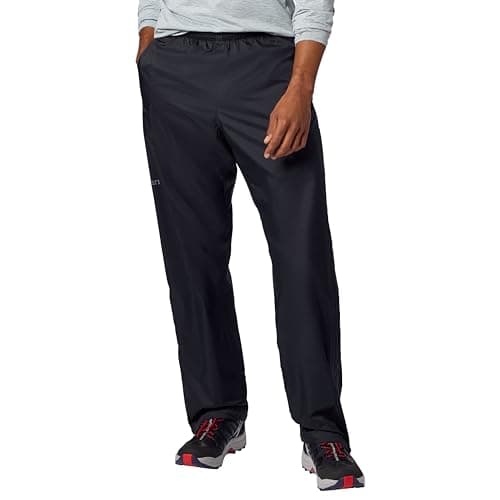
Buy the Marmot PreCip Evo Full-Zip Pant if you hike or camp in weather and want one pair to do it with. Full-length side zips are the feature that gets them worn, 320 g packing into its own pocket is the weight that keeps them in the bag, and the C0 DWR and recycled face fabric are a better chemistry story than most of the category. This is the one most people should stop reading at.
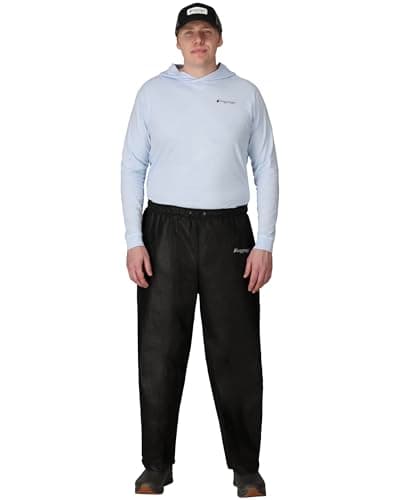
Buy the Frogg Toggs Classic Pro Action if you want rain pants in the car for anyone who turns up without them. Fully taped seams and rust-proof polymer hardware at a fifth of the price is remarkable value, and the only real limit is abrasion - keep them off brush and rock.
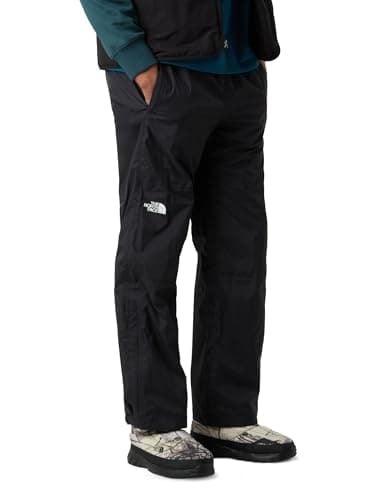
Buy The North Face Antora Rain Pant if the pants will take a beating and you would rather not feel a coating on your legs. A 128 g/sqm face fabric and a mesh lining are the two specifications you are paying for, and articulated knees are what keep a membrane working when you step up. Accept the bulk, and remember the lower-leg zips mean you will still be loosening a boot in the rain.
The picks in full
1. Best overall
Marmot PreCip Evo Full-Zip Pant
Marmot
Full-length side zips on a 2.5-layer NanoPro pant at 320 g, which packs into its own pocket and goes on over boots in seconds.
Marmot publishes a 2.5-layer NanoPro construction with fully taped seams, a face fabric of 100 percent recycled nylon ripstop at 78 g/sqm, a C0 DWR with no intentionally added PFAS, a 320 g (11.3 oz) weight, a 32 in inseam in medium, full-length side zips, a design that packs into its own pocket, two zippered hand pockets and a zippered back pocket.
Full length is the whole argument. Rain pants live in a pack, which means they get put on when it is already raining, standing in mud, wearing boots. A pant with ankle zips requires you to take your boots off; a pant with full-length side zips wraps on like a pair of chaps and zips up. In practice that is the difference between pants you wear and pants you carry.
Seventy-eight grams per square metre is also genuinely light for a pant with real taped seams, and packing into its own pocket means it has a defined place in the bag rather than being the damp thing at the bottom. Pair it with the PreCip Eco jacket and you have a matched 2.5-layer set.
The drawback
Full-length zips are two more seams to leak and a little extra weight, and 2.5-layer fabric feels clammy against bare skin. Marmot does not publish a hydrostatic head figure for NanoPro.
Fully taped non-woven polypropylene at 3,000 MVTR for about a fifth of the Marmot's price, with rust-proof polymer hardware.
Frogg Toggs publishes 100 percent non-woven polypropylene with DRIPOR GEN2, a breathability of 3,000 MVTR, a 17 oz weight, fully taped and sealed seams, molded polymer zippers and snaps that will not rust in snow or saltwater, an elastic waist with an adjustable cord lock, and a full cut designed to pull on over clothing.
These are the honest cheap answer, and the reason to buy them is coverage rather than performance. A pair in the car means nobody on the trip is the person standing in the rain in jeans, and at this price you can own two pairs for less than one of anything else here. Polymer hardware is a genuinely good detail - metal snaps on rainwear corrode.
Be clear about what non-woven polypropylene is. It is a bonded fibre sheet rather than a woven fabric, which is why it is light and cheap and waterproof, and also why a bramble puts a hole in it. For a campsite in the rain, that is irrelevant. For a day of off-trail walking it is not, and the site's existing Frogg Toggs Ultra-Lite2 suit carries the same caveat.
The drawback
Non-woven polypropylene is not abrasive-resistant - brush, a scramble or repeated sitting on rock will tear it. No side zips at all, so these go on over bare feet or not at all.
A 2-layer DryVent shell on a 75D 128 g/sqm recycled ripstop, lined with mesh so it does not stick to skin.
The North Face publishes a seam-sealed DryVent 2L shell, a face fabric of 75D 128 g/sqm 100 percent recycled polyester ripstop with a non-PFC DWR finish, a 50 g/sqm recycled polyester mesh lining, lower-leg zips for getting them on over boots, an elastic waist with an internal drawcord, two secure-zip hand pockets, articulated knees and hook-and-loop adjustment at the leg openings.
A hundred and twenty-eight grams per square metre against the Marmot's 78 is most of the story. That is a substantially heavier face fabric, which is what you want if the pants spend time against granite, scree or a tailgate, and the mesh lining is why 2-layer construction feels better on bare legs than 2.5-layer does.
Articulated knees are not a marketing word on a rain pant. A flat-patterned waterproof leg binds at the knee when you step up, which pulls the fabric taut against your skin and wets it out faster. Pre-shaped knees keep the air gap, which is what keeps a membrane working.
The drawback
Lower-leg zips only, so these still need some boot wrestling, and the mesh lining and heavier face fabric mean this is the bulkiest of the three in a pack. It does not pack into its own pocket.
For campsite use in a shower, no - a jacket and a dash to the tent covers it. They earn their place when you are walking in sustained rain, when it is cold and windy, or when you are sitting on wet ground, because a soaked pair of hiking pants takes hours to dry and takes heat out of you the whole time. They double as a windproof layer, which is most of their real value.
QAre full-length side zips on rain pants worth it?
They are the specification that decides whether you own rain pants or just carry them. Rain pants get put on standing up, in the rain, already wearing boots - full zips wrap on and zip up in seconds, lower-leg zips mean loosening a boot, and no zips means sitting on wet ground. A pair you can put on quickly gets worn at the first shower.
QWhat is the difference between 2-layer and 2.5-layer rain pants?
Where the membrane's inner protection comes from. A 2-layer pant like the TNF Antora has a separate mesh lining, which feels better on bare skin and adds bulk. A 2.5-layer pant like the Marmot PreCip Evo has a printed coating instead, which is lighter and packs smaller but feels clammy against skin.
QDo rain pants go over or under gaiters?
Over, always. Water runs down the outside of your leg, so a pant hem tucked inside a gaiter routes that water straight into the boot - the exact failure the gaiter exists to prevent. Pant over gaiter, gaiter over boot, jacket hem over pant waist, so each layer sheds onto the one below.
QWhy do my rain pants feel wet inside?
Usually sweat rather than leakage. No waterproof pant breathes fast enough to keep up with a climb, and on a warm wet day the outside air is already saturated so there is nowhere for your vapour to go. Vent the side zips while walking. If the outer fabric looks soaked and dark rather than beading, the DWR has worn off and needs reproofing, which is not the same as the membrane failing.
How we picked
Everyone else in this category will tell you they tested twenty of these. We have not tested any of them, and we would rather say so than pretend. There is no gear closet here and no test lab.
What we did instead: pulled the published specifications from each manufacturer's own spec sheet or manual, named the standard behind every rating so you can check what it actually promises, did the arithmetic that turns a spec into a decision, and pulled today's real retail price rather than quoting one from memory. Every pick states a drawback, because a list where nothing is wrong with anything is an advert.
The limits of that method, stated plainly: published specs do not capture zipper quality, seam durability, or how a tent behaves at 2am in a storm. Where that matters, we say so on the pick. The full method is here.