The Best Hiking Shirts, Where UPF and Venting Beat Everything Else
A long-sleeve shirt in the heat sounds backwards and is not. Fabric that blocks UV all day beats sunscreen you reapply twice and then forget, and the vents are what make it bearable.
A long sleeve in the heat is the counterintuitive right answer
The short answer
In open sun, a vented long-sleeve shirt with a published UPF rating is cooler than a t-shirt, because shade on your skin beats air on your skin. It also blocks UV for the whole day with no reapplication, which sunscreen does not: sunscreen needs redoing every two hours and almost nobody does the back of the neck. Buy for UPF and venting. Buy dark colours if sun is the reason - dark dyes absorb more UV and rate higher.
The physics is that direct sun loads heat onto your skin faster than a breeze removes it, so putting a thin layer between the two is a net gain even though it feels like adding insulation. Desert cultures worked this out some time ago. The shirt has to be vented and loose for it to hold, which is why all three picks here publish a venting system.
The other half of the argument is compliance. A fabric that is UPF 50 is UPF 50 at hour six of a hike, in sweat, on the back of your neck, without you thinking about it. That is a different category of protection from a bottle in your pack, and it is why this page exists separately from the sun protection page.
This page is not about base layers
A merino tee is a base layer, not a hiking shirt, and the site covers those separately in best base layers for camping. The distinction is real rather than pedantic:
Garment
Job
Worn
Base layer (merino or synthetic knit)
manage moisture against the skin, add a little warmth
next to skin, under other layers
Hiking shirt (vented woven or sun hoody)
block UV, move air, carry pockets
as the outer layer in warm weather
Insulating layer (fleece or synthetic jacket)
trap air for warmth
over the shirt when you stop
Shell (rain jacket and pants)
block rain and wind
over everything, only when needed
Four jobs, four garments. A merino tee does not block UV; a vented woven shirt does not manage cold.
The layering order and why cotton does not appear anywhere in it is in how to layer for camping. The short version is that a cotton t-shirt holds water against you and stops insulating the moment it is damp, which in heat makes you clammy and in cold makes you hypothermic.
What to look for
Specification
What to want
Why
UPF rating
a published figure, 50 or 50+
UPF 50 blocks about 98 percent of UV; unrated fabric blocks whatever it happens to block
Colour
dark, if sun is the reason
dark dyes absorb UV, so the same fabric rates higher in black than in white
Venting
a named system - back yoke, shoulder, mesh panels
airflow is the only cooling lever left in humid air
Fabric
nylon or polyester woven, or a nylon-spandex knit
both dry fast; cotton does neither job
Sleeves
roll-up with snap holders
one shirt covering both sun exposure and shade
Weight
under 7 oz if published
most makers do not publish it for wovens, which is worth noting
What decides whether a hiking shirt works in heat, rather than how technical the name sounds.
Compared on published numbers
Shirt
UPF
Fabric
Venting
Weight
Pockets
Columbia Silver Ridge Utility Lite LS
50 (Omni-Shade)
100% recycled polyester woven
3-point back
not published
2 chest
OR Astroman Air Sun Hoodie
50+ dark, 30+ light
85% recycled nylon, 15% spandex
AirVent yoke plus laser perforation
5.64 oz (160 g)
1 zip chest
Columbia PFG Bahama II LS
30 (Omni-Shade)
100% nylon, quick dry
hidden shoulder plus mesh back
not published
2 chest
Figures as published by each manufacturer. Prices on this page carry their own as-of date.
The weight column is mostly blank and that is the honest state of the category: Outdoor Research publishes a figure for a knit hoody, Columbia publishes none for either woven. A center back length of 30.0 in, which Columbia does publish, is a more useful fit number anyway.
What the UPF numbers actually mean
UPF
UV blocked
Practical reading
15
about 93%
a normal lightweight shirt; on a high-UV day it is a layer, not protection
30
about 97%
good; the Bahama II and most 'sun' shirts sit here
50
about 98%
the practical ceiling worth paying for
50+
over 98%
the top rating granted; the Astroman Air in dark colours
The standard UPF bands. The jump from 15 to 30 matters far more than the jump from 50 to 50+.
Read that table as a reason not to over-pay at the top. The difference between UPF 30 and UPF 50 is about one percent of UV, which over a long day is still meaningful, but the difference between an unrated shirt and UPF 30 is where almost all the benefit lives. A UPF 15 garment is the one to be suspicious of if you bought it for sun.
A shirt does not cover your hands, ears or the back of your neck
The three places people burn on a hiking day are the back of the neck, the ears and the backs of the hands, and no shirt collar reaches all of them. That is the entire case for a sun hoody with Low-Pro cuffs, and the fallback is a brimmed hat plus sunscreen on the remaining skin, applied before you set off rather than when it starts to hurt. The hat and sunscreen side of it is in best sun protection for camping.
Washing synthetics and keeping the odour down
Nylon and polyester hiking shirts hold smell in a way merino does not, because the bacteria live in the oils the fabric does not absorb. The fix is to wash them promptly and cool rather than hot, skip the fabric softener - which coats fibres and kills both wicking and any antimicrobial treatment - and dry them in air rather than heat.
Columbia's antimicrobial treatment on the Silver Ridge genuinely helps with this, and softener is the fastest way to remove it. If a shirt has gone permanently sour, a technical wash of the kind described in how to wash merino wool and base layers will usually reset it, and the same drying rules apply at camp as in how to dry clothes and boots at camp.
Which to buy
Buy the Columbia Silver Ridge Utility Lite Long Sleeve if you want one shirt for hiking and camping in warm weather. UPF 50 with 3-point back venting and roll-up sleeves covers the sun, the heat and the change of conditions in a single garment, the two chest pockets are genuinely useful, and the antimicrobial treatment handles multi-day wear. This is the one most people should stop reading at.
Buy the Outdoor Research Astroman Air Sun Hoodie if sun is the actual reason you are shopping, and buy a dark colour. UPF 50+ with a hood and Low-Pro cuffs protects the neck, ears and hands that no collar reaches, 5.64 oz is the lightest thing here, and the stretch knit layers under a fleece in a way a woven does not. Do not buy it in white and expect 50+.
Buy the Columbia PFG Bahama II Long Sleeve if the climate is hot and humid and still. Two separate vent systems moving air across your back is worth more in that air than a higher UPF number, the relaxed cut keeps the fabric off your skin, and nylon dries fast. Accept UPF 30 as the trade, and put a hat on.
The picks in full
1. Best overall
Columbia Silver Ridge Utility Lite Long Sleeve Shirt
Columbia
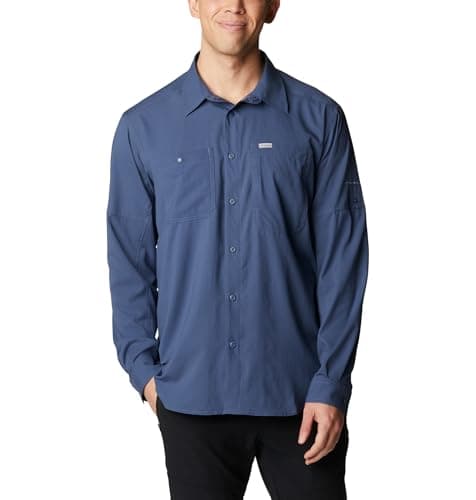
Omni-Shade UPF 50 in a 100 percent recycled polyester woven, with 3-point back venting, roll-up sleeves and two chest pockets.
Columbia publishes Omni-Shade UPF 50 sun protection, a 100 percent recycled polyester fabric, Omni-Wick moisture management, a 3-point back ventilation system, roll-up sleeves with snap holders, two chest pockets - one snap and one hook-and-loop - an antimicrobial treatment, and a 30.0 in center back length.
UPF 50 is the reason, and it is a different kind of sun protection from the one most people use. Sunscreen has to be reapplied every two hours and never gets the back of the neck, whereas a UPF 50 fabric blocks about 98 percent of UV for as long as you are wearing it and does not wash off in sweat. On a six-hour day in open country that is not a marginal difference.
The roll-up sleeves with snap holders are the feature that makes one shirt do two jobs. Sleeves down and buttoned for sun exposure on a ridge, rolled and snapped for a shaded descent, with no second garment to carry. Three-point back venting is what stops the whole thing turning into a sauna, which is the usual objection to a woven shirt in summer.
The drawback
A woven button-front shirt is not stretchy and does not layer under a slim fleece as neatly as a knit. UPF 50 rather than 50+, and Columbia does not publish a shirt weight.
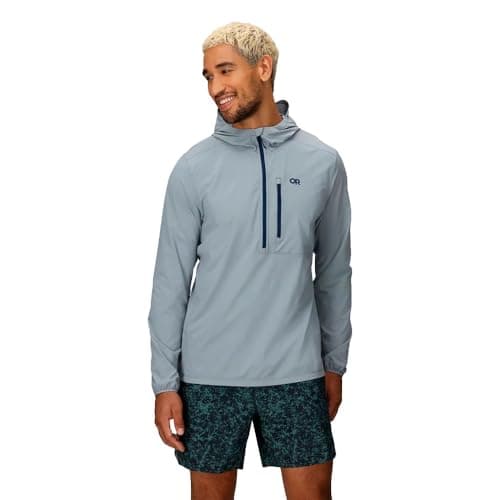
UPF 50+ in dark colors at 5.64 oz, in stretchy recycled nylon with AirVent construction and laser-perforated holes.
Outdoor Research publishes UPF 50+ in dark colors and UPF 30+ in light colors, a fabric of 85 percent recycled nylon and 15 percent spandex that is bluesign approved, a 5.64 oz (160 g) weight, AirVent construction on the back yoke plus strategically placed laser-perforated holes, a 3-panel hood, a 14 in center-front zipper, a left zip chest pocket and Low-Pro cuffs.
The hood is the point and it is the thing to understand before buying. A hood on a sun shirt covers the ears, the back of the neck and the sides of the face - the three places a hat misses and sunscreen gets missed on - and it does it passively. Combined with Low-Pro cuffs that cover the backs of the hands, a sun hoody protects essentially everything above the waist with no reapplication.
Read the colour caveat carefully, because it inverts normal reasoning. People buy light colours for heat, and in this fabric light colours are UPF 30+ rather than 50+ - dark dyes absorb UV and are measurably more protective. If sun is the reason you are buying this, buy a dark one, and note that the site's sun protection page makes the same point about the lighter-weight OR Echo Hoodie at UPF 15.
The drawback
UPF drops to 30+ in light colors, which is the opposite of what people intuitively buy for heat. There are no chest pockets to speak of beyond one zip pocket, and a hooded knit looks out of place at a restaurant on the way home.
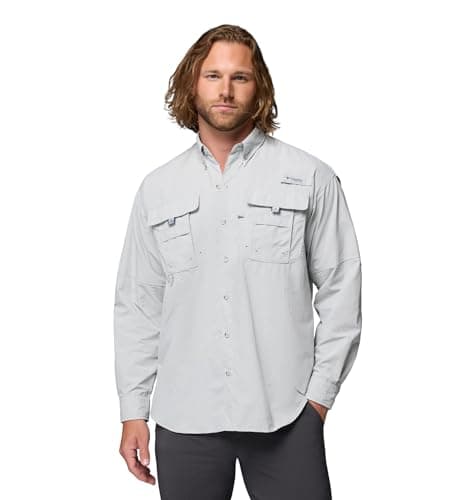
A 100 percent nylon quick-dry woven with hidden shoulder vents and mesh-lined back vents, cut relaxed.
Columbia publishes Omni-Shade UPF 30 sun protection, a 100 percent nylon quick-dry fabric, hidden shoulder vents and mesh-lined back vents, roll-up sleeves, two chest pockets with hook-and-loop closure, and a relaxed lightweight fit.
Two vent systems rather than one is what puts this here. Shoulder vents move air across the top of the back where a pack does not sit, and mesh-lined back vents keep moving it when you are standing still - which is the condition that defeats everything else. In genuinely humid air, where no fabric can evaporate sweat quickly, airflow is the only lever left.
Nylon rather than polyester is also deliberate on Columbia's part: nylon is more abrasion resistant and dries fast, at the cost of holding smell more. The relaxed cut is part of the cooling - a shirt that does not touch your skin is a shirt with an air gap in it, and that is worth more in heat than any fabric claim.
The drawback
UPF 30 is the lowest rating here - about 97 percent of UV rather than 98, but a real step down from 50. It is a fishing shirt, so the styling is unmistakable, and nylon holds odour more than polyester.
QAre long-sleeve shirts better for hiking in hot weather?
Yes, if they are vented and rated. Direct sun loads heat onto skin faster than a breeze removes it, so a thin shaded layer is a net gain even though it feels like adding insulation. The shirt has to be loose and vented for that to hold, which is why every pick here publishes a venting system.
QWhat UPF rating do you need for a hiking shirt?
UPF 30 captures most of the benefit and UPF 50 is the practical ceiling worth paying for - about 97 and 98 percent of UV blocked respectively. The jump that matters is from an unrated shirt to UPF 30; from 50 to 50+ is roughly one percent. Be suspicious of a UPF 15 garment sold as sun protection.
QDo dark or light hiking shirts block more sun?
Dark, which inverts what most people buy for heat. Dark dyes absorb UV, so the same fabric rates higher in black than in white - Outdoor Research publishes UPF 50+ for the Astroman Air in dark colours and UPF 30+ in light ones. If sun protection is why you are buying, buy dark and rely on venting for cooling.
QIs a hiking shirt the same as a base layer?
No. A base layer, usually a merino or synthetic knit, sits next to skin to manage moisture and add a little warmth. A hiking shirt is the outer layer in warm weather and its job is blocking UV, moving air and carrying pockets. A merino tee does not block UV; a vented woven shirt does not manage cold.
QWhy do synthetic hiking shirts smell?
The bacteria live in skin oils that nylon and polyester do not absorb the way wool does. Wash them promptly and cool, air dry rather than heat dry, and never use fabric softener - it coats the fibres and kills both the wicking and any antimicrobial treatment the shirt came with.
How we picked
Everyone else in this category will tell you they tested twenty of these. We have not tested any of them, and we would rather say so than pretend. There is no gear closet here and no test lab.
What we did instead: pulled the published specifications from each manufacturer's own spec sheet or manual, named the standard behind every rating so you can check what it actually promises, did the arithmetic that turns a spec into a decision, and pulled today's real retail price rather than quoting one from memory. Every pick states a drawback, because a list where nothing is wrong with anything is an advert.
The limits of that method, stated plainly: published specs do not capture zipper quality, seam durability, or how a tent behaves at 2am in a storm. Where that matters, we say so on the pick. The full method is here.