The Best Sunglasses for Camping and Snow, Chosen on VLT
Lens darkness is a published number, and almost nobody looks it up. Snow reflects most of the light that hits it, which is why a lens that is fine on a summer trail is not enough above the treeline in winter.
Visible light transmission is the percentage of light a lens lets through, and it is published. Lower is darker. Lens category 0 to 4 is the shorthand: category 2 is roughly 18 to 43 percent VLT and suits variable conditions, category 3 is about 8 to 18 percent and is the normal bright-day sunglass, and category 4 is 3 to 8 percent and exists for snow and altitude. Category 4 is too dark to drive in and is not road legal in many places. Buy the category that matches where you camp, not the one that looks most serious.
This is the only specification on the page that changes outcomes, and it is the one nobody reads. People buy sunglasses on frame shape and brand, then wonder why their eyes ache after a day on snow in a category 3 lens, or why they keep taking their category 4 lenses off in the woods.
The practical rule: if your camping is three-season and at low elevation, a category 3 polarized lens is the right tool and polarization matters more than darkness. If it includes snow, altitude or long days on open water, you want category 4 or a photochromic lens that reaches it.
What to look for
Specification
What to want
Why
Lens category or VLT
a published figure matched to your terrain
it is the only number that predicts whether your eyes hurt at the end of the day
UV protection
100%, stated
UV and darkness are independent; a dark lens with poor UV filtering is worse than none
Polarization
yes for water and wet rock, optional otherwise
it cuts reflected glare specifically, not overall brightness
Side coverage
wrap or removable side shields for snow
on snow a lot of the light arrives from below and from the sides
Anti-fog treatment
yes if you stop a lot in the cold
lenses fog when you stand still in cold air, which is when you need to see
Weight
light enough that you keep them on
the protection only works while they are on your face
What decides whether a lens suits your camping, rather than how technical the lens name sounds.
Note the UV row, because it is the one genuine safety trap. Darkness and UV filtering are separate properties: a cheap dark lens with no UV coating opens your pupils and then lets ultraviolet through, which is worse for your eyes than wearing nothing. Every lens on this page states 100 percent UV protection.
Compared on published numbers
Sunglasses
Category
VLT
Polarized
Lens size
Weight
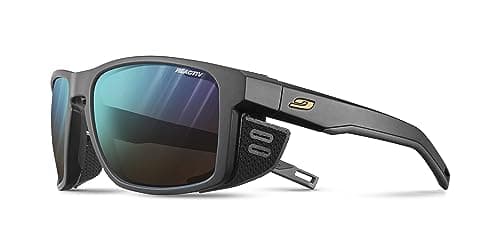
Julbo Shield, REACTIV 2-4
2 to 4, photochromic
7% to 35%
no
not published for this variant
not published
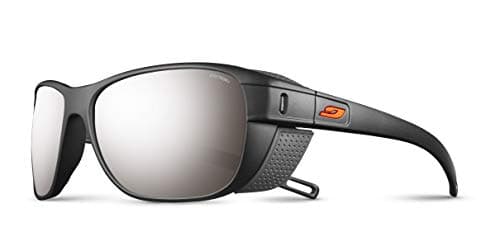
Julbo Camino, Spectron 4
4
5%
no
58 mm wide
25 g
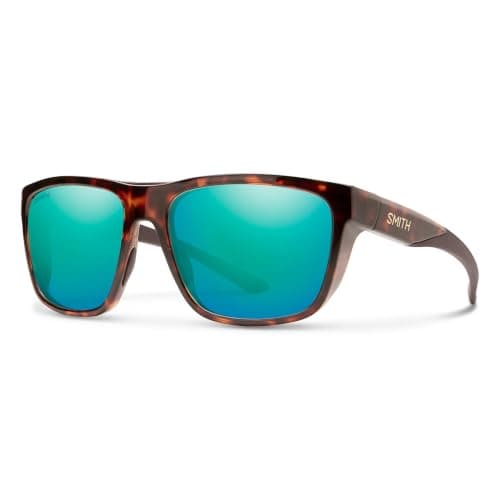
Smith Barra, ChromaPop
not published as a category
12% on the Opal Mirror lens
yes
59 x 47 mm
not published
Figures as published by each manufacturer or its retail listing. Prices on this page carry their own as-of date.
The blanks are the honest state of this category. Julbo publishes a VLT range for the REACTIV lens but not frame dimensions for that variant; Smith publishes a VLT figure for some colorways and not others, and no weight at all. Where a number is missing here it is because the maker does not publish it, not because we did not look.
Why snow changes the answer
Fresh snow reflects most of the light that hits it, so a winter camper above the treeline is lit from above and below at once. The result is an effective brightness far beyond anything a summer trail produces, and the injury it causes — photokeratitis, or snow blindness — is a sunburn of the cornea that arrives hours later and is genuinely disabling for a day or two.
That is the whole case for a category 4 lens, and for side coverage. It is also why this page sits in the safety section of the site rather than among clothing: sunglasses in winter are protective equipment in the same way a UPF layer and sunscreen are, and the exposure does not stop when it gets cold.
Polarized lenses and your screens
A polarized lens blocks light vibrating in one plane, and many phone, GPS and camera screens emit polarized light. Hold a polarized lens at the wrong angle to one and the screen goes black. That is not a defect and it matters if you navigate on a phone or read a handheld GPS in bright sun — turning your head usually fixes it, but it is a real reason some people prefer a non-polarized lens for navigation and a polarized one for water.
Two cheap habits that matter more than the lens
Use a retainer cord. The commonest way to lose sunglasses outdoors is putting them on a hat brim and then bending over, and a lost pair protects nothing. The second is to keep them in a hard case in the pack rather than a pocket: a scratched lens scatters light, which is both annoying and a small loss of optical performance.
Clean them with water and a microfiber cloth, never a shirt tail. Dust on a lens plus a dry cotton shirt is an abrasive, and the coatings on these — the anti-reflective layer on the Julbos, the hydroleophobic one on the Smith — are the first thing to go.
Which to buy
Buy the Julbo Shield with the REACTIV 2-4 lens if you camp in summer and winter and want one pair. A photochromic lens spanning 7 to 35 percent VLT is the only item here that is honestly correct in forest and on snow, and the anti-fog treatment earns its place every time you stop moving in the cold.
Buy the Julbo Camino with the Spectron 4 lens if your winter involves snow and altitude and you already own normal sunglasses. A true category 4 lens at 5 percent VLT and 25 g is the protective tool for that environment at a fraction of the Shield's price — and do not drive in them.
Buy the Smith Barra if your camping is three-season and near water. ChromaPop polarization cuts the glare off a lake in a way darkness alone cannot, the 6 base curve suits people who dislike wrap frames, and 12 percent VLT is right for a bright summer day. It is the wrong lens for a snowfield, which is the trade.
The picks in full
1. Best overall, because one lens covers the whole range
Julbo Shield, REACTIV 2-4
Julbo
A photochromic category 2-to-4 lens running 7 to 35 percent VLT, with anti-fog and oil-repellent treatment, on a frame with removable side shields.
Julbo publishes a REACTIV photochromic lens spanning categories 2 to 4 with a visible light transmission range of 7 to 35 percent, anti-fog and oil-repellent treatment, and intended use in mountain sports, on the Shield frame with its removable side shields.
A 7-to-35 percent range is the reason to pay for this. A fixed category 4 lens is too dark to walk through forest in and a category 2 lens is not enough on snow, so most people who camp year round need two pairs. A photochromic lens that covers from light shade to glacier brightness is one pair, and it is the only item here that genuinely does both.
The anti-fog treatment matters more than it sounds for camping specifically. Sunglasses fog when you stop moving in the cold, which is exactly when you are reading a map or lighting a stove. The removable side shields are the other half: they cut reflected light coming in at the temples, which on snow is where a surprising amount of it arrives.
The drawback
Photochromic lenses take time to react and never go as dark in a car as outside, where the windscreen blocks the UV that triggers them. Julbo does not publish frame dimensions for this lens variant, and it is more than twice the price of the Camino.
Published specs
Lens category
2 to 4, photochromic
Light transmission
7% to 35% VLT
Lens treatment
anti-fog and oil-repellent
Intended use
mountain sports; removable side shields on the Shield frame
2. Best for snow and altitude, and the best value here
Julbo Camino, Spectron 4
Julbo
A true category 4 lens at 5 percent VLT in polycarbonate with a flash mirror finish, at 25 g, for under a third of the Shield's price.
Julbo publishes a category 4 polycarbonate lens at 5 percent visible light transmission with an anti-reflective coating and a flash mirror finish, a 58 mm lens width, a 15 mm bridge, a 135 mm temple and a 25 g weight.
Category 4 is the specification that nothing else on this page has, and on snow it is the right answer. Fresh snow reflects the great majority of the light that lands on it, so the effective brightness above the treeline in winter is far higher than the same day at sea level — which is why snow blindness is a real injury and why mountaineers wear lenses this dark.
Twenty-five grams is the other quietly good number. A pair of sunglasses you forget you are wearing is a pair you keep on, and keeping them on is the entire protective mechanism. Read the drawback seriously though: 5 percent VLT in a forest is like walking at dusk, and you should not drive in these.
The drawback
Five percent VLT is genuinely too dark for driving and for walking in forest, and category 4 lenses are not road legal in many places. This is a specialist lens, not a general-purpose one.
Published specs
Lens category
4
Light transmission
5% VLT
Lens material
polycarbonate, anti-reflective with a flash mirror finish
ChromaPop polarized lenses at about 12 percent VLT on a 6 base curve, in an Evolve bio-based frame with anti-reflective and hydroleophobic coatings.
Smith publishes ChromaPop polarized lenses with anti-reflective and hydroleophobic coatings and 100 percent UV protection, a 59 mm by 47 mm lens, a bridge given as 18 or 19 mm depending on the listing, a 135 mm temple, a 6 base curve and an Evolve bio-based plastic frame. A 12 percent VLT figure is published for the Opal Mirror lens.
Polarization is the feature here and it does a different job from darkness. A polarized lens cuts light that has bounced off a flat surface, which is what kills the glare coming off a lake, a wet rock or a car hood. It does very little about overall brightness, which is why a polarized lens is not a substitute for a high category on snow.
The 6 base curve is worth knowing if you have tried wrap-around sunglasses and disliked them. A 6 base is relatively flat against the face rather than strongly curved, which suits people who find high-wrap frames distorting at the edges — and costs you some of the side coverage a wrap gives.
The drawback
Twelve percent VLT is nowhere near enough for snow at altitude, Smith publishes VLT only for some colorways, and no weight figure is published at all. Polarization also makes some phone and GPS screens hard to read at certain angles.
Published specs
Lens
ChromaPop polarized, anti-reflective and hydroleophobic coatings, 100% UV
Light transmission
12% VLT on the Opal Mirror lens; Smith does not publish it per colorway
Category 4, which is roughly 3 to 8 percent visible light transmission - the Julbo Camino's Spectron 4 lens publishes 5 percent. Fresh snow reflects most of the light that hits it, so you are lit from above and below at once, and a normal category 3 sunglass at 8 to 18 percent is not enough above the treeline in winter.
QAre polarized sunglasses better for camping?
For water and wet rock, yes: polarization specifically cuts light that has bounced off a flat surface, which is the glare off a lake. It does little about overall brightness, so a polarized lens is not a substitute for a dark one on snow. It can also black out phone and GPS screens at certain angles.
QCan you drive in category 4 sunglasses?
No. Category 4 lenses pass only about 3 to 8 percent of light and are not road legal in many places - the Julbo Camino at 5 percent VLT is a mountain lens, not a driving one. If you want one pair for everything including the drive, a photochromic lens that spans categories 2 to 4 is the honest answer.
QDo dark sunglasses protect your eyes from UV?
Not necessarily, and this is the one real trap. Darkness and UV filtering are separate properties. A cheap dark lens with no UV coating opens your pupils and then lets ultraviolet through, which is worse for your eyes than wearing nothing at all. Look for a stated 100 percent UV protection regardless of how dark the lens is.
QWhat is snow blindness?
Photokeratitis - effectively a sunburn of the cornea from reflected ultraviolet light. It arrives hours after the exposure rather than at the time, which is why people walk all day on snow without realizing, and it is disabling for a day or two. A category 4 lens with side coverage is the prevention.
How we picked
Everyone else in this category will tell you they tested twenty of these. We have not tested any of them, and we would rather say so than pretend. There is no gear closet here and no test lab.
What we did instead: pulled the published specifications from each manufacturer's own spec sheet or manual, named the standard behind every rating so you can check what it actually promises, did the arithmetic that turns a spec into a decision, and pulled today's real retail price rather than quoting one from memory. Every pick states a drawback, because a list where nothing is wrong with anything is an advert.
The limits of that method, stated plainly: published specs do not capture zipper quality, seam durability, or how a tent behaves at 2am in a storm. Where that matters, we say so on the pick. The full method is here.