Satellite Messenger vs PLB vs Two-Way Radio: Three Different Problems
These get sold together, in the same aisle, with the same promise. One reaches a rescue center, one reaches your family, and one reaches the person two hills away.
Trail & Tarp earns a commission from qualifying purchases made through links on this page, at no extra cost to you. Full disclosure.
What each one reaches
The short answer
A personal locator beacon reaches a government search and rescue coordination center, and nothing else. A satellite messenger reaches that center and also your family. A two-way radio reaches another radio a few miles away and reaches no emergency service at all. That is the entire comparison, and everything else is detail.
Personal locator beacon
Satellite messenger
Two-way radio
Reaches
406 MHz SAR system
SAR center plus your contacts
Another radio in line of sight
Range
Global, via satellite
Global or near-global, via satellite
A few miles, far less in terrain
Messaging
None
Two-way or one-way text
Voice, to your own group
Subscription
None
Required
None
Battery
Years; 5 year replacement interval
Days to weeks, rechargeable or AAA
A day or two
Example weight
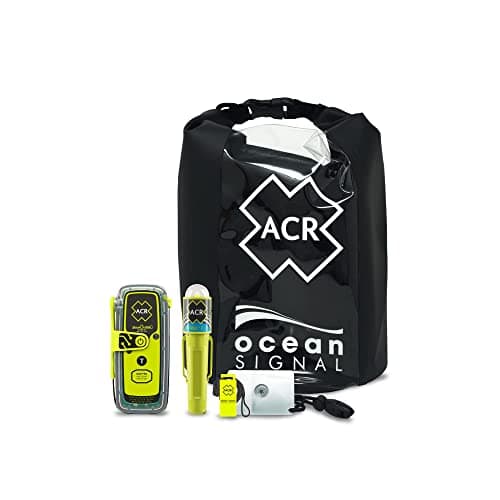
148 g, ACR ResQLink 400
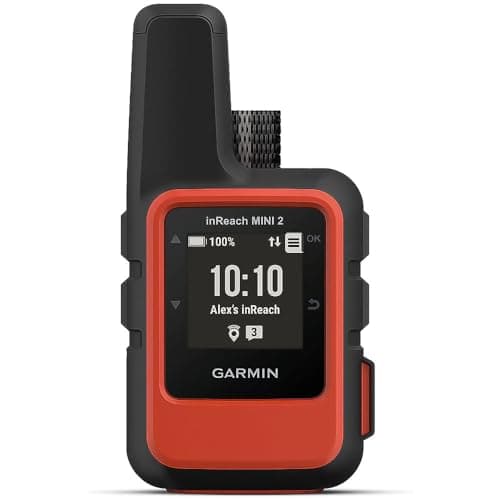
100 g, Garmin inReach Mini 2
Typically 150-300 g per handset
Best for
Emergencies only, occasional trips
Regular trips, solo, worried family
Keeping a group together
Published figures where a maker states one. Radio weights are a typical range rather than a specific product.
The beacon: one job, done without maintenance
A PLB transmits a distress signal on 406 MHz to the internationally monitored Cospas-Sarsat system. It is a government-run service, so there is no subscription, no account and nothing to lapse. An ACR ResQLink 400 publishes a 5 year battery replacement interval, 24+ hours of operation once activated, multi-constellation GNSS using GPS and Galileo, 121.5 MHz homing, buoyancy, and a 148 g weight.
It must be registered — with NOAA in the United States — which links the beacon's identifier to you and your emergency contacts. That registration is what turns a signal into an informed response, and it is free.
The limitation is total: it cannot tell anyone you are fine. If you are four hours late and perfectly safe, a beacon offers nothing, and somebody at home is deciding whether to call for a search based on no information.
The messenger: the one that prevents false alarms
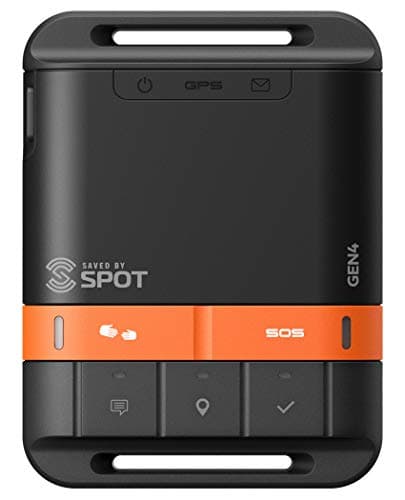
A Garmin inReach Mini 2 publishes two-way Iridium messaging with interactive SOS, location sharing and tracking, at 100 g, with up to 14 days of battery at 10-minute tracking. A SPOT Gen4 publishes one-way Globalstar check-ins, custom messages, tracking and SOS at 142 g on 4 AAA cells.
The everyday value is the mundane message: delayed, camping here instead, back tomorrow, all fine. Most of what a messenger prevents is not an emergency — it is the search that would otherwise be launched because somebody did not come home on time.
The cost is a subscription that must be active. A messenger with a lapsed plan is a paperweight, which is exactly the failure mode a beacon does not have. Product detail is in best satellite messengers for camping.
Two-way radios are not safety devices
FRS and GMRS handheld radios talk to other radios. They cannot reach emergency services, and the advertised range — often quoted as tens of miles — assumes clear line of sight between two elevated antennas. In forest, valleys or hills, real range is frequently under a mile. In the US, GMRS use requires an FCC license while FRS does not; check the current rules before buying. Radios are for keeping a group in contact, and they complement a messenger or beacon rather than replacing one. A pair of FRS handhelds is a convenience purchase, not a safety one.
What each trip actually needs
Trip
Carry
Why
Developed campground with cell coverage
Your phone
It does everything, and there are people around
Day walks from a campsite
Phone, plus a filed plan
Coverage gaps are short and the walk is known
Backcountry with no coverage, in a group
Messenger or beacon; radios optional
Somebody must be able to summon help
Solo anywhere remote
Two-way messenger
The ability to communicate matters most when alone
Large group spread out
Radios, plus one messenger or beacon
Radios coordinate; the satellite device escalates
Occasional trips, no subscription wanted
PLB
Nothing to maintain, and it works in five years
Most camping sits in the first two rows, where none of these devices is required.
What none of them does
None of them navigates. A messenger has a GPS receiver, but a small screen and a battery are a poor substitute for a map and compass, and the point of carrying a compass is precisely that it has no failure mode involving power — see best compasses for hiking.
And none of them makes a trip safe. A device shortens the time between deciding you need help and help being told; it does not prevent the situation. The things that do — a filed plan, turning back early, adequate insulation, enough water, and knowing the route — cost nothing.
What this page is not
It is not guidance on when to activate an SOS, what happens afterwards, or how to conduct yourself in an emergency. We are not qualified to write that, and the NOAA, Cospas-Sarsat and FCC pages linked below, along with each manufacturer's documentation, are the authority. What is compared here is published specifications and what each system technically reaches.
The gear this page points to
Garmin inReach Mini 2
Garmin
Two-way Iridium messaging with interactive SOS at 100 g, up to 14 days tracking. Subscription required, and the everyday value is the mundane message.
QDo two-way radios work for emergencies when camping?
No. FRS and GMRS handhelds talk to other radios and cannot reach emergency services. Advertised ranges assume clear line of sight between elevated antennas; in forest or hills real range is often under a mile. They are for keeping a group together.
QShould I buy a PLB or a satellite messenger?
A PLB if you camp occasionally and want an emergency device with no subscription and a battery measured in years. A two-way messenger if you go out regularly, travel solo, or want to be able to tell people at home you are simply running late.
QDo you need a license for two-way radios?
In the United States, GMRS use requires an FCC license while FRS does not. The rules and power limits change, so check the current FCC position before buying, particularly for higher-power handsets sold as GMRS.
QCan a satellite messenger replace a map and compass?
No. It has a GPS receiver, but a small screen and a battery are a poor substitute for a paper map and a compass that has no failure mode involving power. Carry both; they solve different problems.
Sources
Every figure on this page comes from a published source. We have not tested this gear, so the numbers are the manufacturer's or the standard body's, not ours. How we research.