Leave No Trace practice for human waste is a cathole 6 to 8 inches deep and 4 to 6 inches across, dug at least 200 feet — about 70 adult paces — from water, trails and camp. That is the entire specification a backpacking trowel has to meet, and half an ounce of aluminum meets it.
Everything heavier than a trowel is for a different job: moving snow, levelling a tent pad, digging a vehicle out, or managing a fire pit where that is permitted. Those are vehicle-camping tasks, which is why the weight difference between the two picks here is a factor of sixty and neither is wrong.
Some areas do not permit catholes at all and require you to pack waste out, notably alpine zones, desert, canyon country and heavily used areas. Check the land manager before you plan around digging — the practicalities are in campsite toilets and hygiene.
Compared on published numbers
Tool
Weight
Length
Material
Digs
TheTentLab Deuce #2
0.60 oz
6.8 x 2.5 in
7075-T6 aluminum, anodized
catholes in soil and root mat
TheTentLab Deuce #1
0.45 oz
6.5 x 2.4 in
7075-T6 aluminum, anodized
catholes, lightest option
TheTentLab Deuce #3
0.97 oz
8 x 2.6 in
7075-T6 aluminum, anodized
catholes, most leverage
Gerber E-Tool
2.5 lb
23.75 in open, 9.25 in closed
boron carbon steel spade, 7075 aluminum shaft
snow, tent pads, vehicle recovery
Figures as published by each manufacturer.
Why plastic trowels keep breaking
The cheap orange plastic trowel is the default first purchase and it snaps, usually on the first genuinely rooty site. The reason is that a trowel is loaded as a lever: you drive the tip in, then pull back on the handle, and the bending stress concentrates exactly where the blade meets the handle.
Aluminum at 0.60 oz solves it not by being thicker but by being a material that bends rather than shatters. A bent trowel still digs; a snapped one is litter you now have to carry out. That is the whole case for spending more on something lighter, and it is one of the few places in camping where lighter and stronger are the same purchase.
Dig before you need it
The single most useful habit here has nothing to do with the tool. Dig the cathole when you arrive at camp, in daylight, somewhere you have chosen deliberately, rather than at the moment you need it in the dark. It takes two minutes, it removes any chance of a bad decision made in a hurry, and it means the 200-foot distance from water actually gets measured rather than estimated. Carry the trowel and a small bag for used paper in the same pocket so neither gets forgotten.
What a folding shovel is genuinely for
Snow. Levelling a platform, building a windbreak, digging out a buried tent. A trowel cannot move snow at any useful rate, and this is the strongest case for carrying 2.5 lb in winter — see winter camping for beginners.
Vehicle recovery. Digging sand or mud from under a wheel. This is the reason one lives in a lot of car camping kits permanently.
Fire management, where fires are permitted. Clearing a ring down to mineral soil, and dealing with an ember that escapes. Water still puts a fire out; a shovel just helps you get at it.
Levelling a tent pad. Worth doing sparingly. Digging drainage trenches around tents is an old practice that damages sites and is now discouraged nearly everywhere.
What to carry with it
For the trowel, a sealed bag for used paper, hand sanitizer and a lighter-weight pack towel. Burying paper is slower to break down than people assume and animals dig it up; packing it out is standard practice now.
For the shovel, gloves, because a steel spade on frozen or rocky ground will blister hands fast — see best gloves for camping. A waste disposal kit covers you for the areas where digging is not allowed at all.
Which to buy
Buy the Deuce #2 if you backpack, full stop. At 0.60 oz there is no weight argument against it and it does the only job most campers need a digging tool for. Buy the Gerber E-Tool if you camp in snow, drive onto soft ground, or want one in the vehicle for the two days a year it matters.
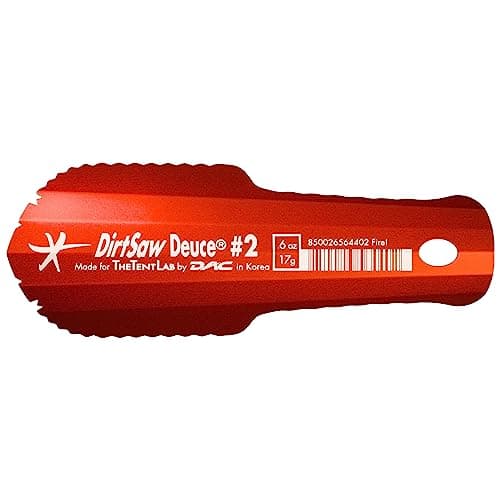
0.60 oz of 7075-T6 aerospace aluminum at 6.8 by 2.5 in, with four teeth on the leading edge to cut roots.
TheTentLab publishes a weight of 0.60 oz for the #2, a size of 6.8 by 2.5 in, 7075-T6 aerospace aluminum construction with anodizing, four teeth on the leading edge to cut through roots, and two other sizes: the #1 at 0.45 oz and the #3 at 0.97 oz.
The teeth are the feature that separates this from a plastic trowel. Most cathole attempts fail on root mat rather than soil, and a plastic blade flexes and skates off roots where a toothed aluminum edge saws through them.
The drawback
Half an ounce of thin aluminum is not a digging tool for hard or rocky ground, and the handle is short enough that leverage comes entirely from your wrist.
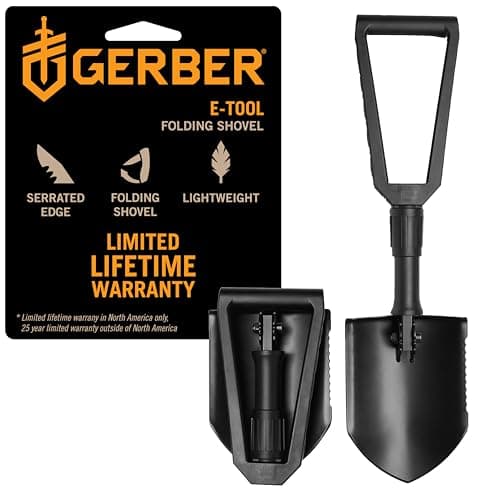
A 9 in boron carbon steel spade on a 7075 aluminum shaft, 23.75 in open and 9.25 in closed, with a serrated edge.
Gerber publishes a 23.75 in open length, a 9.25 in closed length, a weight of 2.5 lb / about 37 oz, a 9 in powder-coated boron carbon steel spade, a 7075 aluminum shaft, a serrated edge for cutting roots and limbs, and several locking angles.
The locking angles are the reason to pick a folding shovel over a fixed one. Set at 90 degrees the spade becomes a mattock you can chop and drag with, which is what you actually want for digging out a wheel, levelling a tent pad or clearing snow.
The drawback
2.5 lb. That is four times a full sleeping pad's weight for a tool most campers use twice a year, and it belongs in a vehicle rather than a pack.
Six to eight inches deep and four to six inches across, at least 200 feet from water, trails and camp. That is about 70 adult paces. Some areas, including alpine zones, desert and canyon country, do not allow catholes at all and require you to pack waste out.
QDo I need a shovel for camping?
Only for snow, vehicle recovery, levelling a tent pad or fire management. For human waste, a 0.60 oz aluminum trowel meets the requirement completely. A 2.5 lb folding shovel is a vehicle item, not a backpacking one.
QWhy do plastic camping trowels break?
Because a trowel is loaded as a lever: you drive the tip in and pull back, and the bending stress concentrates where the blade meets the handle. Aluminum bends rather than shattering, so a damaged one still digs instead of becoming litter.
QWhat size Deuce trowel should I get?
The #2 at 0.60 oz is the usual choice and the one most people carry. The #1 at 0.45 oz saves a fraction of an ounce and gives up leverage; the #3 at 0.97 oz is 8 inches long and digs noticeably easier in hard ground.
How we picked
Everyone else in this category will tell you they tested twenty of these. We have not tested any of them, and we would rather say so than pretend. There is no gear closet here and no test lab.
What we did instead: pulled the published specifications from each manufacturer's own spec sheet or manual, named the standard behind every rating so you can check what it actually promises, did the arithmetic that turns a spec into a decision, and pulled today's real retail price rather than quoting one from memory. Every pick states a drawback, because a list where nothing is wrong with anything is an advert.
The limits of that method, stated plainly: published specs do not capture zipper quality, seam durability, or how a tent behaves at 2am in a storm. Where that matters, we say so on the pick. The full method is here.