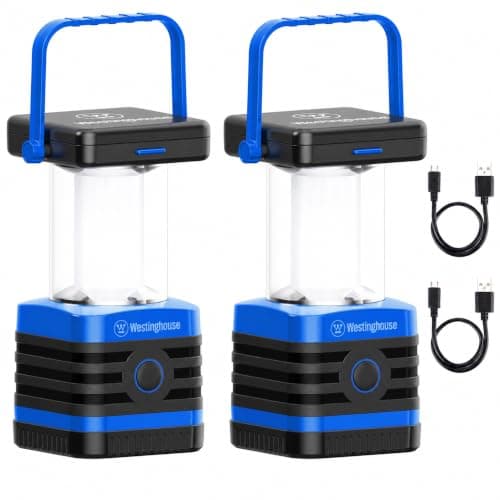
Coleman OneSource 1000-Lumen Rechargeable Lantern
Coleman
1,000 lm high and 50 lm low, 2 h to 100 h. The 50 lm figure is the one that describes an actual evening.
$45.46 · Check price on Amazon
#ad how this is funded · price as of October 23, 2026
Lumens measure how much light leaves a lamp, not how well you can see. The two are different, and the gap between them is where most lighting purchases go wrong.
Trail & Tarp earns a commission from qualifying purchases made through links on this page, at no extra cost to you. Full disclosure.
The short answer
A lumen measures total light output in all directions — how much light the lamp emits. It says nothing about where that light goes, how far it throws, how evenly it spreads, or how long it lasts. A 1,000 lumen lantern and a 1,000 lumen spotlight are completely different objects. For camping, the useful numbers are the low-setting output, the runtime at that setting, and the beam shape.
The reason peak lumens dominate packaging is that it is one number and bigger sounds better. The reason it misleads is that nobody camps on maximum. Coleman publishes 1,000 lm high and 50 lm low for the OneSource lantern, with 2 hours at high and up to 100 hours at low. The 50 lm figure is the one that describes your evening.
Most headlamps and flashlights sold in the US and EU publish figures to ANSI/PLATO FL1, which defines how output, runtime, beam distance, peak beam intensity, impact resistance and water resistance are measured. That is why headlamp numbers are broadly comparable between brands.
Two details worth knowing. FL1 runtime is measured until output falls to 10% of the initial figure, so a light can be technically “running” at a small fraction of its starting brightness. And FL1 output is measured 30 seconds after switch-on, which is why a light that steps down thermally after two minutes can still publish a big number honestly.
Lanterns and string lights frequently publish no standard at all, which is why cross-brand comparison in those categories is looser — a caveat this site also applies to cooler ice claims and liner warmth claims.
| Task | Useful output | Why |
|---|---|---|
| Reading in a tent | 5-20 lm | Any more and it is uncomfortable in a small space |
| Ambient light over a table | 20-100 lm spread wide | Enough to see faces and find a mug |
| Cooking at a camp kitchen | 100-300 lm, directed | You need light on the work surface, not in eyes |
| Walking to the toilet block | 50-100 lm | Far less than people use; night vision does the rest |
| Walking a trail at night | 200-400 lm | Wide beam for footing, some throw for route-finding |
| Finding something at distance | 400+ lm, focused | The only genuine use for a headlamp's maximum |
Set against that, a Petzl Actik Core publishes 600 lm with 2 hours at 600 lm and up to 100 hours at 7 lm, and a Black Diamond Spot 400 publishes 400 lm high, 6 lm low, and 200 hours at low on AAA cells. The low figures are enormous compared to the tasks; the high figures are two hours of a weekend.
Night vision is free light, and bright lamps destroy it
Your eyes adapt substantially within about 20 to 30 minutes in darkness, and a single burst of a 400 lumen beam resets that for everyone who sees it. Around a campsite, the polite and the practical answer are the same: use the lowest setting that works, use red mode where the light has one, and point lights at surfaces rather than at people. Most headlamps have a red LED specifically because it preserves adaptation better than white.
Two lights of identical lumen output can be unrecognisably different in use. A flood beam spreads light widely and close — right for camp chores, cooking and reading. A spot beam concentrates it into a narrow cone — right for seeing across a field or picking out a trail marker. Most good headlamps do both, either by mixing two LEDs or with a diffuser.
Lanterns are pure flood by design, which is why they are the wrong tool for finding a path and the right tool for a table. This is the argument for a three-part lighting system rather than one bright object: a lantern for the table, a headlamp per person, and something ambient. The lantern comparison is in best camping lanterns and the ambient layer in best camping string lights.
A regulated light holds its stated brightness until the battery is nearly empty, then drops off quickly. An unregulated light dims steadily from the moment you switch it on. Both can publish the same runtime, and they are very different experiences.
Lithium-cell lights are usually regulated; simple alkaline lights often are not. That is part of why a Streamlight Siege AA publishing 200 / 100 / 50 lm with 7 / 15.5 / 37 hour runtimes is a genuinely useful lantern despite modest peak output — and why comparing it to a 1,000 lm rechargeable on peak lumens alone tells you nothing. The trade-offs between the two power types are in rechargeable vs battery camping lights.
Read the lowest setting and its runtime, check the beam is the shape you need, check the water rating matches the weather you camp in, and treat the headline lumen figure as a maximum you will use for about ninety seconds a night. That approach picks better lights than any amount of comparing peak output, and it is how the picks in best headlamps for camping were chosen.
Coleman
1,000 lm high and 50 lm low, 2 h to 100 h. The 50 lm figure is the one that describes an actual evening.
#ad how this is funded · price as of October 23, 2026
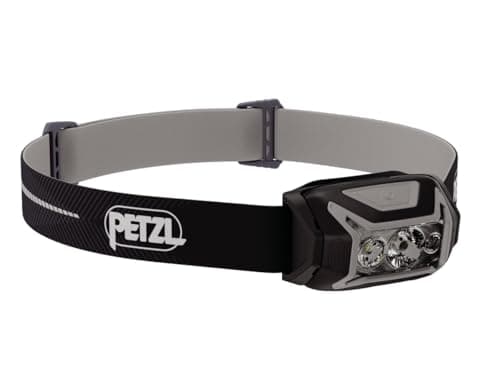
Petzl
600 lm for 2 hours, or 7 lm for up to 100 hours, published to ANSI/PLATO FL1 so it is comparable across brands.
#ad how this is funded · price as of October 23, 2026
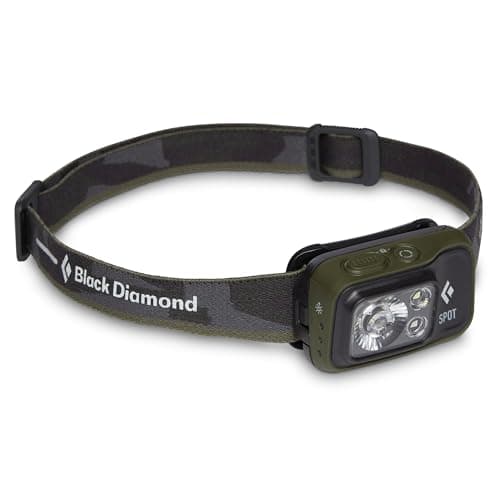
Black Diamond
400 lm high, 6 lm low, 200 hours at low, and IPX8 for 1.1 m for 30 minutes. Read the low column first.
#ad how this is funded · price as of October 23, 2026
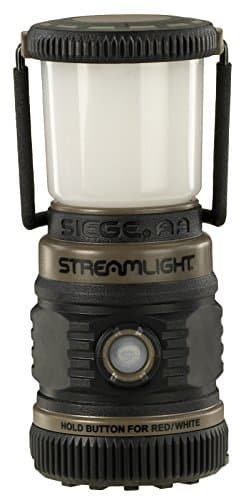
Streamlight
200 / 100 / 50 lm for 7 / 15.5 / 37 hours, IPX7. Modest peak output and an excellent lantern, which is the whole point of this page.
#ad how this is funded · price as of October 23, 2026
Far fewer than the box suggests. 5 to 20 lm for reading in a tent, 20 to 100 lm spread wide for a table, 100 to 300 lm directed for cooking, and 200 to 400 lm for walking a trail at night. Nothing on that list needs 1,000 lumens for more than a few seconds.
Total light output in all directions - how much light leaves the lamp. It says nothing about where the light goes, how far it throws or how long it lasts, which is why a 1,000 lm lantern and a 1,000 lm spotlight are completely different tools.
Usually, because most headlamps sold in the US and EU publish to ANSI/PLATO FL1, which defines how output, runtime, beam distance and water resistance are measured. Lanterns and string lights often publish to no standard, so compare those more cautiously.
ANSI FL1 measures runtime until output falls to 10% of the initial figure, and measures output 30 seconds after switch-on. An unregulated light dims steadily from the start; a regulated one holds its brightness then drops off quickly near the end.
Every figure on this page comes from a published source. We have not tested this gear, so the numbers are the manufacturer's or the standard body's, not ours. How we research.