Trail & Tarp earns a commission from qualifying purchases made through links on this page, at no extra cost to you. Full disclosure.
Sharp is the safe state
The short answer
A sharp blade bites where you place it under light pressure and stays on the line you intended. A blunt one skids off the surface and needs force, so when it does bite it goes somewhere unintended with a lot of energy behind it. Almost every knife injury at a campsite involves a blunt blade and too much force. Keeping an edge is a safety habit before it is a performance one.
The good news is that maintaining an edge is far easier than restoring one. Five strokes at the end of a trip keeps a knife sharp indefinitely; twenty minutes of grinding is what you face after two years of neglect.
Angle is the whole skill
Sharpening means grinding a consistent bevel on both sides until the two meet in a clean edge. The only real skill is holding the same angle for every stroke, and the usual working range for an outdoor knife is roughly 20 degrees per side.
Two tricks make it repeatable without a jig. First, the paper wedge: fold a piece of paper in half twice and you have roughly 22 degrees to compare against. Second, and better for beginners: use a guided pocket sharpener, which holds the angle mechanically and removes the variable entirely.
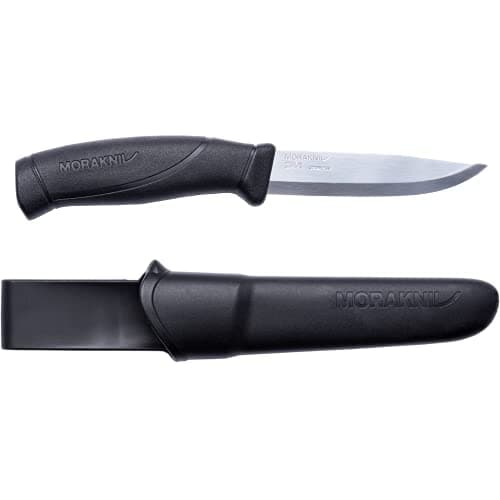
Scandinavian-ground knives such as a Morakniv Companion make this easier than most, because the wide flat bevel can be laid directly on the stone — the bevel is the angle guide. That is one of the quiet reasons they are recommended for beginners.
Three ways to sharpen in the field
Method
How it works
Best for
Weight
Pocket pull-through sharpener
Carbide and ceramic slots at a fixed angle
Fast field touch-ups; no skill needed
1-3 oz
Small diamond or ceramic stone
You hold the angle; removes metal predictably
Real sharpening and edge repair
2-4 oz
Strop, or the back of a leather belt
Realigns a rolled edge without removing metal
Daily maintenance; the habit that prevents sharpening
Almost nothing
Most campers need the first or the third. The stone is for when an edge has actually gone.
A small pocket sharpener is the pragmatic choice for a camp kit: it weighs almost nothing, needs no technique, and restores a working edge in under a minute. Purists dislike carbide pull-throughs because they remove metal aggressively; on a camp knife that is a reasonable trade for something anybody can use.
The stone method, in five steps
Set the stone on something stable and secure it with a damp cloth underneath so it cannot slide.
Find the angle — lay a Scandi bevel flat, or use the paper wedge for a conventional grind — and commit to it.
Push the blade across the stone edge-first, as though slicing a thin layer off the surface, with light and consistent pressure. Count the strokes.
Work one side until you can feel a burr along the whole length of the opposite side. Then do the same number of strokes on the other side.
Alternate single strokes to remove the burr, then strop on leather or the back of a belt to align the edge.
Feeling for the burr is the part that turns sharpening from guesswork into a process. A burr means the two bevels have met at that point; no burr means you have not reached the edge yet however long you have been at it.
Test the edge, do not guess
Two safe tests. Hold the blade edge-up under a light and look along it — a dull edge shows a visible bright line where it reflects, a sharp one is invisible. Or draw the edge gently across a fingernail at a shallow angle: a sharp edge bites and stops, a dull one slides. Do not test by running a thumb along the edge, which is exactly how people cut themselves in the process of making a knife safer.
Steel changes how often you do this
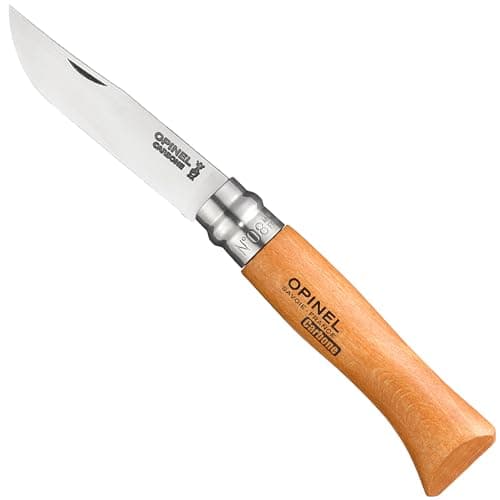
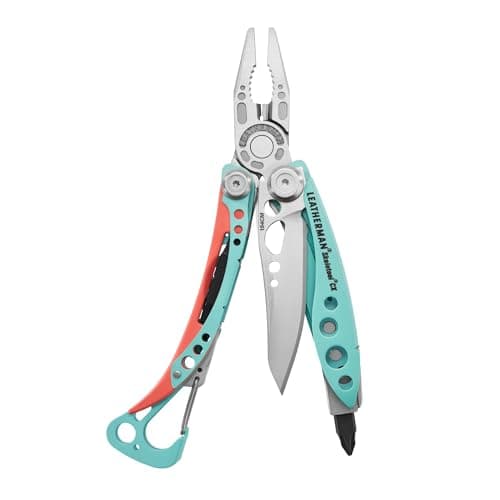
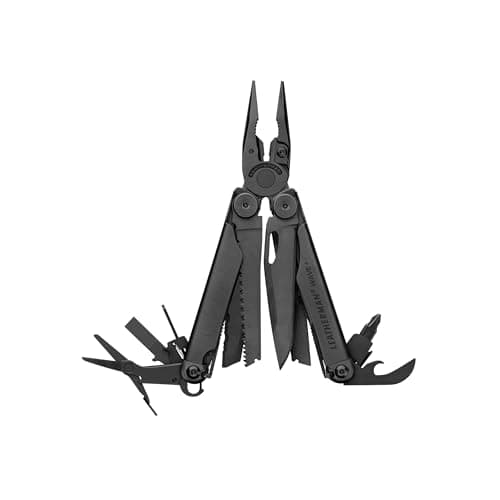
Softer stainless such as the 420HC on a Leatherman Wave+ is easy to sharpen and loses its edge sooner. Higher-carbon stainless such as the 154CM on a Skeletool CX holds an edge noticeably longer and takes more work to bring back. Carbon steel, as on a carbon Opinel No.08, takes the keenest edge of all and rusts if it is left damp.
None of these is better in the abstract; they trade edge retention against ease of maintenance. For a camp knife that gets washed and put away by whoever finished cooking, easy-to-sharpen stainless is the sensible default — the argument is in best camping knives.
Care that means less sharpening
Never cut on stone, metal or a plate. One stroke on a rock undoes an entire sharpening session. Use a board or a flat piece of wood.
Wipe and dry after every use, especially with acidic food and especially with carbon steel.
Strop occasionally. Most “blunt” knives have a rolled edge rather than a worn one, and stropping stands it back up in seconds.
Store dry, in a sheath that is not damp. A leather sheath holds moisture against steel; polymer does not, which is why Morakniv publishes one.
Serrated edges need a tapered rod that fits the scallops, not a flat stone, and a partially serrated blade such as the one Gerber publishes on the Suspension-NXT is best left to a specialist tool or a service. Saw teeth are set as well as sharpened and are not a field job at all. And scissors on a multi-tool are generally not worth sharpening; they are worth keeping clean and dry.
Finally, a knife with a chipped or rolled-over edge needs metal removed on a coarse stone before any of the above will work. That is a workshop job, not a campsite one — take the pocket sharpener for the trip and fix it properly at home.
The gear this page points to
Morakniv Companion (Stainless)
Morakniv
A Scandinavian grind lays flat on a stone, so the bevel is its own angle guide. That is why it is the easiest camp knife to learn on.
QWhat angle should you sharpen a camping knife at?
Roughly 20 degrees per side for a general outdoor knife. Fold a piece of paper in half twice to get about 22 degrees as a visual reference, or use a guided pocket sharpener that holds the angle mechanically. Scandinavian grinds lay flat on the stone and are their own guide.
QHow do you know when a knife is sharp?
Hold it edge-up under a light and look along the edge - a dull edge shows a bright reflective line, a sharp one is invisible. Or draw the edge gently across a fingernail at a shallow angle: sharp bites and stops, dull slides. Never test by running a thumb along the edge.
QIs a pull-through sharpener bad for a knife?
Carbide pull-throughs remove metal aggressively, which purists dislike. On a camp knife that gets used hard and sharpened by whoever is available, it is a reasonable trade for something that weighs an ounce, needs no technique and restores a working edge in a minute.
QWhy is a blunt knife more dangerous than a sharp one?
Because a sharp blade bites where you place it under light pressure, while a blunt one skids off the surface and needs force. When a forced blade finally bites, it goes somewhere unintended with a lot of energy behind it.
Sources
Every figure on this page comes from a published source. We have not tested this gear, so the numbers are the manufacturer's or the standard body's, not ours. How we research.