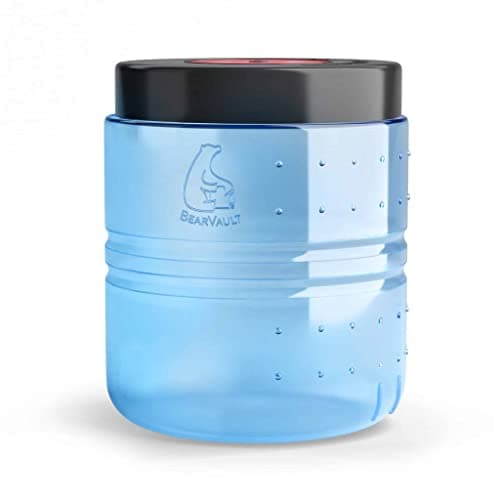
BearVault BV475 Trek Bear Canister
BearVault
9.3 L, 2 lb 4 oz, IGBC certified, tool-free lid. Accepted wherever storage is required.
$94.95 · Check price on Amazon
#ad how this is funded · price as of October 23, 2026
This is the rare gear decision where your opinion does not matter much. Plenty of places accept only a hard canister, and carrying the wrong one is a citation.
Trail & Tarp earns a commission from qualifying purchases made through links on this page, at no extra cost to you. Full disclosure.
The short answer
Check the land manager's regulation first. Many high-use areas require an approved hard-sided canister specifically, and a soft bag — even a certified one — does not satisfy that rule. Where both are allowed, the bag saves you 1 lb 12 oz and packs flat; the canister protects your food from being crushed and needs no tree.
Both products here are IGBC certified, which is the grizzly-bear-tested standard the Interagency Grizzly Bear Committee administers. Certification is necessary and not sufficient: a rule can require hard-sided storage regardless of what a soft bag is certified to survive.
| BearVault BV475 Trek | Ursack Major | |
|---|---|---|
| Volume | 9.3 L | about 10.65 L / 650 cu in |
| Weight | 2 lb 4 oz / 1,030 g | 7.6 oz |
| Shape packed | rigid, 8.7 in dia x 10.5 in | packs flat when empty |
| Material | transparent polycarbonate | UHMWPE (Spectra) fabric |
| Certification | IGBC certified | IGBC certified, cert. no. 3738 |
| Food capacity | about 5 to 6 days for one | about 5 days for one |
| Needs a tree | no | yes, to tie off to |
The weight row is the entire argument for the bag: 7.6 oz against 2 lb 4 oz is a saving of more than a pound and a half, for slightly more volume. If weight decided this, the comparison would be over.
The Ursack is only half a system as sold
Ursack publishes that its odor barrier bag and aluminum liner are sold separately. The odor barrier reduces what a bear smells in the first place, and the liner is what stops your food being crushed to crumbs through the fabric. Budget for both, or the bag you bought to save weight arrives at camp as a sack of powder. Tie it off with the integrated 6 ft, 2,500 lb cord to a solid trunk — never to a branch, which a bear can simply break.
The classic counterbalance bear hang — a bag over a branch, 12 ft up and 6 ft out — is no longer recommended in most places with habituated bears, because bears in those areas have solved it. That is precisely why certified canisters and bags exist and why regulations increasingly name them.
Whichever you carry, the placement rules are the same and they are the part people get wrong: store it well away from where you sleep, and keep anything scented — toothpaste, sunscreen, lip balm, the wrapper in your pocket — inside it, not in the tent. The full routine is in how to store food safely when camping and the wider practice is Leave No Trace.
| If this is you | Carry |
|---|---|
| Your destination requires hard-sided storage | the canister; there is no choice |
| Above treeline, desert, or burned forest | the canister; nothing to tie to |
| Counting ounces on a long forested trail | the Ursack, plus liner and odor barrier |
| You want food intact rather than crushed | the canister |
| Car camping at a developed campground | neither; use the site's metal food locker |
For most readers of this site the answer is the canister, because most people asking this question are heading somewhere popular enough to have a rule. Buy the bag as the second purchase once you know the specific places you go accept it. The full range, including the car-camping options, is in best bear canisters and food storage, and what to do if a bear turns up anyway is in wildlife safety at a campsite.
BearVault
9.3 L, 2 lb 4 oz, IGBC certified, tool-free lid. Accepted wherever storage is required.
#ad how this is funded · price as of October 23, 2026
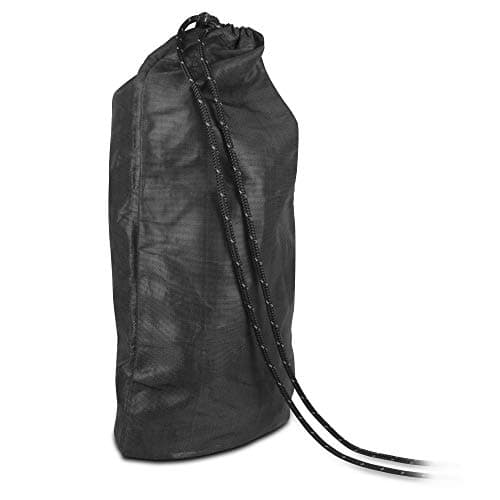
Ursack
7.6 oz for about 10.65 L, IGBC cert. 3738. Budget for the liner and odor barrier too.
#ad how this is funded · price as of October 23, 2026
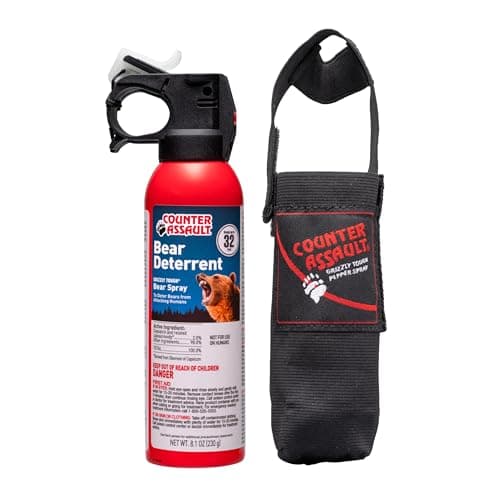
Counter Assault
Storage prevents the encounter; spray is what you carry for the one that happens anyway.
#ad how this is funded · price as of October 23, 2026
Not everywhere. Both the BearVault BV475 and the Ursack Major are IGBC certified, but many high-use areas require hard-sided storage specifically, and a soft bag does not satisfy that rule. Check the land manager's regulation before you choose.
Substantially. Ursack publishes 7.6 oz for the Major against BearVault's 2 lb 4 oz for the BV475, a saving of more than a pound and a half, and the Ursack holds slightly more at about 10.65 L versus 9.3 L.
No, and you should not rely on a hang. The Ursack is tied off to a solid tree trunk with its integrated 6 ft cord, not suspended. The classic counterbalance hang is no longer recommended in most areas with habituated bears because the bears have learned to defeat it.
Not on its own. A bear that works the bag over cannot get in, but the contents can be pulverized through the fabric. Ursack sells an aluminum liner separately for exactly this, along with an odor barrier bag, and both are worth budgeting for.
Every figure on this page comes from a published source. We have not tested this gear, so the numbers are the manufacturer's or the standard body's, not ours. How we research.