The Best Camping Towels, Compared on Size and the Dry Time Nobody Publishes
A cotton bath towel at a campsite is a damp object you carry home in a bag. A microfiber towel is a dry object by the time you break camp. That is the entire difference, and the spec that governs it is surface area rather than absorbency.
Microfiber dries fast because its fibers are far finer than cotton's, which gives the same weight of fabric an enormously larger surface area for water to evaporate from. Sea to Summit puts the figure at around forty times that of a regular fiber. Cotton holds water inside the fiber itself; microfiber holds it between fibers, where air can reach it.
That is the whole mechanism, and it explains the two properties that follow from it. A microfiber towel feels less absorbent at first contact than terry cotton, because it wicks rather than soaks, and it dries hours faster for the same reason. If you dislike how a camp towel feels, that is the trade-off you are feeling.
Compared on published numbers
Towel
Size
Weight
Packed
Face
Extra
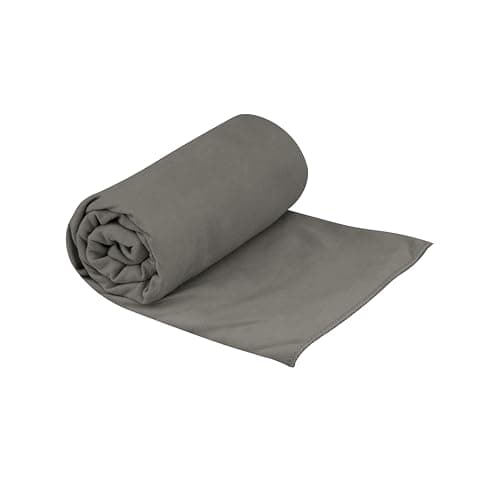
Sea to Summit Drylite, Large
23.6 x 47.2 in
5.1 oz
6.3 x 6.5 x 0.8 in
ultra-suede
press-stud tab, mesh pouch
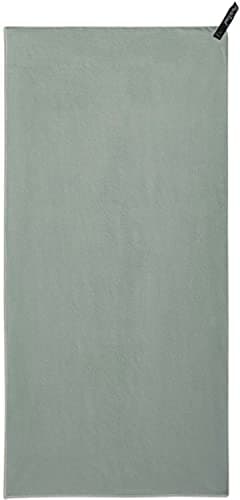
PackTowl Personal, Body
25 x 54 in
not published
not published
microfiber, 50% recycled
Polygiene odor control; 4 sizes
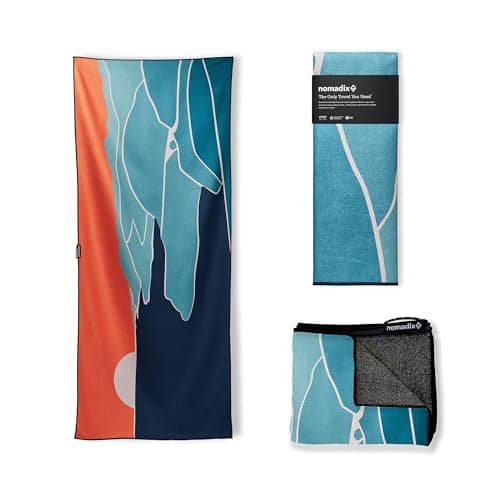
Nomadix Original
72.5 x 30 in
not published
not published
looped MicroTerry
sand-resistant, grips when wet
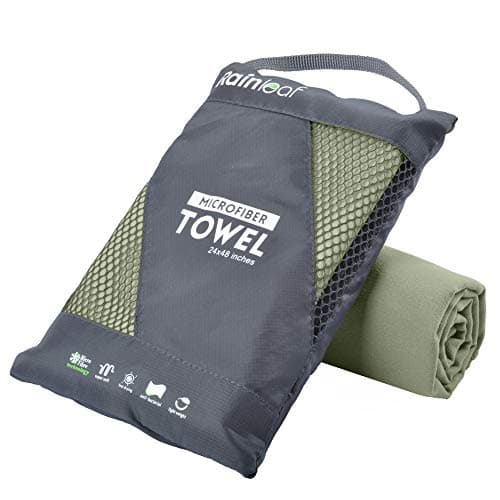
Rainleaf, largest size
40 x 72 in
not published
not published
suede-like
zip pocket, 6 sizes, 16 colors
Figures as published by each maker on 2026-10-17. Three of the four publish no weight and no packed size for a product sold on being light and packable; those cells say so rather than carrying an estimate.
There is no dry-time column in that table because no maker publishes a dry time. PackTowl claims 70% faster than comparable cotton, Nomadix claims four times the absorbency of cotton and Rainleaf claims five times its own weight — three different claims, three different units, no stated test behind any of them, and nothing you can compare. Treat all three as marketing and use size and weight instead.
Size: the mistake is buying too big
A camp towel does not need to wrap around you, because the thing you are drying is usually yourself after a camp shower in a confined space, and a big towel in a confined space is awkward. Bigger towels also dry more slowly and pack worse, which are the two reasons you bought microfiber.
Around 24 by 48 in dries an adult comfortably and is the size to default to. The Sea to Summit Large and PackTowl Body both sit here.
Around 16 by 36 in is a hand towel — enough for a child, for hair, or for washing up at a dish station.
Around 10 by 14 in is a face cloth. Weighs nothing and earns its place in a day pack and in the car.
Over 60 in long is a beach towel. Buy it on purpose, for sitting on, not as your general camp towel.
Where the towel goes is most of whether it dries
A microfiber towel hung full length in moving air dries in an hour or two; the same towel folded on a chair seat is still damp at breakfast. Hang it on a line between two trees, on a tent guy line, or off a pack strap — which is why every towel here has either a loop or a press stud, and why those are not trivial features. The rest of the camp drying problem, including boots and clothes, is in how to dry clothes and boots at camp.
Washing one without ruining it
Two rules, both counterintuitive. No fabric softener, ever: softener coats the fine fibers and destroys exactly the wicking that you paid for, and a softened microfiber towel pushes water around instead of lifting it. And no high heat in a dryer, because the fibers are synthetic and will melt and mat.
Beyond that, wash warm with normal detergent, and in Sea to Summit's case wash it on its own the first time — the maker states the dye is not colorfast. If a towel has gone sour rather than dirty, a wash with a cup of white vinegar and no detergent is the standard fix, and the same approach works on base layers that have started to smell.
What to buy
Buy the Sea to Summit Drylite in Large. It is the only towel on this page whose weight and packed size are published, 5.1 oz is genuinely nothing, and the clip means it actually dries.
Buy the PackTowl Personal instead if your trips run longer than a weekend and the towel will be used damp repeatedly — the odor treatment is the reason. Buy the Nomadix Original if you want one object that is a beach towel, a ground sheet and a changing mat. Buy four Rainleafs if you are towelling a whole family and would rather spend the difference on a shower to use them with.
The picks in full
1. Best overall
Sea to Summit Drylite Towel, Large
Sea to Summit
23.6 by 47.2 in of DRY+ microfiber at 5.1 oz, packing to 6.3 by 6.5 by 0.8 in, with a press-stud tab and a mesh-faced pouch.
Sea to Summit publishes 23.6 by 47.2 in for the Large, a packed size of 6.3 by 6.5 by 0.8 in, a weight of 5.1 oz, DRY+ microfiber with an ultra-suede finish, a press-stud tab for attaching the towel to a pack strap or a clothesline, a mesh-faced storage pouch, and the instruction to wash it separately the first time because the dye is not colorfast.
This is the only towel here with a complete published spec — size, packed size and weight — and that alone makes it the pick, because a camping towel is sold entirely on those three figures and most makers publish one of them.
The press-stud tab is more useful than it sounds. The reason a camp towel stays wet is that it ends up folded over a chair back or on the ground; a towel that clips to a guy line or a branch hangs full-length in moving air and dries in an afternoon. The mesh pouch does the same job in a pack.
The drawback
Sea to Summit states the dye is not colorfast and the towel must be washed separately the first time, which is an irritating thing to discover after you have put it in with a white base layer. The suede finish also feels less like a towel than a terry face does.
Published specs
Size
23.6 x 47.2 in (Large)
Packed
6.3 x 6.5 x 0.8 in
Weight
5.1 oz
Fabric
DRY+ microfiber, ultra-suede finish
Hanging
press-stud tab for a pack strap or clothesline
Storage
mesh-faced pouch
Care
machine washable; wash separately first, the dye is not colorfast
25 by 54 in of 50% recycled microfiber with a Polygiene silver-ion odor treatment, in a size range from face cloth to beach towel.
PackTowl publishes 25 by 54 in for the Body size, with Face at 10 by 14, Hand at 16.5 by 36 and Beach at 36 by 59 in; microfiber made from 50% recycled content; a Polygiene silver-ion odor-control treatment; a built-in hanging loop; and a claim that the fabric dries 70% faster than comparable cotton.
The odor treatment is the reason to pick this over the Sea to Summit. A microfiber towel that is used damp, stuffed away, and used damp again goes sour — it is the single most common complaint about the whole category — and a silver-ion treatment is a real, if not permanent, countermeasure. On a weekend it is irrelevant. On a two-week trip it is the difference between a towel and a problem.
Four published sizes is the other genuine advantage, and the Face size at 10 by 14 in is the sleeper purchase here: it weighs nothing, lives in a day pack, and handles every spill, sweat and dog that a full towel is overkill for.
The drawback
PackTowl publishes no weight and no packed size for any size in this range, which on a packable towel is the information you most wanted. The 70%-faster-drying claim is PackTowl's own figure with no test cited.
Published specs
Size
25 x 54 in (Body)
Other sizes
Face 10 x 14, Hand 16.5 x 36, Beach 36 x 59 in
Fabric
microfiber, 50% recycled content
Odor control
Polygiene silver-ion treatment
Hanging
built-in loop
Maker's dry claim
dries 70% faster than comparable cotton; PackTowl's figure, not a measured one
Note
no weight or packed size is published for this size
72.5 by 30 in of recycled MicroTerry with a sand-resistant face, slip resistance when wet, and printed rather than dyed color.
Nomadix publishes 72.5 by 30 in, a MicroTerry looped face made from post-consumer recycled material, a sand-resistant face, moisture-activated slip resistance, and color that is printed rather than dyed so that it does not bleed.
The looped terry face is a different fabric decision from the suede finish on the other two, and it is the reason this one works on the ground. A flat-faced microfiber towel slides on grass; a looped one grips, which is why Nomadix markets it for yoga and why it is the one to put down outside a tent door when you are changing out of wet clothes.
Sand resistance is a real property of long-loop synthetics and genuinely useful at the beach — see the beach camping guide — but be clear about what you are buying: at six feet long this is a beach towel that is also a camp towel, not a packable one.
The drawback
Nomadix publishes no weight and no packed size, and at 72.5 in long this is the biggest towel here by a wide margin, which means it is also the slowest to dry and the bulkiest to pack. The most expensive per square inch too.
Published specs
Size
72.5 x 30 in
Fabric
MicroTerry looped face, post-consumer recycled material
Sand
sand-resistant face; slip-resistant when wet
Color
printed, not dyed, so it does not bleed
Maker's absorbency claim
absorbs 4x more than a regular cotton towel; Nomadix's figure
A 40 by 72 in microfiber towel with a zippered corner pocket, a snap hanging loop and a vented carry bag, in six sizes and sixteen colors.
Rainleaf publishes 40 by 72 in for the largest of its six sizes, microfiber with a suede-like face, a zippered corner pocket on this size, a snap hanging loop, a vented carry bag, sixteen colors, machine washability, and a claim that it absorbs five times its own weight.
The honest case for this towel is arithmetic rather than engineering. A family of four needs four towels, and four premium towels is real money for an object whose job is getting water off skin. These work, they come in enough colors that nobody argues about whose is whose, and if one gets left at a campsite nobody is upset.
Buy a smaller size than you think. The 40 by 72 in sheet is larger than any of the others here and a very large thin towel takes a long time to dry, which is the one thing you bought microfiber to avoid.
The drawback
Rainleaf publishes no weight and no packed size, the absorbency claim is its own, and a very large thin microfiber sheet is the slowest-drying shape in the category. The zip pocket is a gimmick on a towel you will wash.
QWhy use a microfiber towel for camping instead of a normal towel?
Dry time. Microfiber fibers are far finer than cotton's, giving the same weight of fabric a much larger surface area for evaporation, which is why a microfiber towel hung in air dries in an hour or two where cotton stays damp all weekend. It also packs far smaller, and a damp cotton towel in a closed bag is how gear sours.
QWhat size camping towel do I need?
About 24 by 48 in dries an adult and is the sensible default; the Sea to Summit Drylite Large and PackTowl Personal Body are both in that range. Go to 16 by 36 in for a child or for hair, and 10 by 14 in for a face cloth that lives in a day pack. Anything over 60 in long is a beach towel and dries slowly.
QHow long does a microfiber camping towel take to dry?
No maker on this page publishes a dry time. PackTowl claims 70% faster than comparable cotton, Nomadix claims 4x the absorbency of cotton and Rainleaf claims 5x its own weight, with no test cited for any of them. In practice, hanging it full length in moving air matters more than which one you bought.
QCan you wash a microfiber camping towel in the machine?
Yes. Warm wash, normal detergent, no fabric softener and no high dryer heat. Softener coats the fine fibers and kills the wicking you paid for, and high heat melts and mats synthetic fibers. Sea to Summit also says to wash its Drylite separately the first time because the dye is not colorfast.
QWhy does my camping towel smell?
Because it was packed away damp and used damp again, which is normal for the category rather than a defect. The treatment is a wash with white vinegar and no detergent, and the prevention is hanging it full length to dry. PackTowl's Polygiene silver-ion finish is the only odor countermeasure published by any towel here.
How we picked
Everyone else in this category will tell you they tested twenty of these. We have not tested any of them, and we would rather say so than pretend. There is no gear closet here and no test lab.
What we did instead: pulled the published specifications from each manufacturer's own spec sheet or manual, named the standard behind every rating so you can check what it actually promises, did the arithmetic that turns a spec into a decision, and pulled today's real retail price rather than quoting one from memory. Every pick states a drawback, because a list where nothing is wrong with anything is an advert.
The limits of that method, stated plainly: published specs do not capture zipper quality, seam durability, or how a tent behaves at 2am in a storm. Where that matters, we say so on the pick. The full method is here.