Duffels are for soft gear, rigid bins are for hard gear, and a camping kit needs both. A duffel has no fixed shape, so it fills the gaps a cooler and a tent bag leave behind; a bin protects what a duffel cannot. Sleeping bags, clothing, towels and blankets go in the duffel. Stove, fuel, cookware, lanterns and tools go in the bin.
The car boot is the actual constraint, and it is the thing nobody accounts for until the morning of departure. A hard suitcase wastes every cubic inch it does not fill and cannot be squeezed. Loose carrier bags fill gaps beautifully and then split, spill, and mean you carry eleven things to the pitch. A duffel is the compromise: compressible enough to fit around a cooler, structured enough to carry in one hand.
Duffel
Capacity
Weight
Liters per lb
Main fabric
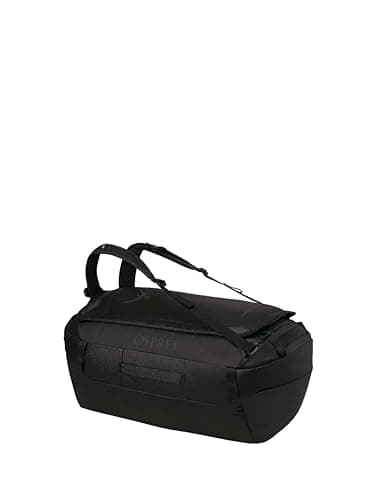
Osprey Transporter 65
65 L
2.97 lb
about 22
900D recycled polyester, TPU coated
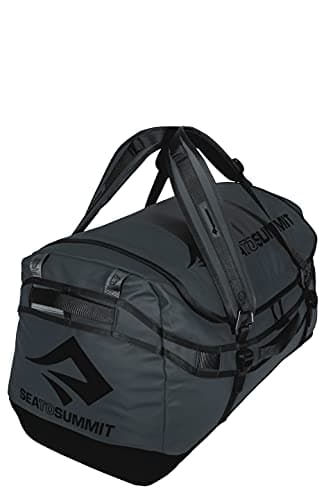
Sea to Summit Duffle 90L
90 L
about 4 lb 8 oz
about 20
Tarpaulin laminate, 1000D nylon base
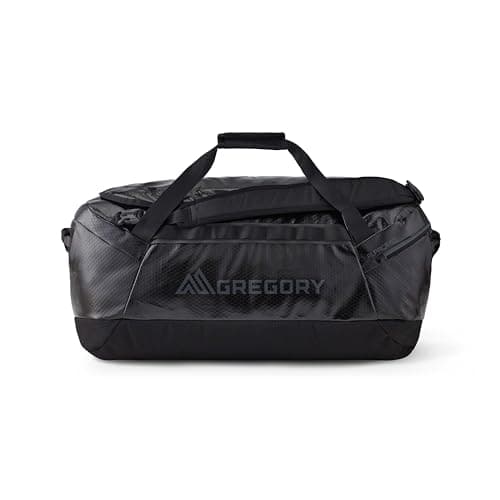
Gregory Alpaca 60
60 L
3.37 lb
about 18
900D polyester, 40% recycled, TPU coated
Capacity and weight as published by each manufacturer. Liters per pound is our arithmetic from those two figures.
What denier and TPU actually mean here
Denier is the linear mass density of the yarn: a 900D fabric uses much thicker threads than a 210D one, so it is heavier and much harder to abrade or puncture. Camping duffels sit at 600D to 1000D because they get dragged, dropped and stood on, and anything lighter fails at the base.
TPU — thermoplastic polyurethane — is a laminate bonded to the fabric, and it is what makes a duffel shed water rather than absorb it. It is also why these bags feel slick and wipe clean. What it is not is waterproof: water gets in through the zipper, which is a standard coil zip on all three of these rather than a welded waterproof one. If you need genuinely dry storage, that is a dry bag inside the duffel, not a different duffel.
The one-bag-per-person rule
The organizing system that survives contact with a real family is one soft bag per person for their own clothing and bedding, plus shared bins for the kit. Everybody knows where their things are, nobody unpacks anybody else's bag looking for socks, and loading the car becomes a count rather than a search. It is the same logic as the labeled-bin system in the gear storage bin roundup, applied to the soft half of the kit.
Sizing: 60, 90 or two of each?
A rough guide from what these bags hold. Sixty to 65 L takes one adult's sleeping bag, pillow, clothing for a weekend and a towel, with room over. Ninety liters takes the same for two people, or all four sleeping bags for a family, or the entire soft contents of a car camping kit if the clothes go elsewhere.
For most families, one 90 L bag for bedding plus a 60 L per adult for clothing is the shape that works. For a couple, two 65 L bags is simpler and easier to carry. Avoid the temptation of one enormous bag for everything: at 90 L full of bedding you are already at the limit of a comfortable one-person carry.
What to look for beyond the numbers
A U-shaped or full-length zip. Slot openings mean digging. All three here open wide.
A reinforced base. Higher denier, an extra layer, or both. This is where duffels die.
Compression or lash points. External straps let you strap a mat or a chair to the outside, which is more useful in a boot than an extra internal pocket.
Removable straps. Backpack straps you can take off do not snag on everything when the bag is being carried by the handles.
What we did not do
We have not loaded, carried or soaked any of these. Every capacity, weight and fabric figure above is the manufacturer's published specification with a link to where it was read, and the liters-per-pound column is arithmetic on those two numbers rather than a claim of our own. See how we research, and how to pack a car for camping for where these bags go in the loading order.
The picks in full
1. Best all-round camping duffel
Osprey Transporter Duffel 65
Osprey
65 L in a bluesign-approved 900D recycled polyester shell with a TPU coating, at 2.97 lb, with stowable harness straps for the walk in.
Osprey publishes a 65 L capacity, dimensions of 27 by 16 by 12 in, a 2.97 lb (1.35 kg) weight, a main fabric of bluesign approved 900D recycled polyester with a TPU coating, a 600D recycled polyester lining and base also TPU coated, and a PFC-free DWR finish.
Twenty-two liters per pound is the number that makes this the default. A duffel's job is to hold as much as possible while weighing as little as possible and surviving being dragged across gravel, and 900D with a TPU laminate is the sweet spot: heavy enough to shrug off a campsite, light enough that the bag is not a meaningful part of the load.
The stowable harness straps matter more than they sound. Sixty-five liters of bedding is an awkward, unbalanced thing to carry by a handle across a field, and being able to put it on your back for the two hundred yards from the car park to the pitch is the difference between one trip and three. For actual trail carrying, this is not a backpack — see the backpack roundup.
The drawback
Water resistant rather than waterproof: a TPU-coated shell with a standard zip is not a dry bag, and prolonged rain will get in at the zip.
90 L in a tarpaulin laminate with a 1000D nylon base, 74 by 37 by 37 cm, at 2,050 g, with three carry modes and dual zippers.
Sea to Summit publishes a 90 L capacity, dimensions of 74 by 37 by 37 cm, a 2,050 g weight (about 4 lb 8 oz), a tarpaulin laminate upper with a 1000D nylon base, a dual zipper system, and multifunctional handles giving three carry modes.
The 1000D nylon base is the specification worth paying for. Duffels wear out from underneath: they get put down on gravel, dragged out of boots, and stood in wet grass. A base at double the denier of the body is what makes the difference between a bag that lasts three seasons and one that lasts ten.
Ninety liters is a family bag, not a personal one. Loaded with four sleeping bags and everybody's clothing it is heavy enough to want two hands, which is exactly the use case: one big soft bag that goes in the boot last and comes out first, rather than four small ones that get separated.
The drawback
4 lb 8 oz and 90 L is a genuinely large object that two people should lift when it is full, and it will not fit in a small boot alongside a cooler.
60 L at 3.37 lb in a 900D polyester with 40% recycled content and a TPU coating, with removable padded shoulder straps and a #10 YKK U-zip.
Gregory publishes a 60 L capacity, dimensions of 27.5 by 15 by 12.6 in, a 3.37 lb (1.53 kg) weight, a heavy-duty blended 40% recycled 900D polyester fabric with a TPU coating, a three-layer padded bottom with an internal coating, removable padded shoulder straps, and a large U-zip opening with a smooth-action #10 YKK zipper.
The U-zip is the feature that separates a good duffel from a bad one, and this one runs on a #10 YKK, which is the heavy gauge. A duffel that opens flat down three sides means you can see everything at once instead of excavating; a duffel with a slot opening means whatever you want is always at the bottom.
The padded three-layer base and the properly padded straps make this the one to buy if your pitch is a walk from the parking area, which is common at state park campgrounds and almost universal at walk-in sites. It is also the heaviest per liter of the three, which is the price of that comfort.
The drawback
The heaviest here per liter, and the padded backpack harness is comfort you pay for in bag weight whether or not you use it.
Sixty to 65 L holds one adult's sleeping bag, pillow, weekend clothing and a towel with room over. Ninety liters holds the same for two people, or all four sleeping bags for a family. One 90 L bag for bedding plus a 60 L per adult for clothing is the shape that works for most families.
QAre camping duffels waterproof?
Water resistant, not waterproof. TPU-coated fabrics shed rain, but all three of these use standard coil zips rather than welded waterproof ones, so prolonged rain gets in at the zipper. Put a dry bag inside for anything that must stay dry.
QDuffel bag or plastic bin for camping gear?
Both, for different halves of the kit. Duffels hold soft gear and compress into the gaps a cooler leaves in a car boot. Rigid bins hold the stove, fuel, cookware and tools, and protect them from being crushed.
QWhat does 900D mean on a duffel bag?
Denier is the linear mass density of the yarn, so 900D uses much thicker threads than 210D and resists abrasion and puncture far better. Camping duffels sit between 600D and 1000D, and the best of them use the highest denier on the base, where the wear happens.
How we picked
Everyone else in this category will tell you they tested twenty of these. We have not tested any of them, and we would rather say so than pretend. There is no gear closet here and no test lab.
What we did instead: pulled the published specifications from each manufacturer's own spec sheet or manual, named the standard behind every rating so you can check what it actually promises, did the arithmetic that turns a spec into a decision, and pulled today's real retail price rather than quoting one from memory. Every pick states a drawback, because a list where nothing is wrong with anything is an advert.
The limits of that method, stated plainly: published specs do not capture zipper quality, seam durability, or how a tent behaves at 2am in a storm. Where that matters, we say so on the pick. The full method is here.